Sunday, April 7, 2019

April 7 - Expedition Everest

On this day, in 2006, guests in Disney's Animal Kingdom at Walt Disney World officially felt the first breaths of Yeti's wrath on Expedition Everest. Everest is the 18th mountain themed attraction to appear in a Disney theme park (the first being the Matterhorn Bobsleds in Disneyland). In 2011, the ride had the dubious distinction of being listed in the Guinness Book of World Records as the most expensive roller coaster ever built, coming in at over $100 million. Everest is also the tallest structure on all of Walt Disney World property, standing 199 feet, six inches tall, beating out the Twilight Zone Tower of Terror by six inches (Why not go another six inches, you ask? Because anything 200 feet and taller needs to have an ugly blinking light on it, that's why. Take that local ordinances!). Everest is the second Disney coaster to go backwards, but the first one to go both forwards and backwards in the same ride. And then there's the Yeti.

Image copyright Disney
First some positives about him. He's the biggest, most complex Audio-Animatronic Disney ever built. He's 25 feet tall and boasts a skin that measures just over 1,000 square feet (yes feet). When he's working, he can move five feet horizontally and a foot and a half vertically. He's really impressive. When he's working. Which he hasn't since a few months after the ride opened. But it's not apparently his fault. Rumor has it that he could still work today, that he himself is fully functional and wants to work, except for one tiny thing: the ride might disintegrate around him if he did.

When Everest was being designed and built, a fabulous new '4-D' program was used to create three separate components, the track, the show building (the mountain itself) and the Yeti figure. Each component was built individually and then slid together like a giant jigsaw puzzle, interlocking as a homogenized whole but not relying on each other structurally (or even supposedly touching). A truly great system for building something. Repairing something, though? Not so much. A miscalculation occurred when it came to the Yeti's concrete base (some blame the program, others say it happened in execution). Three months of that monster flailing around caused it to split. Because of the way all the other elements were basically slid in around the Yeti, no one can get to his base to demo and repair it without basically taking the whole ride apart. So the poor Yeti has sat, unmoving, for the last 13 years, earning the nickname Disco Yeti because plan B for him is to flash strobe lights, trying to give him the illusion of movement. Imagineers regularly insist they are working on a plan to fix him, but so far no luck. What is lucky, is the fact that Expedition Everest is a great coaster anyways.

April 6 - John Ratzenberger


On this day, in 1947, John Dezso Ratzenberger was born in Bridgeport, Connecticut. After graduating from Sacred Heart University in Fairfield, John somehow wrangled himself a job at Woodstock as a tractor operator in 1969, then, two years later, moved to London. While working as a house framer in England, he met up with an old classmate from Sacred Heart, Ray Hassett, who was also living in Britain. John and Ray had spent a good chunk of their college years doing improv comedy together, first in the school’s cafeteria and later in the actual theater. In 1973, the boys teamed up again, creating a two man troupe known as Sal’s Meat Market. They based themselves at London’s Oval House but would tour all over Europe for the next four years. The British troupe The Comic Strip, which hit their stride in the Eighties and included Jennifer Saunders, Robbie Coltrane and Dawn French, among others, credited Sal’s as being a major influence on them. As the Seventies came to a close, Sal’s Meat Market closed its proverbial doors as both its members returned to the United States. Ray turned to a career in law enforcement, but John was destined for more fame and fortune.

Image courtesy starwars.com
John's first onscreen appearance was in the 1976 movie version of the 1975 play The Ritz, starring Rita Moreno. He continued in small roles throughout the rest of the decade and into the Eighties, showing up in classics like A Bridge Too Far (Lt. James Megallas), Superman (missile controller), Superman II (NASA controller), The Empire Strikes Back (Major Bren Derlin) and Ghandi (American Lieutenant). It wasn't until he made the switch to the small screen that he became a household face.

Image courtesy alchetron.com
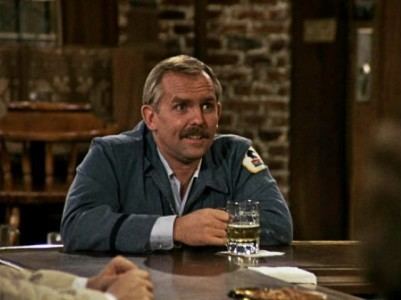
In 1982, when John auditioned for a new sitcom that took place in a neighborhood bar, he was asked to read for the role of one of the establishment's best patrons, Norm Peterson. The audition went well enough, but John could tell he wasn't going to get the part. Figuring he had nothing to lose, he asked the producers of Cheers if they'd cast the role of a bar know-it-all. They hadn't even considered having that part but thought it was a great idea. And thus the legend of Clifford Clavin was born. Cliff was part of Cheers from episode one (although John didn't officially become a series regular until season two) straight through to the end, eleven seasons later. John's last appearance as Cliff didn't happen until nine years after the end of Cheers, when he showed up on an episode of Frasier. Over the course of the series, John earned two Prime Time Emmy nominations for his work as the insufferable barfly.

Image copyright Pixar
John first became part of the Disney family in 1995 and if we're being specific, he's a ubiquitous part of the Pixar clan. For Pixar's first feature film, Toy Story, John was cast in the role of Hamm, a piggy bank who has trouble keeping his money safely inside. Three years later, he played the role of P.T. Flea, the Ring Leader of the traveling circus, in A Bug's Life. From then on, he's been considered Pixar's lucky charm and has had a least a cameo in almost every movie the studio has done since. You've heard his voice as: Hamm in Toy Story 2 and 3, The Abominable Snowman in Monsters, Inc and Monsters University, the school of Moonfish in Finding Nemo, The Underminer in The Incredibles (1 and 2), Mack the Truck in all three Cars pictures, Mustafa the Waiter in Ratatouille, John in WALL-E, Tom the Construction Worker in Up, Gordon the Guard in Brave, Fritz in Inside Out, Earl the Velociraptor in The Good Dinosaur, Bill the Crab in Finding Dory and Juan Ortodoncia in Coco. He also appears in the Planes movies, which are set in the world of Cars but not Pixar films, as Harland the Jet Tug and Brodi.

Image copyright Pixar
Outside of Pixar, John hosted his own reality show on the Travel Channel from 2003-08, John Ratzenberger's Made in America, that highlighted products produced by American companies. He guest starred on four episodes of 8 Simple Rules during the first season. He's been in commercials for everything from Quality Hotels to Zaxby's chicken to Pitney Bowes. John has also made guest appearances on dozens of television shows as varied as Bones and Lego Star Wars (reprising Major Derlin from Empire). His next project is also a reprisal: later this year you'll be able to hear him once again as Hamm when Toy Story 4 hits the big screen.

Friday, April 5, 2019

April 5 - Moon Pilot


Image copyright Disney
On this day, in 1962, Walt Disney Pictures released Moon Pilot. Based on a 1960 novel by Robert Buckner, Starfire, Pilot is notable for being the studio’s first science fiction movie. The plot is the usual silliness that Disney movies exhibited in the Sixties (but without the tang of desperation they acquired in the Seventies). An Air Force pilot is going to be the first man to travel around the moon so he has to go into top secret stealth mode to keep the Russians from finding out. While being babysat by bumbling federal agents, he runs into a beautiful but mysterious woman, who turns out to be an alien. The end scene is them flying off to her home planet singing love songs to each other. It’s not as bad as that summary might make it sound (two thirds of viewers on Rotten Tomatoes liked it), just don’t expect something on the level of, say, Passengers. Especially since humans were still six years away from actually traveling around the moon.

Image copyright Disney
The cast was made up of a mix of Disney mainstays and newcomers. The titular Pilot, Captain Richard Talbot, was played by Tom Tryon who also played the title role for seventeen episodes in the Wonderful World of Disney series Texas John Slaughter. Brian Keith, who starred a year earlier in The Parent Trap (and would appear in several more Disney films later on), was Talbot’s Major General. Even Tommy Kirk had a small role. Perhaps the standout performer of the film, though, is the French actress Dany Saval, in her first credited role. As Lyrae, the alien, she elevates the film above what’s typical for a somewhat slapstick comedy. Sharp eyed viewers can also see Sally Field and Jo Anne Worley, both enjoying their screen debuts.

Speaking of that slapstick, the film actually created some bad mojo between Walt and the FBI. Originally, the inept agents guarding Captain Talbot were identified as being from that agency. The FBI complained that guarding astronauts wasn’t something they did, so the agents became thinly veiled as Federal Security Officers. Once Moon Pilot was released, the FBI further complained that the movie made them look like idiots (which, to be fair, it did).

Thursday, April 4, 2019

April 4 - Rock 'n' Roll Beach Club

On this day, in 1990, the Rock 'n' Roll Beach Club began welcoming revelers at Pleasure Island in Walt Disney World. Beach Club was the first new club to appear after Pleasure Island opened its doors on May 1, 1989. Ever since Michael Eisner had taken over leadership of the Walt Disney Company several years before, he had been looking for ways to boost revenue in the parks. For Walt Disney World, an on-property, nighttime entertainment venue was high on his list. If it was more convenient for guests to stick around when the theme parks closed instead of having to travel to clubs in downtown Orlando, Disney should get a bigger percentage of their wallets. Expanding the size of the Walt Disney World Village shopping area and opening a multi-club venue right next door went a long ways toward making that dream a reality.

Image courtesy waymarking.com
When Pleasure Island opened, it contained six clubs: Videopolis East (new wave music), the Neon Armadillo (live country), the Adventurer’s Club (a quirky mix of improve comedy and set show pieces, one of my favorites), the Comedy Club (which started out with a set show but evolved into all improv), Mannequins Dance Palace (techno-trance) and the XZFR Rockin’ Rollerdrome. Yes, you read that right. A rollerdrome. Someone thought that mixing alcohol and roller skating was a good idea. Until of course the club actually opened for business. Then it became painfully obvious what a huge liability that was. The doors were rather quickly closed, the club given a cursory makeover and reopened as the Rock ‘n’ Roll Beach Club, which it would remain until closing several months before the rest of Pleasure Island in 2008. If you ever visited the Beach Club and wondered why there was a chest high wall surrounding a hardwood oval in the middle of the first floor, now you know.

Over the years several other clubs came and went with the confines of Pleasure Island. Videopolis East was renamed Cage before becoming 8Trax, featuring Seventies and Eighties music, in 1992. The Pleasure Island Jazz Company came along in 1993, showcasing live musicians, before becoming the Raglan Road Irish pub in 2005. The Neon Armadillo became the BET Soundstage in 1998, changing from country to hip-hop and R&B. The Firework’s Factory, a restaurant on the eastern edge of Pleasure Island became the Wildhorse Saloon at the same time, keeping Country music on the Island for a few more years, before ending up as Motion, a top 40 video club, in 2001.

Image copyright Disney
By the mid Aughts, though, attendance at Pleasure Island was flagging badly. Change was in the air for nightclub culture that had been thumping through the nights for almost two decades. The entrance fee for the area was the first thing to go, as each of the remaining clubs became its own venue. Plans were made to retheme Pleasure Island into a more family friendly area called Hyperion Wharf, but as the bigger plan of Disney Springs began to emerge, that never happened. On September 27, 2008, New Year’s Eve was celebrated for the last time and the Island ceased to exist. Buildings were demolished or extensively renovated starting the very next day and there are few remnants of the place left.  Which, honestly, isn’t a bad thing.

Image courtesy me
Full disclosure time: I worked in Admissions and Guest Services at Pleasure Island for over a year in the late Nineties. While I enjoyed the people I worked with, PI literally brought out the worst in guests. It wasn’t a Friday or Saturday night if someone wasn’t getting arrested and hauled off to Orange County Jail. And all I have to say to make one of my former co-workers shudder are the words Vibe Live (it was really ugly). The things I’ve seen are not sights that should be regularly occurring on Disney property. PI might have served a purpose in the beginning, by the time I came along several years later, it was already pretty seamy and it went downhill after I left. The Island’s current incarnation as the Landing area of Disney Springs still fulfills its original purpose of keeping guests on property, is still a lot of fun to go hang out in but is now, thankfully, minus the creepy parts.

Wednesday, April 3, 2019

April 3 - Midget Autopia

On this day, in 1966, the Midget Autopia ride burned its last gallon of gas in Fantasyland at Disneyland. The attraction got its name from being the smallest of the three Autopias in Disneyland. You heard that correctly. At one point there were three different versions of the same ride spread out across Disneyland. The original Autopia was an opening day attraction in Tomorrowland. It’s multi-lane, limited access design was actually a precursor to the American highway system (President Eisenhower didn’t authorize real interstate highways until 1956). If you’ve ever driven around one of the Autopia tracks and gritted your teeth when you get bumped from behind, you’ve actually experienced a pretty mild version of an Autopia accident. The original cars didn’t have the benefit of a guide rail or bumpers. When folks took them out for a test run before the park opened, it was more like a demolition derby than a driving course. They smacked into each other so much, the cars were nearly destroyed. Bumpers were retrofitted around the remaining cars for opening day, which limited the damage the vehicles took but not necessarily the spines of the riders. Static bumpers eventually turned into spring-loaded bumpers (which absorbed some of the impact) which led to the inclusion of a center guide rail, keeping accidents to minor rear ends only.

Image copyright Disney
The popularity of the Tomorrowland Autopia led to a slightly smaller duplicate of the ride to pop up in Fantasyland in 1956. Originally called the Junior Autopia, since it wasn’t as big, the second version benefited from the mistakes of the first one: it had that center guide rail from day one. In 1959, the Junior Autopia was closed, expanded and reopened as the Fantasyland Autopia, now basically indistinguishable from its Tomorrowland counterpart. In 1957, the Midget Autopia opened at the edge of Fantasyland near the Storybook Land Canal Boats. Not only was the track shorter, but the cars were smaller as well. While adults were a necessity on the other two Autopias (at least for kids too short to reach the gas pedal), they weren’t allowed to ride the Midget version.  

Image courtesy yesterland.com
After the Midget Autopia closed to make way for the installation of It’s a Small World, Walt packed it up and shipped it to Marceline, Missouri. For the next eleven years, visitors to the city’s Walt Disney Municipal Park could get a little taste of Disneyland in the Midwest. As parts for the ride became scarce, Marceline was forced to close the attraction in 1977. A single car is still on display at the town’s museum. The ride’s cement track actually survived until 2016, when it was finally demolished to make way for a new swimming pool.

Image courtesy autoweek.com
Disneyland’s two remaining Autopias dueled with each other all the way until September 1999 when they were both closed down, demolished and a single, larger Autopia was built in their place. The attraction proved so popular over the years that versions of it currently exist in Walt Disney World and Disneyland Paris and were once part of Tokyo Disneyland and Hong Kong Disneyland (the latter two only recently being removed to make way for new rides). And if you think affection for one of the loudest, smelliest rides in all of Disney has waned at all, you clearly missed the uproar when folks thought the Tron coaster was going to replace it in the Magic Kingdom (don’t worry: the track will be a little shorter but the two will live side by side for years to come).

Tuesday, April 2, 2019

April 2 - Bill Garity

On this day, in 1899, William Garity was born in Brooklyn, New York. Bill would later attend (but not necessarily graduate from, the details are really hazy) the Pratt Institute, a famous private school in Brooklyn that had programs centering around engineering, architecture and the fine arts (a STEAM school in the 1890s, when it was just called being well rounded).

By 1921, he was working under Lee DeForest. Lee was an inventor who held over 180 patents, including one for the Audion vacuum tube which made radio broadcasting possible. Lee and Bill worked together on a sound system for movies they called Phonofilm. Their process recorded sound directly onto the film itself (as opposed to Vitaphone which recorded a films sound onto records) but the sound quality wasn't terribly good. Even as the recordings improved, Lee had trouble convincing any major studios to use his system and after six years of trying, went bankrupt. At that point, a businessman-turned-producer named Pat Powers basically stole his idea, taking Bill to boot, and created a copycat system that he called Powers Cinephone. Pat, however, was able to convince a young studio owner looking to get into the sound game with a new animated character to use the system.

Image courtesy theymadethat.com
Bill became the in-house sound technician for the Walt Disney Studio in 1928. At the same time, Pat became the new distributor of the studio's cartoons. Everything seemed to go well for just over a year. Then, in 1930, an old problem reared its head again. Walt confronted Pat about money that was owed, Pat begrudgingly paid up but then convinced the studio's head animator, Ub Iwerks, to start his own studio under Pat's guidance. As the distribution deal (and seemingly the studio) fell apart, Bill opted to stay with Disney. As the Thirties He continued to develop better sound for the studio until Walt brought a new project to his resident engineer.

Walt was looking for a way to make cartoons look more like live action films. He wanted to zoom into scenes and have forests look like they had some depth to them instead of like flat paintings. Ub was working on the same problem over at his studio. Both Ub and Bill came up with the concept of a multiplane camera, but Bills was more sophisticated. Instead of a camera photographing an animation cel laying directly on top of a background, the multiplane camera allowed for several layers of cels to be photographed at once and each layer could be moved individually. In a panning shot, for instance, some trees could move by faster than others enhancing the illusion that they were different distances from the viewer. The first project to use Bill's invention was the 1937 Silly Symphony The Old Mill. The multiplane camera can be credited with earning the Oscar for Best Animated Short. Bill's multiplane camera became a staple of Disney productions and was used on every animated feature from Snow White and the Seven Dwarfs in 1937 until Oliver and Company in 1988 (at that point it was being made obsolete by computers).

Image copyright Disney
As the Thirties came to an end, Bill returned to work in audio. Walt recognized the need for richer, fuller sound for the studio's upcoming feature, 1940's Fantasia. Bill's solution was known as Fantasound and made Fantasia the first commercially released film to be heard in stereo. Fantasound is credited with the first uses of a click track, simultaneous multi-track recording and is generally recognized as the first surround sound experience. It wasn't a cheap process (almost 20% of the film's budget was spent just on recordings) but it is a process that stood the test of time. In 1956, when a transfer was made from Fantasound's optical recordings to magnetic recordings (over a phone line, no less), just a small amount treble response was lost.

Shortly following the release of Fantasia, Bill would leave the Disney Studio to become Vice President and Production Manager over at the Walter Lantz Studio, where he would finish out his career. He passed away on September 16, 1971 in Los Angeles, California. In 1999, Bill was posthumously made an official Disney Legend for all of his technical genius that directly made the Walt Disney Studio what it is today.

Monday, April 1, 2019

April 1 - Blizzard Beach

Image copyright Disney
On this day, in 1995, Disney's Blizzard Beach water park officially opened its doors to guests for the first time. The third water park to open in the Walt Disney World resort, Blizzard Beach also boasts the third highest attendance of all the world's water parks (its sister park Typhoon Lagoon is second but a water park in Guangzhou, China beats them both by a good half a million guests a year). So the other Walt Disney World park must be fourth then, right? Sadly, no. The Florida Project's original water park, River Country, stopped operating in November 2001 after 25 years on the shore of Bay Lake (it wasn't officially closed until January 2005 when the announcement was made that the water park that hasn't reopened in over four years isn't going to).

Image copyright Disney
How did Blizzard Beach get its winter theme in the middle of central Florida? Legend has it that a freak snowstorm hit the area and the snow stuck around just long enough for a ski resort to be built. As they were about to rent their first pair of ski boots and watch everyone awkwardly walk around in them, the snow melted and the whole thing became a water park instead. Now considering how long it's taken Disney to build their new gondola transportation system, you decide how much water that backstory holds. While I enjoy Blizzard Beach, truth be told, I like the second Florida water park better (and if we're really being transparent, I like Seaworld's Aquatica best, except for the horrible parking situation over there and Seaworld's seeming inability to handle anything that even remotely resembles a crowd, but I digress).

Typhoon Lagoon opened for business on June 1, 1989 and fixed many of the problems that River Country had. It was a stand alone attraction (River Country was connected to the Fort Wilderness Campground), making it easier to get to. It had lots more parking and it didn't use filtered lake water in its attractions (one of the convenient excuses... I mean health reasons cited for the closing of River Country was an outbreak of nasty parasites being contracted around the country in non-chlorinated waters).

Image copyright Disney
The two Disney water parks have several similar rides between them. Both have lazy rivers, both have steep water slides that can literally tear a person in half, both have tube slides and both have body slides. I guess I just buy into Typhoon Lagoon's backstory more (it's a tropical bay that's been through it with a big storm). I mean we have big storms in Central Florida all the time. Storms of the snow variety? Not so much. Don't get me wrong, I can have  blast at either one. So if anyone is going soon, let me know so I can rearrange my schedule (you're buying this time, right? I swear I'll get the next one).