Showing posts with label Toy Story. Show all posts

Wednesday, July 31, 2019

July 28 - Bud Luckey

Image courtesy findagrave.com
On this day, in 1934, William Everett Luckey was born in Billings, Montana. Growing up in Big Sky Country, it’s no surprise that Bud, as all his friends knew him, would spend a summer vacation or two at a dude ranch. He once quipped that the experiences only made him a little bit cowboy but they were great at improving his drawing skills when it came to horses. Following his graduation from high school, Bud served a stint in the Korean War with the United States Air Force. When his tour of duty in Korea was up in 1953, he stayed on with the military, becoming an Artist-Illustrator with NATO forces in Europe. After a year with NATO, Bud spent three more doing the same kind of work with Strategic Air Command, also in Europe and North Africa. After his honorable discharge in 1957, he remained a reservist throughout the Sixties, but his professional life became much more animated.

Bud used his love of drawing and his GI Bill benefits to enroll in art classes at the famed Chouinard Art Institute. Part of his training happened under the direction of Art Babbitt, an accomplished Disney animator who was forced out of the company during the Animator’s Strike of 1941. After graduating from Chouinard in 1960, Bud continued to apprentice under Babbitt at Art’s own studio, Quartet Films, while also beginning to branch out on his own. He managed to get his first screen credit as part of the team that animated The Alvin Show, the first cartoon series to feature David Seville and his chipmunks.

Image courtesy pinterest.com
In 1961, Bud was hired as an Art Director and Producer for an ad agency, Guild, Bascom, & Bonfigli. For the next six years he worked with classic characters like Tony the Tiger, Toucan Sam and Snap, Crackle and Pop. He created the Bosco Dumbbunnies for a series of Bosco Chocolate Syrup commercials and won a Clio Award in 1966 for a Betty Crocker spot titled Magic Faucet. GBB was a large agency, encompassing not only television commercials but television shows as well. The head of the show division was Alex Anderson, the creator of Rocky, Bullwinkle and Dudley Do-Right. Bud was able to cross division lines within the agency and got experience working on with all three of those characters. He also dabbled a bit in the agency’s political division, working on ad campaigns for John F. Kennedy, Robert Kennedy and Hubert Humphrey.

Image courtesy youtube.com
Several special friendships evolved during Bud’s tenure at the GBB Agency. He worked on several commercials with a young Jim Henson (probably the Wilkins Coffee ads) and the two became friends, working together off and on until Jim’s death nearly 30 years later. Bud was also an integral part of the Dolly Madison account, which used the Peanuts characters in their ads. After being made Senior Art Director of all things Charlie Brown related, Bud made frequent visits to see Charles Schultz, the creator of Peanuts, and Bill Melendez, the director behind such classics as A Charlie Brown Christmas. The friendship and respect that blossomed between Bud, Charles and Bill was so tight that, when Bud started his own studio in 1969, Charles and Bill insisted he still be involved with all ads concerning the Peanuts and the ad agency had to contract with Bud for several more years in order to keep the account.

Image courtesy muppet.fandom.com
Now working in his own studio, the Luckey-Zamora Picture Moving Company (and no that’s not a typo), Bud capitalized on his friendship with Jim Henson and began producing animated shorts for Sesame Street. He created all kinds of classic pieces, some of my favorites being #7 The Alligator King, The Old Woman Who Lived in a 9 and Martian Beauty. He also did work in animation of the non-Disney type (it being a dark era in the company’s history, that was probably wise). Bud has credits on the Mad Magazine Television Special (a 1974 pilot that was never actually aired but lives online in infamy), 1977’s The Extraordinary Adventures of the Mouse and His Child and Don Bluth’s first feature after leaving Disney, 1982’s The Secret of NIMH. In the mid Eighties, Bud merged his studio, which for years had been the largest animation studio in the San Francisco area, with Colossal Pictures which freed him up to make the move to another fledgling studio in 1990.

Image copyright Pixar
Bud joined the team at Pixar as their fifth artist, immediately becoming a character developer, storyboard artist and animator (it was a small company, everyone wore more than one hat). Toy Story was his first foray into computer animation, but he once said that the kids who learned their numbers on Sesame Street from his animation were now teaching him how to animate with numbers and that was a good thing. Bud is credited with moving the character of Woody from a ventriloquist's dummy to a talking toy with a pull string (and the guy we all know and love today).

Bud stuck around at Pixar for a total of twenty-four years. He designed characters for A Bug's Life, Toy Story 2, Monsters Inc, Finding Nemo, Cars, Toy Story 3, Ratatouille, WALL*E and Up. In 2003, his animated short Boundin' premiered in front of The Incredibles. I say his because he designed it, wrote it, composed the music for it, sang in it and played the banjo for it. Boundin' was nominated for an Academy Award and won the Annie Award for Best Short. 

Image copyright Pixar
It would have been enough if that were Bud's only association with The Incredibles, but he also got in front of the microphone for the film as the voice of Rick Dicker, the federal agent who oversees the Superhero Relocation Program. Bud would provide the voice of two more Disney characters in the course of his career. First he played the small but pivotal role of Chuckles the Clown in 2010's Toy Story 3 and the subsequent shorts Hawaiian Vacation and Small Fry. Then, in 2011, he took a gloomier look at life as Eeyore in Winnie the Pooh.

Image courtesy amazon.com
Bud retired from Pixar and the world of animation in 2014. One of the things people who knew his animation work were surprised to learn was that he had also designed and illustrated over 100 children's book during his lifetime, including Sesame Street coloring books and Little Golden Books featuring Pixar characters. He removed himself to the East Coast to enjoy his twilight years, which only numbered a few. On February 24, 2018, Bud suffered a fatal stroke at his home in Newtown, Connecticut. He was 83.

Friday, May 10, 2019

May 8 - Don Rickles

Image courtesy washingtonpost.com
On this day, in 1926, Donald Jay Rickles was born in New York, New York. The son of Lithuanian and Austrian immigrants, Don grew up in the Jackson Heights neighborhood of Queens. He graduated from Newtown High School, in nearby Elmhurst, and joined the United States Navy. During World War II, he served as a seaman first class on board the USS Cyrene, a motor torpedo boat tender that became the flagship for the Commander of the Motor Torpedo Boat Squadrons, 7th Fleet, in the Philippines. Following an honorable discharge in 1946, Don began attending classes at the American Academy of Dramatic Arts in Manhattan, planning to become a serious actor. It didn’t quite work out that way.

Don began his career getting bit parts on anthology television shows in the mid Fifties. Frustrated by the lack of parts being offered to him, he began doing standup routines in New York and Los Angeles. His material was merely okay; it resulted in getting heckled a lot. Don began firing back insults at the hecklers. The insults got more laughs than the jokes, so he started doing more of them. As his reputation for being a master with the improvised insult grew, his act essentially became entirely quips at other people’s expense. He earned the nickname “The Merchant of Venom” for his ability to insult anybody, anytime, anywhere. The irony behind that nickname was the fact that Don was probably the nicest guy in show business.

Image courtesy pagesix.com
As Don’s fame grew, so did the fame of his audience members. One night in Miami Beach, he spotted Frank Sinatra in the crowd and unflinchingly let him have it, something almost no one in Hollywood was willing to do (especially with Frank’s rumored connections to the mob). Frank enjoyed the ribbing immensely and the two became life-long friends, although Don would remain the only person who could get away with insulting Frank (or even interrupting him, for that matter). Frank’s support was instrumental in helping Don become a headliner in Las Vegas. His frequent appearances on talk shows (over 100 on Johnny Carson alone) only cemented his celebrity comic status. Not that he didn’t still do the occasional acting gig, too.

Image courtesy pinterest.com
Don’s first film role actually had nothing to do with comedy. Appearing alongside Clark Gable and Burt Lancaster in the 1958 World War II submarine drama Run Silent, Run Deep, he gives us a glimpse of what might have been if those initial television roles had been bigger. But then again, probably not. Years later, in his memoir, Don fully admitted that playing to a script just wasn’t his style; his strength was improvisation. Which didn’t stop television networks from trying to give him his own series, twice. Both were called The Don Rickles Show and both only lasted one season, first in 1968, then in 1972.

Image copyright Disney
Don’t feel too bad for Don, though. He still had plenty of guest starring roles on television series as varied as The Twilight Zone, Sanford and Son and Medical Center, in a small screen career that stretched from the mid Fifties to 2014. He’s best known (besides the talk show appearances) for being a staple of the Dean Martin Roasts. Zinging everybody from his old pal Frank Sinatra to his fellow roasters to getting zinged himself, Don was key to making the roasts as popular as they were.

Image copyright Disney
Even though Don made some questionable choices when it came to his movie career (not one, but four of the Beach movies with Frankie and Annette? Yes, his agent was married to Annette at the time, but seriously, four?), he somehow managed to stay out of Disney's mediocre period in the Seventies. He apparently was waiting for something good to come along and he had to wait all the way until 1995's Toy Story. Don is so perfect as Mr. Potato Head, I imagine when it came time to cast the role, everyone at Pixar wrote their first choice a piece of paper and revealed all at once the same name: Mr. Warmth himself. And the fact that they were able to incorporate a hockey puck (and insult he'd been using for four decades at that point) into the movie was genius. Don, of course returned for Toy Story 2 and 3, and we're glad he did. The Mr. Tortilla Head bit in Toy Story 3 was one of the funniest inventions I've seen in a long time. Don was scheduled to do Toy Story 4, but died before recording any dialog. Supposedly all of Mr. Potato Head's lines are culled from stuff they cut from the first three films, which would make him the spud's only voice so far, but I don't know how much I believe that. I'll guess we'll find out next month.

Image courtesy youtube.com
Mr. Potato Head isn't the only thing Don did for Disney (even if it is what his grandchildren were most impressed by). He was enticed to make a foray into the world of attractions. When Disney attempted to give the Enchanted Tiki Room an update, they also redid the pre-show.   Since the show now included Iago and Zazu, the pre-show showcased their agents, William and Morris, voiced by Don and Phil Hartman respectively. For thirteen years, starting in 1998, Don got to brag on a regular basis that not only was he Iago's agent, but he'd signed all the Mighty Ducks as well.

Image courtesy multivu.com
Don's career post-Toy Story didn't slow down even one bit. He continued showing up on television shows like Hot in Cleveland and making the rounds of late night talk shows.  In 2007 he published his memoir, Rickles' Book. That same year, his son Landis produced an HBO documentary about him appropriately title Mr. Warmth (it earned him a Prime Time Emmy Award). In 2013, Don suffered from a bout with flesh-eating disease but a year later scoffed at the idea of ever retiring.  He continued to tour the country doing stand-up, enjoying tributes to himself on SpikeTV and starring in webcasts like Comedians in Cars Getting Coffee and Dinner with Don. He worked pretty much right up until his kidneys decided they'd had enough and failed him on April 6, 2017. The benevolent King of Insults was 90.

Sunday, April 7, 2019

April 6 - John Ratzenberger


On this day, in 1947, John Dezso Ratzenberger was born in Bridgeport, Connecticut. After graduating from Sacred Heart University in Fairfield, John somehow wrangled himself a job at Woodstock as a tractor operator in 1969, then, two years later, moved to London. While working as a house framer in England, he met up with an old classmate from Sacred Heart, Ray Hassett, who was also living in Britain. John and Ray had spent a good chunk of their college years doing improv comedy together, first in the school’s cafeteria and later in the actual theater. In 1973, the boys teamed up again, creating a two man troupe known as Sal’s Meat Market. They based themselves at London’s Oval House but would tour all over Europe for the next four years. The British troupe The Comic Strip, which hit their stride in the Eighties and included Jennifer Saunders, Robbie Coltrane and Dawn French, among others, credited Sal’s as being a major influence on them. As the Seventies came to a close, Sal’s Meat Market closed its proverbial doors as both its members returned to the United States. Ray turned to a career in law enforcement, but John was destined for more fame and fortune.

Image courtesy starwars.com
John's first onscreen appearance was in the 1976 movie version of the 1975 play The Ritz, starring Rita Moreno. He continued in small roles throughout the rest of the decade and into the Eighties, showing up in classics like A Bridge Too Far (Lt. James Megallas), Superman (missile controller), Superman II (NASA controller), The Empire Strikes Back (Major Bren Derlin) and Ghandi (American Lieutenant). It wasn't until he made the switch to the small screen that he became a household face.

Image courtesy alchetron.com
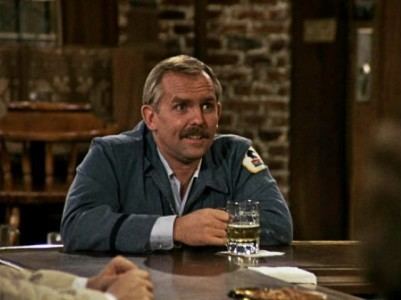
In 1982, when John auditioned for a new sitcom that took place in a neighborhood bar, he was asked to read for the role of one of the establishment's best patrons, Norm Peterson. The audition went well enough, but John could tell he wasn't going to get the part. Figuring he had nothing to lose, he asked the producers of Cheers if they'd cast the role of a bar know-it-all. They hadn't even considered having that part but thought it was a great idea. And thus the legend of Clifford Clavin was born. Cliff was part of Cheers from episode one (although John didn't officially become a series regular until season two) straight through to the end, eleven seasons later. John's last appearance as Cliff didn't happen until nine years after the end of Cheers, when he showed up on an episode of Frasier. Over the course of the series, John earned two Prime Time Emmy nominations for his work as the insufferable barfly.

Image copyright Pixar
John first became part of the Disney family in 1995 and if we're being specific, he's a ubiquitous part of the Pixar clan. For Pixar's first feature film, Toy Story, John was cast in the role of Hamm, a piggy bank who has trouble keeping his money safely inside. Three years later, he played the role of P.T. Flea, the Ring Leader of the traveling circus, in A Bug's Life. From then on, he's been considered Pixar's lucky charm and has had a least a cameo in almost every movie the studio has done since. You've heard his voice as: Hamm in Toy Story 2 and 3, The Abominable Snowman in Monsters, Inc and Monsters University, the school of Moonfish in Finding Nemo, The Underminer in The Incredibles (1 and 2), Mack the Truck in all three Cars pictures, Mustafa the Waiter in Ratatouille, John in WALL-E, Tom the Construction Worker in Up, Gordon the Guard in Brave, Fritz in Inside Out, Earl the Velociraptor in The Good Dinosaur, Bill the Crab in Finding Dory and Juan Ortodoncia in Coco. He also appears in the Planes movies, which are set in the world of Cars but not Pixar films, as Harland the Jet Tug and Brodi.

Image copyright Pixar
Outside of Pixar, John hosted his own reality show on the Travel Channel from 2003-08, John Ratzenberger's Made in America, that highlighted products produced by American companies. He guest starred on four episodes of 8 Simple Rules during the first season. He's been in commercials for everything from Quality Hotels to Zaxby's chicken to Pitney Bowes. John has also made guest appearances on dozens of television shows as varied as Bones and Lego Star Wars (reprising Major Derlin from Empire). His next project is also a reprisal: later this year you'll be able to hear him once again as Hamm when Toy Story 4 hits the big screen.

Tuesday, March 26, 2019

March 24 - R. Lee Ermey


Image courtesy stripes.com
On this day, in 1944, Ronald Lee Ermey was born in Emporia, Kansas. After spending his formative years on a farm near Kansas City with his five brothers, Lee and his family moved to Zillah, Washington when he was fourteen. The transition did not go well for the teenager. At the hearing for his second arrest for criminal mischief, the judge gave Lee, then seventeen, a choice: go to jail or enlist. He choose the military and never looked back.

In 1961, Lee became a United States Marine. After surviving training in San Diego, he spent almost four years in aviation support. He then got a position that would serve him well beyond the two years he actually held it: drill instructor. From 1965-67, Lee honed his skills, barking orders at new recruits and presenting an aura of absolute command. He then transferred to the Marine base in Okinawa, Japan, which was just a short hop away from South Vietnam. Starting in 1968, Lee spent 14 months fighting the Viet Cong as part of the Marine Wing Support Group 17. He advanced to the rank of E-6, Staff Sergeant, and earned numerous awards including: a Meritorious Unit Commendation, a Good Conduct Medal with two bronze stars, the National Defense Service Medal, the Armed Forces Expeditionary Medal, the Vietnam Service Medal with one silver star, the South Vietnamese Gallantry Cross with palm, a South Vietnamese Presidential Unit Citation, the South Vietnamese Campaign Medal, a Rifle Marksman Badge and a Pistol Sharpshooter Badge. In 1972, Lee received a medical retirement due to injuries sustained in the line of duty.

Image courtesy pressfrom.info
As a veteran, Lee began attending the University of Manila in the Philippines on the G.I. Bill. While there, he got a part as a Marine drill instructor in The Boys in Company C, a picture that was filming nearby. Boys was one of the first movies to come out after the Vietnam War that was about the Vietnam War. This led to a role as a chopper pilot in Francis Ford Coppola’s Apocalypse Now (Lee also served as a technical advisor) and a handful of other parts over the next several years. His breakout role came in 1987 in a film similar in plot to Boys, Stanley Kubrick’s Full Metal Jacket. As Gunnery Sergeant Hartman, Lee earned Golden Globe and Boston Society of Film Critics nominations.

Image courtesy pinterest.ru
Jacket jumpstarted Lee’s acting career and he would spend the next three decades playing… well, mostly drill sergeants. But let’s face it, he was really good at it. Whether it was a one off on The Family Guy or Dr. House’s ex-military father on House or a drill-sergeant –turned-therapist selling GEICO Insurance, Lee became Hollywood’s quintessential military man. Sure he’s played a minister on The X-Files and a registered sex offender on Law and Order: SVU, but the overbearing drill master was his gig and he knew it. Lee even had a couple of shows of his own on the History Channel that leaned into the persona, Mail Call in which he answered viewer questions about various military topics and Lock n’ Load with R. Lee Ermey which chronicled the history of various weapons.

Image copyright Pixar
Naturally, when Pixar was creating the first fully computer animated feature, Toy Story, released in 1995, they picked Lee to lead their band of green army men. He voiced the role of Sarge in all three of the original films, as well as a handful of direct-to-video pieces and video games. Whether admonishing Woody to do the right thing or reminding everyone that we never leave a man behind, Sarge gave both backbone and heart to the world of toys.

Throughout his life, one of Lee’s joys was to spend time at the Marine base in San Diego talking to new recruits. In 2002, for his tireless dedication to the Corps, he was given an honorary promotion to E-7, Gunnery Sergeant. He passed away on April 15, 2018 in Santa Monica, California and was laid to rest in Arlington National Cemetery. He was 74.

Saturday, March 16, 2019

March 13 - Joe Ranft

Image courtesy collider.com
On this day, in 1960, Joseph Henry Ranft was born in Pasadena, California. As a kid, Joe developed two great passions in his life: magic and film. By the time he was 15, he was a member of the Magic Castle Junior Group (which, as anyone who is into magic knows, is a big deal). Unlike most of the members of that group, who go on to become professional magicians, Joe felt the pull of comedic storytelling a little bit more and enrolled at CalArts to study character animation. Working alongside fellow students like John Lasseter and Brad Bird, Ranft eventually caught the eye of Disney with a student film called Good Humor. After graduating in 1980, he moved right into the Television Department at the Disney Studios (knowing full well that if it didn't work out, he always had a bit of magic in his back pocket to rely on).

Image copyright Pixar
The first five years of Joe's career weren't exactly what anyone would call auspicious. He worked on all kinds of projects, developing stories and creating storyboards to go along with them, but none of them were ever actually produced. Eventually Joe was transferred into the Feature Animation Department where he had the good fortune to apprentice under one of Walt's Nine Old Men, Eric Larson and his prospects picked up considerably. Joe spent the rest of the Eighties and early Nineties working on the stories of films like Oliver and Company, The Little Mermaid, Beauty and the Beast, Aladdin and The Lion King. He was Story Supervisor on The Rescuers Down Under and Storyboard Supervisor for The Nightmare Before Christmas and James and the Giant Peach.

Image copyright Pixar
In 1991, Joe's old schoolmate, John Lasseter, asked him to join his new venture, a studio called Pixar. The move earned Joe his only Oscar nomination (for Best Original Screenplay on Toy Story). In addition to being Story Supervisor on Toy Story and A Bug's Life, he began to get more heavily into voice work (hey, Pixar was a small place at the time; everyone had to do multiple things). He'd already provided some screams in Beauty and the Beast and was Igor, Dr. Finkelstein's assistant, in The Nightmare Before Christmas, but now he actually got dialogue. Joe is the voice of Lenny the Binoculars in Toy Story, Heimlich in A Bug's Life, Wheezy in Toy Story 2, Pete "Claws" Ward in Monsters, Inc., Jacques the Shrimp in Finding Nemo, and Doggy Loggy in Chicken Little.

In the early Aughts, Joe was elevated to co-director on Cars. He provided the voices for Red and Peterbilt, but never got to see them on the big screen. Tragically, on August 16, 2005, Joe was a passenger in car that lost control, crashed through a guardrail and fell 130 feet into the Navarro River in Mendocino County, California. Joe and the car's driver were killed on impact. Both Cars and Tim Burton's Corpse Bride (which Joe had been executive producer for) were dedicated to his memory. He was posthumously made a Disney Legend in 2006 and given the Windsor McCay lifetime achievement award at the 2016 Annie Awards. He was only 45 at the time of his death and was a loss felt throughout the entire industry.

Sunday, February 17, 2019

February 10 - Jim Varney

On this day, in 2000, James Albert Varney Jr. passed away in White House, Tennessee from lung cancer. Born in Lexington, Kentucky on June 15, 1949, Jim showed a capacity for memorizing long passages from books at an early age. He was also an excellent mimic, especially with cartoon characters. When he was eight, his mom started him in children's theatre classes. By the time he was in high school, Jim was winning state drama competitions. At fifteen, he played Ebenezer Scrooge in a local production and he was performing professionally in nightclubs just two years later. He went on to study the Bard at a theatre in Virginia and performed regularly at Opryland USA in its early years. A big chunk of the rest of the Seventies was spent at the Pioneer Playhouse in Danville, Kentucky, performing in classics like Blithe Spirit to houses of only a few dozen people. Then came the role of literally a lifetime.

In 1980, Jim was cast in a television commercial as a character known as Ernest P. Worrell. That first ad was for an appearance by the Dallas Cowboy cheerleaders at an amusement park near Bowling Green, Kentucky, Beech Bend Park. Ernest then literally exploded into the Eighties. For the next decade, Jim performed the lovable character selling everything from natural gas to cars to grocery stores to dairy products. He was franchised out all over the country. Nearly identical ads would run for Tyson's Toyota in Virginia and Audubon Chrysler in Kentucky, just the name of the business would be changed. I remember Ernest in commercials for Country Fresh growing up in West Michigan. And of course, his old buddy Vern, an unseen, unheard character that was essential to the Ernest persona was always right there with him, KnoWhutImean?

Image copyright Touchstone Pictures
The popularity of Ernest lead to ventures outside of 30 second commercials and, for longer than you might expect, Jim was able to sustain the bigger projects. The first leap was into movies. Directed by the same guy who helped develop the commercials (and would direct all subsequent Ernest films), John R. Cherry III, Ernest was first used in a film  called Dr. Otto and the Riddle of the Gloom Beam. Jim played Dr. Otto, an evil villain with an extra hand on his head, who changes his appearance at the end of the picture to Ernest in order to escape detection. It was the next film Jim did that really catapulted his fame and brought him into the Disney family.

In 1987, Touchstone Pictures co-produced and distributed Ernest Goes to Camp, the first film that focused on Ernest P. Worrell. It was a hit. Made for only $3 million, Camp was in the top five films for the first three weeks it was open and grossed over $23 million. Touchstone would release three more Ernest movies over the next four years. Ernest Saves Christmas (1988) opened at #2 and grossed over $28 million, Ernest Goes to Jail (1990) opened at #3 and grossed over $25 million, and Ernest Scared Stupid (1991) which only grossed $14 million.

Image copyright DCi
Due to the tepid box office of Stupid, Touchstone stopped its distribution deal of the Ernest films, which turned out to be the smart move. The next picture, Ernest Rides Again, only grossed $1.4 million on a $7 million budget, making it the last theatrically released movie featuring the character. Believe it or not, there would be four more direct-to-video Ernest films before the franchise finally petered out in 1998.

The movies weren't the only other incarnations of Ernest though. In 1988, Jim starred in a Saturday morning kid's show, Hey Vern, It's Ernest! A delightfully weird amalgamation of different characters and sketches (my brother and I looked forward to it every week), Jim would be awarded the Daytime Emmy for Outstanding Performer in a Children's Series for his work, even though Hey Vern only lasted one season. Interestingly, while Disney wasn't involved with the production of the series, it did own the company that was for a few years in the late Nineties.

Image copyright 20th Century Fox
Ernest's final arena of exposure (but thankfully not Jim's) was actually as part of an attraction. When Cranium Command opened with the Wonders of Life pavilion at Epcot in 1989, the pre-show involved General Knowledge showing new recruits different types of brains. A picture of Albert Einstein stood in for someone who used his brain and the type of person who didn't? You guessed it, Jim as Ernest.

Outside of Ernest, Jim enjoyed a broad mixture of successes and failures. He gained critical praise for his portrayal of Jed Clampett in 1993's film version of The Beverly Hillbillies. He starred in The Rousters with Chad Everett on NBC for one season (it just couldn't compete opposite The Love Boat). He was a regular cast member on the infamous television failure Pink Lady and Jeff. He was critically praised again for his work as an abusive father in 100 Proof.

Image copyright Pixar/Disney
Jim came back into the world of Disney in 1995 as the voice of the classic toy Slinky Dog in Pixar's first film, Toy Story. He would reprise the role for 1999's Toy Story 2. For Atlantis: The Lost Empire, Jim brought Cookie Farnsworth to life. He was also featured in an episode of Hercules: The Animated Series as King Ephialtes.

Unfortunately, Jim had been a chain smoker all his life (in spite of the fact that he filmed an anti-smoking PSA as Ernest in the early Eighties). While filming Treehouse Hostage in late 1988, he developed a persistent cough. When that movie wrapped, he went to a doctor and was diagnosed with lung cancer. Jim would continue working, reportedly throwing his cigarettes away, but it was too late. Less than two years later he would pass away (Atlantis was released posthumously). He was only 50 years old.

Saturday, December 8, 2018

December 3 - Andrew Stanton

Image courtesy of Twitter.com
On this day, in 1965, Andrew Stanton was born in Rockport, Massachusetts. Andrew graduated from CalArts and cut his professional teeth as a writer on the late Eighties television series Mighty Mouse: The New Adventures. In 1990, he became the ninth employee of a fledgling studio named Pixar.

Andrew was only the second animator to be hired by Pixar because they weren't really an animation company at the time. It was all about selling their high-end computer system to produce animation, not necessarily making any themselves. Andrew's job was to make commercials and small pieces of animation that showed off the computer's capabilities. But then the idea for Toy Story came along and changed everything.


Image copyright Disney
Along with John Lasseter, Pete Doctor and Joe Ranft, Andrew helped conceive of the plot of Toy Story and develop it into a script. After Josh Whedon, of Buffy the Vampire Slayer fame, contributed some ideas, Andrew took the script and gave it a thorough dialog rewrite. His revisions worked wonders for the film as Toy Story became the first animated movie to be nominated for the Best Original Screenplay Oscar.  Following that success, Lasseter asked Andrew to work on the script for Pixar's second film, A Bug's Life. The film's writers were having a hard time getting the parts with the circus bugs and the regular ants to mesh together. Andrew wrote a draft in a single day that fixed everything up nicely.

Image copyright Disney
Following A Bug's Life, Andrew headed up the team that wrote Toy Story 2 (he also provided the voice for Emperor Zurg) and then co-wrote the script for Monsters, Inc. Monsters' director, Pete Doctor, credits Andrew with the idea that everything in the monsters' world is powered by screams.

For his next project, Andrew took inspiration from how overprotective of his own son he was and Finding Nemo was born. He co-wrote the script, was given the directorial reins for the first time as well and he once again donned the performer's hat as the voice of the 150 year old sea turtle, Crush. In spite of Michael Eisner's lack of confidence in Nemo, it went on to be the highest grossing film of 2003, became the highest grossing animated film ever after passing The Lion King, earned Andrew another nomination for Best Original Screenplay and won the Oscar for Best Animated Feature.

Image copyright Disney
The success of Nemo gave Andrew the confidence to tackle a far more experimental movie: WALL-E. Even though there isn't any dialog in the first thirty minutes of the film, Andrew knew that if he made them charming enough, audiences wouldn't mind. He co-wrote the script based on an idea he hatched with Pete Doctor and directed WALL-E to another big success, in spite of (or maybe because of) its commentary on issues ranging from obesity to consumerism to the environmental impact humans are having on the planet. The script was nominated for the Best Original Screenplay Oscar and Andrew picked up his second Best Animated Feature statue.

Since Disney's official acquisition of Pixar in 2006, Andrew has been the vice president of creativity at Pixar. He's become an executive producer and creative mentor on projects as diverse as Brave, Inside Out and The Good Dinosaur. He was part of the writing team for both Toy Story 3 (earning a Best Adapted Screenplay Oscar nomination) and Toy Story 4, coming out next year. Andrew was also the writer and director for Nemo's sequel, Finding Dory, which passed the one billion dollar mark in worldwide ticket sales.

Image copyright Disney
Now before anyone starts thinking that everything Andrew touches turns to gold, I do need to address the blemish on his resume (and it's a big one). He has one live action directing credit to his name so far: a science fiction film based on novels by Edgar Rice Burroughs (think Tarzan) called John Carter. To be fair, many studios had spent decades trying to adapt Burroughs' Barsoom novels for the big screen, including more than one go at it by Disney. Some things are just not meant to be filmed. After spending a total of 350 million dollars (making it one of the most expensive films ever produced), John Carter received decidedly mixed reviews and failed to earn back its budget, even though it set an opening day record in Russia. Disney ended up taking a 200 million dollar write off on the project. Luckily for Andrew, his track record in animation meant he was just embarrassed after that disaster, not unemployed.

Image copyright Netflix
Outside of Disney, Andrew has directed a few things for television, most notably two episodes of Netflix's smash hit, Stranger Things and an episode of AMC's Better Call Saul. He may be trying to sharpen his skills up a bit as he's expressed interest in directing another live action feature, but we'll see about that. Otherwise he continues to shepherd the Disney/Pixar crew in the fine art of animation, looking on proudly at the release of things like Ralph Breaks the Internet.

Sunday, December 2, 2018

November 28 - Randy Newman

Image courtesy of Twitter.com
On this day, in 1943, Randall Stuart Newman was born in Los Angeles, California. Born on his father's 30th birthday, Randy spent some of his youth living in New Orleans before his family returned to Los Angeles at the age of 11. You could say that he later went into the family business: three of his uncles (Alfred, Lionel and Emil) and four of his cousins (Thomas, Maria, David and Joey) are also film composers. Although Randy didn't start out that way.

At the ripe old age of 17, Randy became a professional songwriter. He released a single, Golden Gridiron Boy, in 1962 as a performer but it was a flop and he wouldn't perform again for several years because of it. The same year, Randy gained exposure (and the royalties that come with it) when The Fleetwoods released his song They Tell Me It's Summer as the B-side of one of their hits. For those of you kids who don't know what a B-side is, go ask your grandparents. Throughout the rest of the Sixties, Randy's songs were recorded by such artists as Dusty Springfield, Gene Pitney and Petula Clark. He even saw several of songs become top 40 hits in the United Kingdom during this time.

Photo lifted from Wikipedia.com
In 1968, Randy released his first album as a performer, the self titled Randy Newman. It didn't catch on with audiences but was a critical success and many of its songs were covered by other groups, so he still made money. The track I Think It's Going to Rain Today became something of a standard (the best known version is perhaps Bette Midler's on the Beaches soundtrack). Throughout the Seventies, Randy continued to write songs for other groups (like Mama Told Me Not to Come for Three Dog Night) while occasionally putting out albums of his own. The early albums never really became great commercial successes, but Randy built a large following anyways.  In 1974, he had his first success when the album Good Old Boys reached number 36 on the charts. Three years later, he cracked the top ten with Little Criminals featuring the hit song Short People.

Image copyright HBO Films
Randy's work composing for film actually began in 1971 when he penned the score to Norman Lear's Cold Turkey. It would be ten more years, though before he did it again. The wait was worth it. For 1981's Ragtime, Randy was nominated for two Academy Awards. Thus began his second career of composing both film scores and songs used in those films. His work can be heard on such movies as Pleasantville, Awakenings and Meet the Parents. Not only did he write songs for The Three Amigos, he co-wrote the script and provided the voice for the singing bush.

Image copyright Disney
Randy has become a staple for Pixar releases. Starting with their first feature, Toy Story, Randy has not only scored a total of eight Pixar films so far, but also written and performed songs for some of them: A Bug's Life, Toy Story 2 and 3, Monsters, Inc., Cars, Monsters University and Cars 3. He will return next year as the composer on Toy Story 4. His work on those eight movies garnered him several Oscar nominations, including two wins for Best Original Song for Monsters, Inc and Toy Story 3. The win for Monsters, Inc. actually ended his unwanted distinction for the most nominations without a win after losing 15 times. He still quips that his percentages aren't great as he's only won twice in 20 nominations.

Image copyright Disney
Randy also has the honor of scoring the last traditionally animated Walt Disney Pictures feature, 2009's The Princess and the Frog. Set in Louisiana, the mix of jazz, zydeco and blues was perfectly suited to Randy's style and he even got an animated version of himself in the film, albeit as a firefly. Two more Oscar nominations came his way for the songs Almost There and Down in New Orleans. Randy had previously written the music for Disney's version of James and the Giant Peach as well.

At the age of 75, Randy continues to write new songs, provide the scores for new movies and perform. He released an album just last year called Dark Matter. He scored last year's The Meyerowitz Stories and has at least one coming out next year.  In 2002, he was inducted into the Songwriters Hall of Fame, became a Disney Legend in 2007, and a Rock and Roll Hall of Fame honoree in 2013. In short, he shows no signs of slowing down much. And for fans of his quirky songs and style, that's a very good thing.

Sunday, November 25, 2018

November 22 - Toy Story

Image copyright Disney
On this day, in 1995, Pixar Animation Studios, in partnership with Walt Disney Pictures, generally released its first feature film, Toy Story. Not only is the movie a first for Pixar, it is also the first feature film to be completely computer animated.

Toy Story is directed by one of Pixar's founders, John Lasseter. John's first encounter with computer animation was with the Disney company when he worked on Tron. He became completely enthralled with the new medium and suggested that The Brave Little Toaster be done using it exclusively. Disney disagreed and fired him. John then spent some time at LucasFilm before co-founding Pixar. In 1988, he produced a short, Tin Toy, in order to show off the capabilities of a computer his company had developed, the Pixar Image Computer. Tin Toy would go on to win the Academy Award for Best Animated Short. From that point forward, Pixar stopped trying to sell computers (which, while really advanced for the time were not flying off the shelves) and began creating animation in earnest. Disney took notice of Tin Toy's success and tried to lure John back into the fold. He decided to stay with Pixar and inked a distribution deal with Disney instead.

Image copyright Disney
The original script of Toy Story looked nothing like the final film. There was a character named Woody, but he was an evil ventriloquist doll who was paired with Tinny from Tin Toy. Other than the name Woody, the only thing to survive from that first treatment was the conviction that the movie would center around the fact that a toy's deepest desire was to be played with by a child and how that desire affected their entire existence. The film's production also suffered under the interfering of Jeffrey Katzenberg, then chairman of the studio. Jeffrey's insistence that the characters be more and more edgy (Tom Hanks complained at one point that Woody had turned into a jerk) and that tons of adult references be included actually caused the whole process to grind to a halt. A three month recess was called while the script was reworked into the final product.

Image copyright Disney
The result was phenomenal. Starring Tom Hanks and Tim Allen, both in their first animated roles, the buddy film was the highest grossing movie its opening weekend (and the next two). Made on a budget of 30 million dollars, Toy Story would take in over 370 million making it the highest grossing film of the year. Universally acclaimed, it would not only give a boost of enthusiasm to animation in general (and forecast the doom of hand-drawn films) but would establish Pixar as a powerhouse studio. Toy Story would win a Special Achievement Oscar, be nominated for three other Oscars (Best Song, Best Score and Best Original Screenplay), garner two Golden Globe nominations and win eight Annies. Two sequels followed, both of which were considered as good as (or even better than) the original, as well as several shorts and television specials. Attractions based on the franchise abound at Disney parks all around the world. A fourth Toy Story movie will be released in the summer of 2019. Only time will tell if it is a worthy successor.

Wednesday, October 10, 2018

October 10 - Jodi Benson

On this day, in 1961, Jodi Marie Marzorati was born in Rockford, Illinois. In 1984, she married actor/singer Ray Benson to become Jodi Benson (no she isn't related to the voice of the Beast, Robbie Benson; that's not his real name). In 1989, she dove under the sea and became a Disney legend.

Like many great talents, Jodi's career began on Broadway. She played Virginia in Marilyn: An American Musical, supposedly the only authorized musical about Marilyn Monroe. Jodi then originated the role of Doria Hudson in 1986's Smile, a musical that takes a look behind the scenes of a fictional beauty pageant. Smile's book and lyrics were written by Howard Ashman, who would go on to write the lyrics for a certain mermaid as well. Another funny thing about Smile, at least for Jodi, is that Doria's big number is called "Disneyland." Of course that wouldn't be funny for a few more years, but you get it.

In 1989, Jodi was part of the cast of Welcome to the Club, a musical about guys in jail for being delinquent on their alimony payments and the wives who wanted their money. You heard that right. And, as you might have guessed, it was a colossal flop. The significance to our story is that Samuel E. Wright was also in that cast and he played Sebastian the Crab in The Little Mermaid. And Jodi was in that movie, too.

In an interview I saw once, Jodi remembered that after she got the part of Ariel in The Little Mermaid, most of her friends kind of ridiculed her for doing a Disney movie. You have to remember that Disney's animation department had been in a dark, dark period for a couple of decades. It hit bottom with The Black Cauldron and, even though it was on the upswing, wasn't yet in a position of being a desirable gig. But Jodi was excited. Reports were coming in from the little studio Howard Ashman and Alan Menken were writing songs in that every time the door opened and their fantastic music would spill out into the hall, doors to other studios would start opening and people were asking "Where is that music coming from?" She probably didn't know that she was involved in her life defining role, but she knew that something special was happening.

When Mermaid premiered in 1989, the world went bonkers for its redheaded heroine. The film won Academy Awards, Golden Globes and Grammys and ushered in a Renaissance for Disney animation. No longer would anyone be ridiculed for wanting to do it. Jodi would work almost exclusively for Disney for years, making appearances at trade shows, theme park attraction openings, basically anywhere the company could get mileage out of having Ariel there. She would continue to voice Ariel in two sequels to Mermaid, a television series, video games, episodes of various other shows (like House of Mouse), and the attraction Mickey's PhilharMagic at the Magic Kingdom. You will be able to hear her as Ariel once again later this year in Ralph Breaks the Internet.

Ariel is the role you probably knew Jodi did. What you may not know is that she is also the voice of Barbie in the Toy Story films. Barbie wasn't in the first Toy Story because Mattel wasn't willing to give Pixar the rights to her. By the second film, Mattel was falling all over themselves to get her in. Jodi provided her perky voice for Toy Story 2, Toy Story 3, various shorts and will be doing it again next year in Toy Story 4. She's also been Lady in Lady and the Tramp II , Anita in 101 Dalmations II and Weebo, the robot in Flubber. Jodi made a rare live action appearance in the 2007 movie Enchanted as Sam, the assistant to Patrick Dempsey's character (she was actually one of three actresses who played Disney princesses to appear in that film).

As if all that work for Disney wasn't enough, Jodi has done all sorts of other roles over the years as well. On Broadway, she earned a Tony nomination in 1992 for Crazy For You and was the narrator in a 1998 production of Joseph and the Amazing Technicolor Dreamcoat. Jodi has performed as a soloist all over the world with orchestras including the Boston Pops and the Tokyo Symphony. Her voice has been heard in Don Bluth's Thumbelina, Dreamworks Joseph: King of Dreams and Universal's Balto series.

In 2011, Jodi, who was already legendary in the Disney universe, was named an official Disney Legend. What will we see from her in the future? I'm sure it will include more Ariel and more Barbie, but hopefully it will also include new and exciting roles we can't even dream of at the moment.

Also on this day, in American history: Earle Dickson