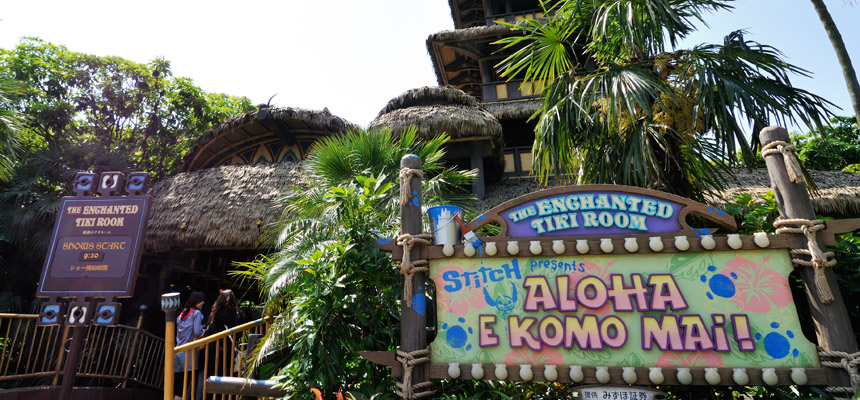
Showing posts with label The Enchanted Tiki Room. Show all posts

Sunday, July 28, 2019

July 25 - Harriet Burns

Image courtesy disneyhistoryinstitute.com
On this day, in 2008, Harriet Burns passed away in Los Angeles, California. Born as Harriet Tapp in San Antonio, Texas on August 20, 1928, growing up during the Great Depression really brought out her creative side. Toys and games couldn't be purchased, they had to be created out of materials that could be found. How imaginative was Harriet as a child? While most kids would give their pet goldfish a name like Goldie, she named hers Tackaonsitgo Popeye Gotsinyammer Cockapinay Kasuzyanna Karachi Dianashey Brianashey Jickalicky Jackaboney Christianna More and could actually remember the whole name every time. Was she destined to become an artistic Legend? Whether you believe in that sort of thing or not, yes.

Image courtesy waltdisney.org
Following high school, Harriet's father told her that he would only pay for college if she majored in Home Economics (yes, that was, and still is, a thing). She agreed and enrolled at Southern Methodist University in Dallas but, in the end, pulled one over on dear old dad by changing her major to Art, kind of forgetting to tell him about that. After graduating from SMU, Harriet spent another year at the University of New Mexico studying advanced design (no word on whether or not dad paid for that). In 1951, she married her college sweetheart, Bill Burns and did some work designing displays for Neiman Marcus in Texas.

In 1953, the Burns family moved to Los Angeles, California so Bill could try his hand at a career in acting. It didn't work out terribly well. In spite of the fact that she had a one-year-old daughter at home, Harriet decided that she'd better find some work to help pay the bills. On the basis of her previous design work, she was able to get a position with Dice Display Industries Cooperative Exchange, a Hollywood based prop company. For a little over a year, Harriet designed and built props for shows like the Colgate Comedy Hour. She was also part of a team that designed and built sets for the floor shows at Las Vegas hotels like the Dunes. Near the end of her short time with Dice, Harriet was a leader of the team that designed Santa's Village, a small theme park in Lake Arrowhead, California. Even with all that steady work, Dice Display still went belly up in early 1955. One of Harriet's co-workers decided to  return to his former place of employment and suggested that she try to get a position there as well.

Image copyright Disney
Harriet heard rumors that the Walt Disney Studio wasn't hiring women right at the moment, but she applied anyways. She later quipped that they must have thought her name was Harry because she got the job. Her first assignment was on a new television show the studio was working on, The Mickey Mouse Club. She started out making props but soon was helping to design and build the iconic clubhouse set that would feature prominently in every episode. Harriet worked her magic at a station right next to Fred Joerger, who was one of two people in a new department known at that time as Model Department. Fred's admiration of her talents would change the course of her career (as well as the look and feel of Disney theme parks).

Image courtesy d23.com
Fred worked with Wathel Rogers doing a very specific job that Walt felt needed to be done. They were making models of everything that was being built for the company's new theme park over in Anaheim, Disneyland. Fred felt that he and Wathel could use the help of Harriet in their model work and suggested to Walt that she become part of their department. Walt agreed and Harriet was transferred in. She was only the third person, and the first woman, to become what would eventually be known as an Imagineer. It's a position she would hold until her retirement over thirty years later.

Harriet's first task in the Model Department (soon to be renamed WED Enterprises), was to create a detailed model of Sleeping Beauty Castle, the most iconic landmark in Disneyland. Once the park was opened in July 1955, the trio at WED continued making models of attractions, but now they started depicting potential rides instead of existing ones. One of Harriet's first projects of this kind was to design and build a model of the Matterhorn Bobsleds ride, a 1/100th scale replica of an attraction that was a 1/100th scale replica of the actual Matterhorn in Switzerland.

Image courtesy pinterest.com
As time went on, WED Enterprises began adding more and more people to its ranks and taking on more and more projects. Designing and building four attractions for the 1964 World's Fair pushed everyone's creativity to the limit and everyone, including Harriet, showed they were more than up to the task. Harriet was part of two teams for the Fair, the one working on Great Moments with Mr. Lincoln for the State of Illinois pavilion and the one creating the Carousel of Progress for the General Electric pavilion. Both of those projects have stood the test of time. Great Moments is still running on Main Street USA in Disneyland and the Carousel is still turning in Tomorrowland in the Magic Kingdom.

Image courtesy imagineerharriet.com
During the same time work was progressing on the rides for the World's Fair, Harriet was also busy doing another role she played with WED: she was a figure finisher. That meant she was one of the people who carefully applied paint and other materials to both Audio-Animatronics and the sets of attractions to give them their show ready or finished look. The first attraction she did this for was the Submarine Voyage which opened in 1959. It was the next one, though, that really showed off her talents. While doing finishing work on The Enchanted Tiki Room, hand applying thousands of feathers to the shows dozens of birds. she noticed a problem. When the four main birds breathed in and their chests puffed out, everything looked fine, but when they exhaled and their chests went back to normal, their skin looked bunched, kind of like Jose and the others were suffering from mites. Harriet solved this problem one day in a meeting. Walt was wearing a cashmere sweater and she couldn't help but notice that the knitted fabric moved at his elbows exactly like the Imagineers had envisioned the birds chests moving. Four custom made cashmere bird skins later and the bunching problem was fixed.

Image courtesy hauntedmansion.fandom.com
Harriet was deeply involved in the design Disneyland's first major expansion, New Orleans Square, and all the restaurants and attractions that call it home. She made a model of the entirety of the Pirates of the Caribbean ride and was one of the attraction's main figure finishers. For anyone wondering where Imagineers get their inspiration from, it just might be you. The pirate that sits on the bridge swinging his leg and singing as guests float under him was based on Harriet's mailman at the time. She was also part of the design team that created the Haunted Mansion just a couple of years later. Sharp eyed guests will notice a tombstone at the Mansion about an opera singer who shares a name with Harriet (it's not a coincidence; all the tombstones at the Mansion honor the attraction's original designers). Walt was so impressed with her talents, he featured Harriet on several episodes of the Wonderful World of Disney throughout the Sixties, showcasing her work in the Tiki Room, Pirates and the World's Fair rides.


Image copyright Disney
Harriet was part of Walt Disney Imagineering until her retirement in 1986. Not only did she work on stuff at Disneyland but she was also influential on the designs of Walt Disney World, Tokyo Disneyland and EPCOT Center. She would continue to spend the rest of her life creating magic just on a smaller scale, doing it exclusively for her grandchildren and their friends. She also remained highly active in the Santa Barbara arts community, where she maintained her home. In 1992, she was honored with her very own window on Main Street USA in Disneyland, the first woman to ever receive one. It reads "The Artisans Loft, Handmade Miniatures by Harriet Burns." In 2000, the pioneering Imagineer was officially declared a Disney Legend. She passed away eight years later from complications brought on by a heart condition. She was 79.

Wednesday, July 3, 2019

June 23 - The Enchanted Tiki Room

On this day, in 1963, the Enchanted Tiki Room began serenading guests in Disneyland's Adventureland. As WED Enterprises (today's Imagineering Department) was working on attractions for the 1964 World's Fair, they were also looking for ways to improve Disneyland. One of the technologies they were developing was a kind of robotics eventually trademarked as Audio-Animatronics (we'll see why they got that name in a bit). The first dive into that pool came when Walt brought a mechanical bird back from a trip to New Orleans and set his Imagineers to trying to upgrade its movements. The team then moved on to a figurine that tap danced like Buddy Epsen. They continued to expand their knowledge, making more and more complex figures and systems. Eventually they would wow audiences with a likeness of Abraham Lincoln at the Fair, but first Walt had his whiz kids work up a little something for Disneyland.


Originally, the Enchanted Tiki Room was going to be a Polynesian themed restaurant, filled with birds and flowers that would sing to guests as they ate. The large fountain in the middle of the theater was supposedly going to be a coffee service station. That plan was quickly abandoned in favor of more Audio-Animatronic figures appearing in a full blown show. Underneath the theater, was an enormous room filled floor to ceiling with all the computers necessary to run all the figures. Because of the enormous amount of heat generated by those computers, the Tiki Room became the first building in Disneyland to include air conditioning. While that might entice guests into the show today, it actually wasn't as much of a selling point in 1963; the technology itself was impressive enough to fill the seats.


Image courtesy electro-tech-online.com
By today's standards, the birds, flowers and totems of the Tiki Room are so basic they aren't even sophisticated enough to be considered quaint. But for guests of the time, watching an entire room seemingly come alive by itself was amazing. How did they do that? was a question pretty much on everyone's lips. A lot of folks today probably think they know how they did that, but most of them would only be partially right at best. The clue comes from how the technology was named, Audio-Animatronics. Yes there an electrical impulse that moved something mechanical, but that impulse was actually initiated by sound.


Image courtesy pinterest.com
Each individual movement requires its own channel and each channel requires its own reel of magnetic tape, that's why figures in the Tiki Room are so simple. Less movements means less reels which means less computers that need to stay synched up. Every movement has two positions, a resting place and a moved place. In other words the movement is either on (moved) or it is off (resting). Each reel of magnetic tape has a certain tone recorded on it that, when played, vibrates a metal reed, closing a circuit, sending a pulse of electricity to a pneumatic (or air driven) valve that causes whatever movement it’s connected to (eye blink, wing flap, mouth opening, etc). When the electrical pulse is spent, the movement returns to its resting position and waits for the next one. The tones are laid out on the tape at precise intervals to make, in the Tiki Room’s case, it appear that all the figures are dancing and singing in time with a recorded soundtrack. That’s why it took an entire room of computers, running hundreds of reels of tape to make the whole thing work. Nowadays, of course, we have fancy computing systems with enough power that you could probably run a set up like the Tiki Room from a couple of laptops (and hardly anyone even knows what magnetic tape is), but in 1963 this was top of the line stuff.


Image courtesy undercovertourist.com
As mind boggling as the technology was, Walt didn’t rely solely on gizmo’s to make the show work. He got the Sherman Brothers to write another earworm, The Tiki Tiki Tiki Room (they were writing their slightly more famous earworm, It’s a Small World, around the same time). He got the best voices he could find for his four macaw stars, half of which actually came from in-house. Wally Boag and Fulton Burley, who played the Mexican bird, Jose, and the Irish bird, Michael, respectively, were regular cast members across the park at the Golden Horseshoe Revue in Frontierland for decades. The quartet is rounded out by Thurl Ravenscroft (who also appears in The Haunted Mansion) as Fritz, the German parrot, and Ernie Newton (who was also the singing voice of Boo-Boo Bear) as Pierre, the French parrot. Walt also had some of his best Imagineers working on how the figures looked, Legends like Harriet Burns and Joyce Carlson. The attention to detail paid off.

Image copyright Disney
The Enchanted Tiki Room was a hit from the beginning. An extra Audio-Animatronic bird, placed near the entrance in an effort to get people to come see the show, caused traffic jams of guests trying to see just what this new thing was. Interestingly, entrance to the Tiki Room cost an extra 75 cents, supposedly because technically WED Enterprises owned it, not Disneyland, and it was therefore a separate attraction from the rest of the park. The popularity of the show saw an identical version installed in the Magic Kingdom in Walt Disney World right on time for opening day and Tokyo Disneyland was also Enchanted at its opening. The first two Tiki Rooms are still running just as they did back in the day (we won’t talk about the couple of years that Florida’s version was “Under New Management”), albeit with upgrades in the technology that run them, but Tokyo’s has undergone a complete revision. It’s now a Stitch themed Hawaiian show and no longer uses the original theme song. Speaking of which, you know you’re dying to sing a few verses of it, so All together now, in the tiki, tiki, tiki, tiki, tiki room, in the tiki, tiki, tiki…

Thursday, May 23, 2019

May 22 - Thurl Ravenscroft


Image courtesy discogs.com
On this day, in 2005, Thurl Arthur Ravenscroft passed away in Fullerton, California. Born in Norfolk, Nebraska on February 6, 1914, Thurl hit the road soon after high school, landing in Los Angeles, California. He began an art education at the Otis College of Art and Design. While at Otis, he became part of a singing quartet known as the Sportsmen Quartet. They could frequently be heard on Jack Benny’s radio show. Thurl’s first brush with the Walt Disney Studio came in 1940. The singing group he was a part of (it’s usually credited as the Mellomen, but that group didn’t form until 1948, so it may have been the Sportsmen) sang a song for Pinocchio called Honest John. The song was cut from the final film. Some sources claim it only ever existed for promotional purposes, but parts of the melody can be heard underscoring scenes with Foulfellow and Gideon, so who really knows anymore. Thurl himself got to remain in the film, though, as he had also been recorded as Monstro the Whale’s ‘voice.’ 

Image copyright Disney
In 1948 (as near as I can tell), Thurl got together with a few friends a formed a quartet usually known as The Mellomen (they recorded under a variety of names over the years). In addition to singing backup to the likes of Doris Day, Bing Crosby, Peggy Lee and Elvis Presley, the Mellomen made appearances in all sorts of Disney projects. You can hear them as the guards painting the roses red in Alice in Wonderland, pirates and native Americans in Peter Pan, the dogs in the pound in Lady and the Tramp, the elephant patrol in The Jungle Book, the trees in Babes in Toyland, singing the opening to Zorro, as the Honeypot Quartet in the Winnie the Pooh shorts and singing A Pirates Life for Me throughout the Pirates of the Caribbean ride. The group was also featured on several episodes of the Disneyland anthology television series and Disneyland Records albums. The Mellomen performed together well into the Seventies before running out of steam and harmonizing their way into the sunset. 

Image copyright Disney
Thurl not only racked up an impressive list of Disney credits with his quartet, but he holds iconic solo roles, too. In one of them, he actually gets the dubious distinction of being mistaken for Walt Disney more than anyone else, ever. Have you ever had someone try to tell you that one of the singing busts in the graveyard scene of the Haunted Mansion was Walt himself? It’s not. It’s actually Thurl (must be the whole mustache thing). And for those of you who wonder about that sort of thing, his bust has a name: Uncle Theodore. He is also the voice of the drunken pirate in Pirates of the Caribbean, Buff, the American bison head, in the Country Bear Jamboree, and the first mate on the Mark Twain Riverboat. Thurl can also still be heard every half hour or so in The Enchanted Tiki Room as Fritz, the German accented macaw.  

Image copyright Disney
Lest you think that Thurl only soloed when it came to Disney attractions, you might recognize his deep bass from any one of the following Disney films: Paul Bunyan in the short Paul Bunyan (what else), Captain the Horse in One Hundred and One Dalmatians, Sir Bart in The Sword in the Stone, Billy Bass, the Russian Cat, in The Aristocats and Kirby in The Brave Little Toaster series (while not created by Disney, they were distributed by the company). In 1995, Thurl was declared an official Disney Legend for all the incredible voice work he’d done over the years. 

Image copyright Kellogg's
Thurl didn’t do a whole lot of voice work outside of Disney, but what he did do is instantly recognizable. He is the uncredited singing voice of the Grinch in holiday classic How the Grinch Stole Christmas. He sang the song No Dogs Allowed for the 1972 Peanuts special Snoopy Come Home. But one of his most famous roles was one he first did in 1953 and continued doing until 2005, long after he’d retired from everything else. For 52 years, Thurl was the (until the end) uncredited voice behind Tony the Tiger, telling everyone how Grrreat! Kellogg’s Frosted Flakes are. He’s been replaced as Tony since then by Lee Marshall, but if you listen closely to the commercials, every once in a while you can still hear a recycled bit of Thurl. Only a few months after recording his last tagline, the great bass voice succumbed to prostate cancer at his home in Fullerton, California. He was 91.

Friday, May 10, 2019

May 8 - Don Rickles

Image courtesy washingtonpost.com
On this day, in 1926, Donald Jay Rickles was born in New York, New York. The son of Lithuanian and Austrian immigrants, Don grew up in the Jackson Heights neighborhood of Queens. He graduated from Newtown High School, in nearby Elmhurst, and joined the United States Navy. During World War II, he served as a seaman first class on board the USS Cyrene, a motor torpedo boat tender that became the flagship for the Commander of the Motor Torpedo Boat Squadrons, 7th Fleet, in the Philippines. Following an honorable discharge in 1946, Don began attending classes at the American Academy of Dramatic Arts in Manhattan, planning to become a serious actor. It didn’t quite work out that way.

Don began his career getting bit parts on anthology television shows in the mid Fifties. Frustrated by the lack of parts being offered to him, he began doing standup routines in New York and Los Angeles. His material was merely okay; it resulted in getting heckled a lot. Don began firing back insults at the hecklers. The insults got more laughs than the jokes, so he started doing more of them. As his reputation for being a master with the improvised insult grew, his act essentially became entirely quips at other people’s expense. He earned the nickname “The Merchant of Venom” for his ability to insult anybody, anytime, anywhere. The irony behind that nickname was the fact that Don was probably the nicest guy in show business.

Image courtesy pagesix.com
As Don’s fame grew, so did the fame of his audience members. One night in Miami Beach, he spotted Frank Sinatra in the crowd and unflinchingly let him have it, something almost no one in Hollywood was willing to do (especially with Frank’s rumored connections to the mob). Frank enjoyed the ribbing immensely and the two became life-long friends, although Don would remain the only person who could get away with insulting Frank (or even interrupting him, for that matter). Frank’s support was instrumental in helping Don become a headliner in Las Vegas. His frequent appearances on talk shows (over 100 on Johnny Carson alone) only cemented his celebrity comic status. Not that he didn’t still do the occasional acting gig, too.

Image courtesy pinterest.com
Don’s first film role actually had nothing to do with comedy. Appearing alongside Clark Gable and Burt Lancaster in the 1958 World War II submarine drama Run Silent, Run Deep, he gives us a glimpse of what might have been if those initial television roles had been bigger. But then again, probably not. Years later, in his memoir, Don fully admitted that playing to a script just wasn’t his style; his strength was improvisation. Which didn’t stop television networks from trying to give him his own series, twice. Both were called The Don Rickles Show and both only lasted one season, first in 1968, then in 1972.

Image copyright Disney
Don’t feel too bad for Don, though. He still had plenty of guest starring roles on television series as varied as The Twilight Zone, Sanford and Son and Medical Center, in a small screen career that stretched from the mid Fifties to 2014. He’s best known (besides the talk show appearances) for being a staple of the Dean Martin Roasts. Zinging everybody from his old pal Frank Sinatra to his fellow roasters to getting zinged himself, Don was key to making the roasts as popular as they were.

Image copyright Disney
Even though Don made some questionable choices when it came to his movie career (not one, but four of the Beach movies with Frankie and Annette? Yes, his agent was married to Annette at the time, but seriously, four?), he somehow managed to stay out of Disney's mediocre period in the Seventies. He apparently was waiting for something good to come along and he had to wait all the way until 1995's Toy Story. Don is so perfect as Mr. Potato Head, I imagine when it came time to cast the role, everyone at Pixar wrote their first choice a piece of paper and revealed all at once the same name: Mr. Warmth himself. And the fact that they were able to incorporate a hockey puck (and insult he'd been using for four decades at that point) into the movie was genius. Don, of course returned for Toy Story 2 and 3, and we're glad he did. The Mr. Tortilla Head bit in Toy Story 3 was one of the funniest inventions I've seen in a long time. Don was scheduled to do Toy Story 4, but died before recording any dialog. Supposedly all of Mr. Potato Head's lines are culled from stuff they cut from the first three films, which would make him the spud's only voice so far, but I don't know how much I believe that. I'll guess we'll find out next month.

Image courtesy youtube.com
Mr. Potato Head isn't the only thing Don did for Disney (even if it is what his grandchildren were most impressed by). He was enticed to make a foray into the world of attractions. When Disney attempted to give the Enchanted Tiki Room an update, they also redid the pre-show.   Since the show now included Iago and Zazu, the pre-show showcased their agents, William and Morris, voiced by Don and Phil Hartman respectively. For thirteen years, starting in 1998, Don got to brag on a regular basis that not only was he Iago's agent, but he'd signed all the Mighty Ducks as well.

Image courtesy multivu.com
Don's career post-Toy Story didn't slow down even one bit. He continued showing up on television shows like Hot in Cleveland and making the rounds of late night talk shows.  In 2007 he published his memoir, Rickles' Book. That same year, his son Landis produced an HBO documentary about him appropriately title Mr. Warmth (it earned him a Prime Time Emmy Award). In 2013, Don suffered from a bout with flesh-eating disease but a year later scoffed at the idea of ever retiring.  He continued to tour the country doing stand-up, enjoying tributes to himself on SpikeTV and starring in webcasts like Comedians in Cars Getting Coffee and Dinner with Don. He worked pretty much right up until his kidneys decided they'd had enough and failed him on April 6, 2017. The benevolent King of Insults was 90.