|
| Image courtesy disneyhistoryinstitute.com |
On this day, in 2008, Harriet Burns passed away in Los Angeles, California. Born as Harriet Tapp in San Antonio, Texas on August 20, 1928, growing up during the Great Depression really brought out her creative side. Toys and games couldn't be purchased, they had to be created out of materials that could be found. How imaginative was Harriet as a child? While most kids would give their pet goldfish a name like Goldie, she named hers Tackaonsitgo Popeye Gotsinyammer Cockapinay Kasuzyanna Karachi Dianashey Brianashey Jickalicky Jackaboney Christianna More and could actually remember the whole name every time. Was she destined to become an artistic Legend? Whether you believe in that sort of thing or not, yes.
 |
| Image courtesy waltdisney.org |
Following high school, Harriet's father told her that he would only pay for college if she majored in Home Economics (yes, that was, and still is, a thing). She agreed and enrolled at Southern Methodist University in Dallas but, in the end, pulled one over on dear old dad by changing her major to Art, kind of forgetting to tell him about that. After graduating from SMU, Harriet spent another year at the University of New Mexico studying advanced design (no word on whether or not dad paid for that). In 1951, she married her college sweetheart, Bill Burns and did some work designing displays for Neiman Marcus in Texas.
In 1953, the Burns family moved to Los Angeles, California so Bill could try his hand at a career in acting. It didn't work out terribly well. In spite of the fact that she had a one-year-old daughter at home, Harriet decided that she'd better find some work to help pay the bills. On the basis of her previous design work, she was able to get a position with Dice Display Industries Cooperative Exchange, a Hollywood based prop company. For a little over a year, Harriet designed and built props for shows like the
Colgate Comedy Hour. She was also part of a team that designed and built sets for the floor shows at Las Vegas hotels like the Dunes. Near the end of her short time with Dice, Harriet was a leader of the team that designed Santa's Village, a small theme park in Lake Arrowhead, California. Even with all that steady work, Dice Display still went belly up in early 1955. One of Harriet's co-workers decided to return to his former place of employment and suggested that she try to get a position there as well.
 |
| Image copyright Disney |
Harriet heard rumors that the Walt Disney Studio wasn't hiring women right at the moment, but she applied anyways. She later quipped that they must have thought her name was Harry because she got the job. Her first assignment was on a new television show the studio was working on,
The Mickey Mouse Club. She started out making props but soon was helping to design and build the iconic clubhouse set that would feature prominently in every episode. Harriet worked her magic at a station right next to Fred Joerger, who was one of two people in a new department known at that time as Model Department. Fred's admiration of her talents would change the course of her career (as well as the look and feel of Disney theme parks).
 |
| Image courtesy d23.com |
Fred worked with Wathel Rogers doing a very specific job that Walt felt needed to be done. They were making models of everything that was being built for the company's new theme park over in Anaheim, Disneyland. Fred felt that he and Wathel could use the help of Harriet in their model work and suggested to Walt that she become part of their department. Walt agreed and Harriet was transferred in. She was only the third person, and the first woman, to become what would eventually be known as an Imagineer. It's a position she would hold until her retirement over thirty years later.
Harriet's first task in the Model Department (soon to be renamed WED Enterprises), was to create a detailed model of Sleeping Beauty Castle, the most iconic landmark in Disneyland. Once the park was opened in July 1955, the trio at WED continued making models of attractions, but now they started depicting potential rides instead of existing ones. One of Harriet's first projects of this kind was to design and build a model of the Matterhorn Bobsleds ride, a 1/100th scale replica of an attraction that was a 1/100th scale replica of the actual Matterhorn in Switzerland.
 |
| Image courtesy pinterest.com |
As time went on, WED Enterprises began adding more and more people to its ranks and taking on more and more projects. Designing and building four attractions for the 1964 World's Fair pushed everyone's creativity to the limit and everyone, including Harriet, showed they were more than up to the task. Harriet was part of two teams for the Fair, the one working on Great Moments with Mr. Lincoln for the State of Illinois pavilion and the one creating the Carousel of Progress for the General Electric pavilion. Both of those projects have stood the test of time. Great Moments is still running on Main Street USA in Disneyland and the Carousel is still turning in Tomorrowland in the Magic Kingdom.
 |
| Image courtesy imagineerharriet.com |
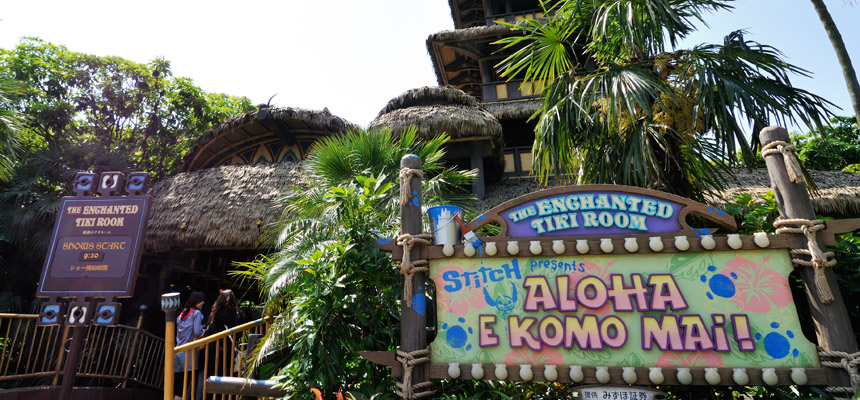
During the same time work was progressing on the rides for the World's Fair, Harriet was also busy doing another role she played with WED: she was a figure finisher. That meant she was one of the people who carefully applied paint and other materials to both Audio-Animatronics and the sets of attractions to give them their show ready or finished look. The first attraction she did this for was the Submarine Voyage which opened in 1959. It was the next one, though, that really showed off her talents. While doing finishing work on The Enchanted Tiki Room, hand applying thousands of feathers to the shows dozens of birds. she noticed a problem. When the four main birds breathed in and their chests puffed out, everything looked fine, but when they exhaled and their chests went back to normal, their skin looked bunched, kind of like Jose and the others were suffering from mites. Harriet solved this problem one day in a meeting. Walt was wearing a cashmere sweater and she couldn't help but notice that the knitted fabric moved at his elbows exactly like the Imagineers had envisioned the birds chests moving. Four custom made cashmere bird skins later and the bunching problem was fixed.
 |
| Image courtesy hauntedmansion.fandom.com |
Harriet was deeply involved in the design Disneyland's first major expansion, New Orleans Square, and all the restaurants and attractions that call it home. She made a model of the entirety of the Pirates of the Caribbean ride and was one of the attraction's main figure finishers. For anyone wondering where Imagineers get their inspiration from, it just might be you. The pirate that sits on the bridge swinging his leg and singing as guests float under him was based on Harriet's mailman at the time. She was also part of the design team that created the Haunted Mansion just a couple of years later. Sharp eyed guests will notice a tombstone at the Mansion about an opera singer who shares a name with Harriet (it's not a coincidence; all the tombstones at the Mansion honor the attraction's original designers). Walt was so impressed with her talents, he featured Harriet on several episodes of the Wonderful World of Disney throughout the Sixties, showcasing her work in the Tiki Room, Pirates and the World's Fair rides.
 |
| Image copyright Disney |
Harriet was part of Walt Disney Imagineering until her retirement in 1986. Not only did she work on stuff at Disneyland but she was also influential on the designs of Walt Disney World, Tokyo Disneyland and EPCOT Center. She would continue to spend the rest of her life creating magic just on a smaller scale, doing it exclusively for her grandchildren and their friends. She also remained highly active in the Santa Barbara arts community, where she maintained her home. In 1992, she was honored with her very own window on Main Street USA in Disneyland, the first woman to ever receive one. It reads "The Artisans Loft, Handmade Miniatures by Harriet Burns." In 2000, the pioneering Imagineer was officially declared a Disney Legend. She passed away eight years later from complications brought on by a heart condition. She was 79.