Wednesday, June 12, 2019

June 5 - Stephen J. Anderson

Image courtesy wikipedia.com
On this day, in 1970, Stephen John Anderson was born in Atlanta, Georgia. Stephen, like so many others in the animation industry, studied character animation at the CalArts School of Film and Video. When he graduated in 1991, he went to work for Hyperion Animation Company. Hyperion was founded by Thomas L. Wilhite, a former head of production at Disney, and is best known for the Brave Little Toaster series. Stephen was an animator on Rover Dangerfield (basically a vanity project written, produced and starring Rodney Dangerfield) and Bebe’s Kids (a box office flop based on the standup of the late Robin Harris). He was also able to cut his directing teeth at Hyperion on the USA Network series The Itsy Bitsy Spider.

In 1999, Stephen became part of the Walt Disney Company as a story artist on Tarzan. A story artist is not to be confused with a storyboard artist who is responsible for drawing the series of sketches that show what a scene might look like as the film develops. A story artist is a screenwriter who makes contributions to the script but not enough to share in a screenplay by or story by credit. By the very next year, Stephen had moved up to the Story Supervisor position for The Emperor’s New Groove. He then continued in that role for 2003’s Brother Bear.

Image copyright Disney
In 2007, Stephen got to step up to the plate and take another swing at directing for Disney's 47th animated feature, Meet the Robinsons. As has become de rigueur, he also provided the voices for several of the film's characters including the villain, Bowler Hat Guy, Grandpa Bud and Cousin Tallulah.  The film garnered mostly positive reviews, but failed to take in much more than its $159 million budget. Personally I think it's one of the vastly underrated Disney films of the modern era.

Image copyright Disney
Stephen followed Robinsons up by providing additional voices for Bolt and as an animator and additional story man on Tangled. He was tapped for a co-director, with Don Hall, for the 2011 Winnie the Pooh feature. The newest adventure in the Hundred Acre Wood was a critical success but not particularly a financial one. It wasn't a flop by any means, making $50 million on a $30 million budget, but opening the same weekend as the final Harry Potter movie didn't do it any favors. Stephen then added additional story elements to the juggernaut known as Frozen as well as voicing Kai, Anna and Elsa's loyal steward. His last feature credit was as an additional story artist on Zootopia. He is reportedly working on a new project as director, but there is no word on what that film might be. What ever it is, we look forward to seeing it and hope it becomes the box office success that Stephen deserves.

Thursday, June 6, 2019

June 3 - Wally Boag and Betty Taylor

On this day, in 2011, Wallace Vincent Boag passed away in Santa Monica, California. Born on September 13, 1920 in Portland, Oregon, Wally was a professional dancer by the age of nine. By the time he was 16, he ran his own dance school. When he turned 19, Wally added comedy to his resume and his career was off and running. Like many performers of the time, he became part of the vaudeville circuit, honing his act on the tough crowds of Poughkeepsie and other Peoria. But Wally had that certain something that tends to be elusive in show business (I like to call it talent) and he not only played the smaller venues of America but he was invited to places like Radio City Music Hall in New York City and the Palladium in London, England. During a show at the London Hippodrome, Starlight Roof, he brought a 12 year old girl onstage to assist with his balloon act. Part of the act involved a little singing and the young lady’s voice wowed the audience so much she became a regular part of the show (her name, by the way, was Julie Andrews).

Image courtesy wikipedia.com
In 1945, Wally’s talents brought him to the attention of Messrs. Metro, Goldwyn and Mayer. They offered him a contract and he began a brief career in movies. He appeared in exactly two for MGM and went uncredited in both: as a soldier in Without Love with Katherine Hepburn and Spencer Tracy and as a Canadian flier in Thrill of a Romance with Esther Williams. While his turn on the Silver Screen didn’t exactly pan out, Wally didn’t stop performing. He continued to appear on stages across America and around the world. In the early Fifties, Wally was in a musical revue in Australia when he met a tenor by the name of Donald Novis. A couple of years later, Donald convinced Walt Disney to give Wally an audition for a new show that was being developed for his soon to be open theme park. Walt loved him and that’s how Wally signed a two week contract to open The Golden Horseshoe Revue at the Golden Horseshoe Saloon in Frontierland of Disneyland.

Image courtesy nytimes.com
I think it’s probably unnecessary to say that Wally’s Horseshoe contract was renewed and for a little bit longer than just two weeks at a time. Wally’s character of a travelling salesman eventually morphed into Pecos Bill which he would perform three times a day. Over the course of the next 27 years, Wally logged almost 40,000 performances. His routines included songs, dancing, the ability to spit out a seemingly endless amount of teeth, rapid fire jokes and balloon creations he called Boagaloons. In 1963, he was joined onstage by an old co-star, Julie Andrews, for a press event for Mary Poppins. The duo recreated their first meeting by singing By the Light of the Silvery Moon together.

In 1971, Wally travelled to Central Florida to help get the Diamond Horseshoe Saloon up and running for the opening of the Magic Kingdom. He spent three years performing Pecos Bill for Walt Disney World guests before returning to California to finish out his career. He finally retired in 1982, quipping that before his contract with Disney, the longest he’d ever worked a gig was 54 weeks, who knew two weeks was going to last so long?

Image courtesy disney.fandom.com
In the Sixties, while Walt was still alive, Wally also did a handful of other projects for the company. He had small roles in The Absent Minded Professor (as a television newsman), Son of Flubber (the father in a television commercial) and The Love Bug (a flabbergasted driver). His second biggest contribution to Disneyana (yet, ironically, his longest lasting) is as the voice of Jose in The Enchanted Tiki Room, for which he also wrote a big chunk of the script. Walt was reportedly considering Wally for the voice of Tigger in the Winnie the Pooh shorts, but the role ultimately went to Paul Winchell. After Walt’s death, with his biggest cheerleader no longer championing him, Wally’s involvement outside of the Saloon dried up. Until 1981, that is, when he was the special guest star on an episode of The Muppet Show, bringing bits from his Pecos Bill persona to a worldwide audience.

Image courtesy jimhillmedia.com
In 1995, Wally was declared an official Disney Legend for his decades of thrilling audiences in the Horseshoe Saloons and leading the show in the Tiki Room. As a deeper honor, he also received his own window on Main Street USA in Disneyland that reads “Theatrical Agency – Golden Vaudeville Routines – Wally Boag, Prop.” In 2009, he published his autobiography, Wally Boag, Clown Prince of Disneyland and lived out the rest of his life in Santa Monica with Ellen, his wife of 68 years, until he succumbed to Alzheimer’s in June of 2011. He was 90.

Image courtesy waltdisney.org
Coincidentally, on June 4, 2011, the day after Wally died, his longtime costar at the Diamond Horseshoe Revue, Betty Taylor, also passed away in Coupesville, Washington. Born in Seattle, Washington on October 7, 1919, Betty began her professional singing career at the age of 12. Over the first twenty four years of her career, she shared the stage with folks like Les Brown, Red Nichols and Frank Sinatra. In 1956, a year after the Golden Horseshoe Revue opened, it became necessary to recast the Saloon’s feisty female proprietor (and Pecos Bill’s sweetheart), Sluefoot Sue. Betty auditioned for and got a four week contract to play the character (twice as long as Wally’s); she spent the next thirty years working through it.

One of the highlights of Betty’s years with the Golden Horseshoe came in the mid Sixties. Walt had decided to mark the 10,000 performance of the Revue as an episode of The Wonderful World of Color and asked Betty to not only play Sue but to emcee the program as well. She initially demurred but Walt insisted and the episode remains one of the classics. Betty remained with the Revue all the way until it closed on October 12, 1986, making her the longest continuous cast member (beating out Wally by a little more than three years) and logging in over 45,000 performances. She was declared an official Disney Legend right along with her perennial beau in 1995. She continued to enjoy singing for the rest of her days and would frequently serenade visitors, even after she moved into a nursing home. When her last note finally faded away, she was 91.

Wednesday, June 5, 2019

June 4 - The Many Adventures of Winnie the Pooh Ride

Image courtesy pinterest.com
On this day, in 1999, the first dark ride to feature the creations of AA Milne, The Many Adventures of Winnie the Pooh, began bouncing guests through the Hundred Acre Wood in Fantasyland of the Magic Kingdom in Walt Disney World. As the popularity of the Winnie the Pooh characters continued to grow throughout the Seventies, plans were made to create a ride at Disneyland that featured them.  However, when a newly rejuvenated Fantasyland opened in 1983, the tubby little cubby was conspicuously absent. So were any explanations. A few years later, when the new area of Mickey’s Toontown was being mapped out, plans were again made for a Pooh ride. Guests would sit in honeypots they could spin like teacups as they travelled through scenes from the films. Toontown opened in 1988 and, once again, Pooh and friends were nowhere to be found. The area allotted for the attraction (as well as the ride vehicle design) morphed into Roger Rabbit’s Car Toon Spin, which opened in 1994. It would be another five years before Pooh received his due and it would happen in Florida, not California.

Image courtesy pinterest.com
In order to make room for the Pooh ride in the Magic Kingdom's Fantasyland, something else had to go. That something turned out to be Mr. Toad's Wild Ride. The removal of Mr. Toad also meant that cast members could no longer backhandedly tell guests to go to hell by suggesting they experience the Wild Ride (in one of the final scenes of that attraction, Mr. Toad did indeed descend into Hades). Both the ride and the insult can be considered minor losses. The Pooh ride does pay tribute to Mr. Toad however. Eagle eyed riders can spot a portrait of him in the attraction handing a deed to Owl (in other words, passing the proverbial torch in a legal and aboveboard manner). All that doesn't mean there wasn't plenty of controversy over closing the classic attraction at the time, but I think you'd be hard pressed to find terribly many people who wouldn't agree that the new ride is an improvement.

Image courtesy tripadvisor.com
The Many Adventures of Winnie the Pooh has several design elements that make it a unique dark ride. First is the inclusion of actual pages from the original A.A. Milne stories. Some are painted on the walls and some are projections. It's the ones that are projections that make for some cool effects. For instance, in the Blustery Day section, it appears that the words are being blown right off the page as each individual ride vehicle goes by. The ride vehicles themselves are probably the best innovation, though. In most dark rides, you sit in a honeypot (or mine car or caterpillar) and get ferried past sets and moving figures and the like. There might be some quick turns, but it's essentially a flat ride. In the Pooh dark ride, you get immersed in the story a whole lot more than that. Each individual vehicle is set up so that, say, when Tigger starts bouncing alongside you, your honeypot starts bouncing along the track. And when the river creeps out of its bed and floods everything, your honeypot starts rocking like it was caught up in the current.

Image courtesy youtube.com
In 2003, Disneyland finally got their own version of the Pooh ride, but again it came with controversy. Real estate in the California park is at a premium and, once again, park officials knew that something was going to have to disappear to make room for the new attraction. Fantasyland didn't offer any options but there was a potential space over in Critter Country. This time the classic attraction that was doomed to be sacrificed was the Country Bear Jamboree. Even though a group of guests tried to band together to save the Bears, the shows low attendance figures doomed it to extinction. Just like Mr. Toad, though, the Jamboree isn't completely gone. Eagle eyed guest can spot the mounted heads of Melvin the Moose, Buff the Buffalo and Max the Buck in the ride (although they are technically the non-Animatronic heads that used to sit in the Mile Long Bar, not the heads from the actual show). Also note that the same mechanism that was used to lower Teddi Barra from the ceiling in Jamboree now bobs Pooh up and down over a whirlpool of honey. Besides some of the scenes being in a different order from the Magic Kingdom version (and stage a little differently), the ride vehicles in California are shaped like beehives rather than honeypots.

Hong Kong Disneyland and Shanghai Disneyland also have their own Pooh rides, opening in 2005 and 2016 respectively. They are essentially the same as the Magic Kingdom attraction. No controversy was connected with either of the Asian versions since they opened with their parks and therefore didn't need to displace anything else.

June 2 - Wayne Brady

Image courtesy mayoarts.org
On this day, in 1972, Wayne Alphonso Brady was born in Columbus, Georgia. The son of West Indian immigrants, Wayne moved to Orlando, Florida as a young child to be raised by his grandmother. In his mid-teens, he started performing in local community theaters and became part of the improv troupe at the SAK Comedy Lab in downtown Orlando. He graduated from Dr. Phillips High School, an arts magnet school, in 1989 and began attending classes at the University of Miami. A degree wasn’t in the cards for young Wayne, however, and by 1996, he’d moved to Los Angeles, California to see what fate had in store for him.

Fate has blessed Wayne with at least a constant flow of employment opportunities if not many that could be considered long-term. His first television appearances came on a late-night syndicated show called Kwik Wit. It pretended to be an improv show but in reality, while based on popular improv games and original material, was pretty rehearsed. It did, however, lead to regular appearances on the British improv show Who’s Line Is It Anyway? during its final season, which was taped in Hollywood. That rolled into the American version of the show and real nationwide exposure for Wayne. In 2003,  Wayne’s work on Who’s Line won the Primetime Emmy Award for Outstanding  Individual Performance in a Variety or Music Program (try saying that with a mouthful of pretzels), making him one of only a handful of people to win that particular award for a regular series as opposed to a one-off special.

Image courtesy study5.info
In 2001, Wayne had his own short-lived variety show. The show only lasted a partial season but the name, The Wayne Brady Show, lived on for two more years as a daytime talk show, which earned its namesake two consecutive Daytime Emmy Awards for Outstanding Talk Show Host. Over the next several years, Wayne enjoyed a whole slew of guest appearances.  He guest starred on both of The Drew Carey Show’s live episodes. He starred as Neil Patrick Harris’ brother on How I Met Your Mother. He appeared on a Canadian sitcom, Getting Along Famously, with former Who’s Line costar Colin Mochrie. He spent two seasons as the host of Don’t Forget the Lyrics!, a game show on Fox. And those are just the highlights.

Wayne finally got a real long-term gig in 2009 when he was asked to be the host of a new version of the classic game show, Let’s Make a Deal. Updating the format a bit with a liberal dash of (what else?) improv (the show's announcer, Jonathan Magnum, is also quite adept at it and was also part of the first Wayne Brady Show), Wayne has been making deals with guests for a decade now, every weekday on CBS. Incidentally, CBS's two daytime game shows owe quite a bit of their continued success to Who's Line Is It Anyway? Their other one, The Price Is Right, has been hosted by Drew Carey since 2007.

Image courtesy ew.com
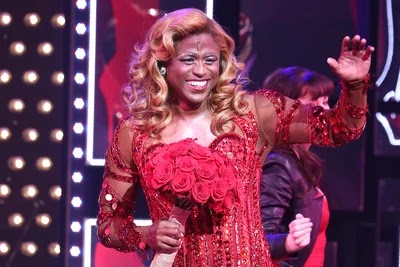
Wayne is no stranger to stages around the country either. In 2004, he made his Broadway debut when he joined the revival of Chicago as the smooth talking lawyer, Billy Flynn. In 2015, he returned to the Great White Way, taking on the role of Lola in Kinky Boots for six months. The following year, he was in Los Angeles playing Charley Kringas in a production of Stephen Sondheim's Merrily We Roll Along. Then Wayne wowed audiences in Chicago (the city, not the show this time) when he spent four months portraying Aaron Burr in Hamilton.

Image copyright Disney
Wayne's connection to Disney goes way back. One of his first jobs as a teen was in the entertainment department at Walt Disney World (rumor has it he was good friends with Goofy). Since then, both versions of the Wayne Brady Show aired on ABC, he wrote and sang the theme song for The Weekenders and he sang "Beautiful" along with Jim Brickman on Jim's Disney album. Sharp eared listeners will recognize Wayne's voice behind Don on an episode of Phineas and Ferb called "Where's Pinky?" and he was a regular cast member on the short lived ABC improv show Trust Us With Your Life in 2012. He's also made an appearance on Dancing With the Stars, not as a contestant but as a performer in a tribute to James Brown. Wayne sang a version of The Tiki, Tiki, Tiki Room for the 2008 album Disney Music Block Party and produced an album of children's songs he helped write called Radio Wayne (inspired by the Radio Disney network) in 2011.

Image copyright CBS
Currently, Wayne is busy taping episodes of the next season of Let's Make a Deal (for which he finally won an Emmy last year after being nominated seven times) while simultaneously making appearances on the CBS soap opera The Bold and the Beautiful as Reese Buckingham. Will there be more improv shows in his future? Probably and when they pop up, you can be sure they'll be funny and look effortless (which really describe's Wayne's basic mode of operation). Happy 47th birthday, Wayne and here's to many, many more!

June 1 - Jonathan Pryce


Image courtesy imdb.com
On this day, in 1947, John Price was born in Carmel, Flintshire, Wales. Growing up the son of grocers, John began attending Edge Hill College at the age of 16, intending to become a teacher. But, like so many stories of successful actors, he got a role in one of the college’s theater productions and that was the end of the education degree. An Edge Hill professor, impressed with his performance, helped him apply to the Royal Academy of Dramatic Arts. He was accepted, received a scholarship to boot and changed his professional name to Jonathan Pryce to satisfy Equity name rules. In spite of having to sell velvet paintings door-to-door in order to cover the rest of his tuition and having a professor who declared he would never amount to more than second rate villains on mediocre British television shows, Jonathan graduated from RADA, taking his place in a group of alumni that includes Alan Rickman and Kenneth Branagh.

Following graduation, Jonathan became part of the Liverpool branch of Everyman Theater Company, spending some time as its Artistic Director before moving on to the Nottingham Playhouse and the Royal Shakespeare Company. Throughout the Seventies, his stage highlights include Petruchio in Taming of the Shrew, Octavio Caesar in Antony and Cleopatra and Angelo in Measure for Measure. At the same time, Jonathan was building a reputation on various British television shows, taking both dramatic (Play for Today) and comedic roles (Chalk and Cheese). His film debut came in 1976 as Joseph Manasse in Voyage of the Damned starring Faye Dunaway and James Mason. All of that would have been enough to refute his RADA professor, but Jonathan went even further. He starred in a play called Comedians. It started at the Nottingham Playhouse in 1975, moved to London’s Old Vic Theatre and then went on to Broadway in 1976. The following year, Jonathan won his first Tony Award for Best Featured Actor in a Play. And he wasn’t even all that well known yet. 


Image courtesy pinterest.com
During the Eighties, Jonathan continued to prove his talent and grow in the public’s eye. He started by winning an Olivier Award as the lead in RSC’s Hamlet (not a bad way to begin a decade). From there he appeared in a handful of movies like Breaking Glass and The Ploughman’s Lunch with Tim Curry. His breakthrough role is widely considered to have come in 1985, as Sam Lowry in Terry Gilliam’s Brazil. Other highlights of the period include playing Herod in The Day Christ Died, working with Gene Wilder on Haunted Honeymoon and starring opposite Whoopi Goldberg in Jumpin’ Jack Flash. He continued winning accolades on the stage appearing as Trigorin in a London production of Chekov’s The Seagull and playing the lead in RSC’s Macbeth. And for those who like improve, he appeared on no less than three early episodes of the British version of Whose Line Is it Anyway? Then, just as the me decade was coming to an end, he fell into the role of a lifetime and a controversy to match it. 

Image courtesy vox.com
Jonathan decided to have a go at musical theater and broke into the genre in a big way. He managed to win the role of The Engineer in the original production of Miss Saigon on London’s West End, starring opposite Lea Salonga. Both Jonathan and Lea would win Oliviers for their performances. The production then prepared to jump the Pond to Broadway, taking its two stars with it. That’s when the public relations nightmare began. The character of The Engineer is half French, half Vietnamese. Actor’s Equity, the American stage union, refused to allow Jonathan, who is Caucasian, to play the role of an Asian. The fighting between Cameron Mackintosh (who threatened to cancel the $10 million production altogether) and Actor’s Equity got ugly. Equity finally caved in to pressure from the public and many of its own prominent members (John Malkovich was among those threatening to withdraw from the union) and allowed him to perform. A smaller controversy erupted around Lea Salonga’s involvement with the show. Equity felt that an American or British actor should have the role for Broadway (Lea is Filipina). However, an extensive search was made for a replacement and none could be found. An arbitrator ruled against Equity and Lea was also allowed to perform. Regardless of what you think of the show (it has pretty racist overtones to it), both Jonathan and Lea won Tony Awards for their performances and the show is currently the 13th longest running Broadway show ever. 

Jonathan followed up Miss Saigon with the role of Henry Kravis in HBO’s 1993 film Barbarians at the Gate, earning both Emmy and Golden Globe nominations. The same year he started production on what would be River Phoenix’s last film, Dark Blood (River died before the film was completed and it’s never been shown). He then became the highly paid spokesman for Infinity cars for four years and starred in a Broadway revival of Oliver! In 1995, Jonathan won the Best Actor Award at the Cannes Film Festival for his portrayal of Lynton Strachey opposite Emma Thompson in Carrington. In 1997, he played a Bond villain (a bit higher on the food chain than his RADA professor predicted), Elliot Carver, in Tomorrow Never Dies and spent the remainder of the decade cashing in on similar roles in Ronin and Stigmata. 

Image copyright Disney
Jonathan joined the Disney family in 1983 as part of one of my favorite films as a kid, Something Wicked This Way Comes, based on the story by Ray Bradbury.  It was his American movie debut. His performance as Mr. Dark, the proprietor of a sinister carnival, earned him a Saturn Award nomination for Best Supporting Actor. Most Disney fans, however, will recognize him from a much different role, Weatherby Swann, the fictional Governor of Jamaica in the Pirates of the Caribbean series. He’s appeared as the somewhat hapless, but ultimately kind, Swann in 2003’s Curse of the Black Pearl, 2006’s Dead Man’s Chest and 2007’s At World’s End. Jonathan also made his musical film debut with the company in the 1996 Hollywood Pictures production of Evita. His depiction of Colonel Juan Peron, opposite Madonna’s Eva, not only earned him critical praise but opened him up to an even wider audience when the soundtrack album sold over 11 million copies worldwide. 

Image copyright Disney
In recent years, Jonathan has continued to shine on both stages and screens around the world. He appeared on Broadway in Dirty Rotten Scoundrels and in no less than seven London productions, among them The Goat, or Who Is Sylvia? for which he was again nominated for an Olivier Award. In 2015, he joined the cast of the HBO juggernaut Game of Thrones in Season 5 as the High Sparrow. The same year he portrayed Shylock in The Merchant of Venice at the Globe Theater. Later this year Jonathan will be portraying Pope Francis (who he bears a striking resemblance to) in a Netflix biopic called The Pope opposite Anthony Hopkins and he is scheduled to reappear on Broadway this fall in the play The Height of the Storm as Andre, a role he originated last year in London. If only that professor were still around to see the 72 year old still at the top of his game. Happy birthday, Jonathan!

Monday, June 3, 2019

May 31 - Snow White's Scary Adventures

Image courtesy themeparkreview.com
On this day, in 2012, the Snow White’s Scary Adventures ride terrified its last child in the Magic Kingdom of Walt Disney World. When Disneyland was under construction in the mid Fifties, plans were naturally made to include rides based on popular Disney characters. When the park opened on July 17, 1955, guests could experience attractions based on Peter Pan, The Adventures of Ichabod and Mr. Toad (at least the Mr. Toad part), Alice in Wonderland, Dumbo, 20,000 Leagues Under the Sea and Snow White and the Seven Dwarfs. Some of the rides just featured characters or elements of the films they were based on, like the flying elephants of Dumbo or the teacups of Alice. Other rides, like Peter Pan’s Flight or Snow White’s Scary Adventures, took guests right into the stories they were pulled from. Except they didn’t do it in a way that people expected.

Image copyright Disney
It didn’t take long for guests to notice that when they rode Snow White’s Scary Adventures, the attraction seemed to be missing something. Snow White was nowhere to be found. The Evil Queen/Hag made several appearances and the dwarfs were there, but where was the princess the ride was named after? The thing is, she wasn’t supposed to be there. The Imagineers had designed a ride concept that proved to be a little higher brow than it needed to be. You, as the rider, were literally stepping into Snow White’s shoes (or Peter Pan’s or Mr. Toad’s) and experiencing what she would have experienced, something the Imagineers felt was implied by the possessiveness of the attraction’s name. It was a nuance that was lost on the general public. For years, the number one complaint about Snow White’s Scary Adventures was a twofold statement, rarely uttered one part without the other: it’s too scary and where is Snow White?

Image courtesy youtube.com
The concerns guests had about Snow White’s Scary Adventures went largely ignored for years. When the Magic Kingdom of Walt Disney World opened sixteen years later, it included a version of the ride. Arguably, the Florida ride was made even scarier. Instead of the three times guests encountered the Evil Queen in the original version, they encountered her seven times, apparently being crushed by a giant jewel she topples on to them to end the ride. In 1983, the Disneyland version would be modified to include Snow White and lighten the tone, but children in Orlando would continue to be scared for eleven more years. In 1994, the Magic Kingdom version was toned way down with most of the witch figures being removed, Snow White finally made an appearance and the ride ended with the witch’s demise. The word scary was also dropped from the attraction’s name. That’s how it stood for the next eighteen years, eventually closing to make way for Princess Fairytale Hall, where guests can meet a princess rather than wonder why she isn’t in her own attraction.

Image courtesy youtube.com
The Disneyland version (really version 2.0) is still operating today making it one of the longest running rides in Disney history. The 1983 revamp didn’t just happen to Snow White’s Scary Adventures, all the dark rides were updated to actually include their namesakes at some point. An additional modification happened at the same time. When the figure of the witch offers the poisoned apple to guests outside of the dwarfs’ house, ride vehicles come close enough that people stole the apple a number of times over the years. Now if they try, their hand will pass right through it. It’s a projection. Additional versions of the ride are also operating in Tokyo Disneyland, a mix of the California and Florida rides, and Disneyland Paris, essentially the same as Disneyland’s current version.

Sunday, June 2, 2019

May 30 - Dick Nunis

Image courtesy twitter.com
On this day, in 1932, Richard A. Nunis was born in Cedartown, Georgia. Dick received a football scholarship to play for the University of Southern California and enthusiastically moved to Los Angeles. His dream of becoming a professional football player and then transitioning into a coaching position were on track right up to the moment he broke his neck in a game. He was lucky beyond belief to recover from his injury, but obviously had to change his career path. He graduated from USC in 1955 with a degree in education and at something of a loose end as to what to do with the rest of his life. A fellow football player, and lifelong friend, Ron Miller, told Dick he should apply for a job for the summer at the theme park his father-in-law was getting ready to open. Dick thought why not and became part of the opening training team at Disneyland, just for something to do for a few months. It would be more than four decades before he needed to find something a little more permanent.

Image courtesy pinterest.com
One of the first classes Dick taught included a group of executives from the top levels of the company, one of whom was Ron's father-in-law, Walt Disney. The class was what would eventually evolve into the first day of training for every new Disney cast member and is now called Traditions. Apparently Dick did a good job of imparting the wisdom he needed to and setting the tone Walt wanted, because he got to go on to train a big chunk of Disneyland's incoming cast. He often said in the years to come that he was forever grateful he got to learn the Boss's philosophy right from the man himself.

Dick didn't stay a trainer long, though. He soon became an area supervisor, then was put in charge of the mail room and steno pool before becoming an operations supervisor. At that point in his career, Dick was in charge of developing a formal standard operating procedure for every attraction in the park. Again, he did an outstanding job as most of the SOPs he helped write are still in effect today. By 1961, Dick was the director of Disneyland operations and became part of Walt's inner circle working on Project X, what I commonly refer to as the Florida Project in this blog, except, of course, at that point no one knew where it was going to be built.

Image courtesy laughingplace.com
In 1968, Dick was made Vice President of Park Operations and, when Project X officially became Walt Disney World in 1971, his role expanded to Executive Vice President of both parks. As he oversaw the expansion of the Disney empire through the Seventies and early Eighties, with the addition of Tokyo Disneyland and EPCOT Center, he was named the President of the Outdoor Recreation Division in 1980. About the same time he was elected to the company's board of directors, a position he would hold until his retirement eighteen years later. In 1991, as the company went through a reorganization of all its divisions, Dick was named chairman of Walt Disney Attractions, which would be his last official job title with Disney.

Two of the main things that Dick made an important part of his leadership strategy were the importance of people to the organization and the concept of giving back to the community. When he started at Disneyland, the park employed about 600 people. When he retired, it took over 63,000 cast members to keep the North American parks going. During that entire time of expansion, he encouraged his fellow cast members to support charities. He served on the board of Give Kids the World, the village in Central Florida where kids from wish organizations from around the world come to stay for free when they visit, and was a big part of the University of Central Florida Foundation.

Image copyright Disney
When he retired on May 26, 1999, the day of his 44th anniversary with the company, Dick's days as a Disney executive were over, but he had no plans to slow down. Since then he's served on the boards of organizations as diverse as Duke Energy and Enterprise Florida, a group trying to promote economic growth across central Florida. He's led trade missions to Asia and Central America and created his own consulting firm, New Business Solutions. He's chaired arts councils, United Way campaigns and economic forums. At 87, he might not do quite as much as he used to but he remains an active and respected member of the community. And, of course, for turning a temporary summer job into a legacy of leadership, Dick was named an official Disney Legend in 1999, shortly after his retirement. He also received a window on Main Street USA in Disneyland that reads "Coast to Coast Peoplemoving - World Leader in Leisure Management - Dick Nunis, Proprieter - Founded 1955 - Offices Anaheim, Orlando, Tokyo - Wave Machines a Specialty"