Showing posts with label Disneyland Records. Show all posts

Tuesday, May 28, 2019

May 26 - Sam Edwards

Image courtesy littlehouse.fandom.com
On this day, in 1915, Sam Edwards was born in Macon, Georgia. Sam’s parents had met as performers on the vaudeville circuit, so it’s no surprise that his first appearance on stage was as a baby in his mother’s arms in a show called Tess of the Storm Country (a 1914 film version starred Mary Pickford). Shortly after Sam’s birth, his parent’s marriage ended in divorce and Sam, with his older sister Florida (care to guess where she was born?) stayed with their mother, Edna. He would never know who his birth father was until a chance meeting in Hollywood over thirty years later. Edna married another actor in 1917, Jack Edwards, and they would soon add a third child to the family, Jack Jr.

The Edwards relocated themselves to the Jacksonville, Florida area, started their own theater troupe and travelled around the country performing in all kinds of plays. Sometimes the kids would be cast alongside mom and dad, but not always comfortably. Sam recalled the first time he could remember being on stage, in Why Men Leave Home, as his mother’s daughter (he wasn’t apparently a very convincing actor at that age; he said most of the audience could tell he was a boy in spite of the lacy underwear that was part of his costume).

Image courtesy perfesserbill.com
As the Edwards children grew, the family transitioned from the stage into radio. Now based mostly in San Antonio, Texas, Jack managed a movie theater, interspersing the new fangled medium of moving pictures with short live performances done by Edna and the kids. As he moved into his teens, Sam began participating in and winning local singing contests. Jack Sr. and Edna were already performing on WOAI, one of the first radio stations in Texas, when they began producing a show starring Sam and Jack Jr. In 1933, The Adventures of Sonny and Buddy became one of the first weekly serials to ever be broadcast. Sam would enjoy a long, prolific career on the airwaves. His whole family appeared as a fictionalized version of themselves on The Edwards Family. He was part of an early soap opera, One Man's Family, and an early kid's adventure show, Speed Gibson of the International Secret Police. Over the couple of decades that radio reigned supreme, Sam had recurring roles on Father Knows Best, Guiding Light, Meet Corliss Archer, The First Hundred Years, Dragnet, Gunsmoke, This is Your FBI and several others.

Image courtesy imdb.com
Sam broke into movies almost by accident. In 1937, He tagged along with his brother to the set of a movie Jake was in, intending to be an extra, mostly for fun. His radio expertise, however, not only got him noticed but also got him a speaking part in High Hat. While never becoming a movie star, Sam would occasionally appear in films for the next four and a half decades. He had significant parts in Twelve O'Clock High with Gregory Peck, Operation Pacific with John Wayne and The Beatniks (which was featured in an episode of Mystery Science Theater 3000). His final film role came in 1981 as a Ticket Clerk in the remake of The Postman Always Rings Twice with Jack Nicholson and Jessica Lange.

When radio transitioned into television, Sam transformed himself as well. While he would never have a starring role like he did before, he would start appearing on the small screen in the mid Fifties and add more than 60 different series to his resume over the years. He is probably most remembered as Bill Anderson, the banker on Little House on the Prairie, but he had recurring roles on Dragnet and Gunsmoke (hold overs from his radio days) and guest shots on everything from The Andy Griffith Show to Mission: Impossible to Happy Days. He even, in another throwback to his earlier career, had a stint on Days of Our Lives. 

Image copyright Disney
Sam joined the Disney family pretty early in both his career and the history of features at the studio. In the 1942 classic Bambi, he brought the adult part of Thumper to twitterpated life. A great deal of his work for Disney came through Disneyland Records. He played both the Cowardly Lion and the Tin Woodman for a series of Wizard of Oz albums. He played Tigger, Rabbit and Owl on a whole bunch of Winnie the Pooh records. He also served as the narrator for many of the Disneyland Storyteller series. Throughout the Seventies, he appeared in a string of live action films for the company, including Escape to Witch Mountain, The Biscuit Eater and two episodes of Walt Disney's Wonderful World of Color, Hog Wild and The Flight of the Grey Wolf. His final 'appearance' for the company was as the voice of Ollie Owl opposite Burl Ives' Sam the Eagle in the patriotic Disneyland attraction America Sings, that ran from 1974 until 1988.

Image courtesy youtube.com
In the early Eighties, Sam retired from acting, mostly. He did some traveling around with his wife of three decades to old time radio conventions, meeting up with old friends and often giving live readings of favorite episodes from back in the day. But mostly he spent time with his family enjoying life. In 1992, he had bypass surgery, recovered nicely and spent another twelve years living peacefully in Durango, Colorado. Then, on July 28, 2004, three days after suffering a heart attack that revealed a hole in his heart, Sam passed away, surrounded by family. He was 89.

Sunday, April 14, 2019

April 13 - Salvador Camarata

Image courtesy d23.com
On this day, in 2005, Salvador Camarata passed away in Burbank, California. Born on May 11, 1913 in Glen Ridge, New Jersey, Sal was was the youngest of eight children who discovered an aptitude for music at an early age. He studied the trumpet at Julliard and Columbia university while at the same time earning money with studio bands in New York. In the early Thirties, he joined Tommy Dorsey's band and arranged several hits for the group, including Tangerine and Green Eyes. As the calendar switched decades from the Thirties to the Forties, Sal switched big bands, from Dorsey to Benny Goodman. When World War II hit, he stepped up, joined the Army Air Forces and spent a good chunk of the conflict as a flight instructor.

Following the end of his tour of duty, Sal went to work for Decca Records, where he did arranging work for the likes of Billie Holiday and Duke Ellington. In 1944, he was sent to London to write a score for the film London Town. While there, he and the head of British Decca, Sir Edward Lewis, became fast friends. Together they would found London Records, originally designed to export classical recordings from England to the United States but eventually became a home for rock and roll bands, including early recordings of The Rolling Stones and ZZ Top.

Sal returned to the United States and New York City in 1950. He continued to work for Decca and did conducting gigs on the side for various television productions and the popular singer Vic Damone. In the mid Fifties, he was contacted by Walt Disney, who wanted to know if he was interested in moving to Southern California to help him with a new project. Sal was interested and became instrumental in setting up Disneyland Records (now known as Walt Disney Records)
in 1956.

Image courtesy d23.com
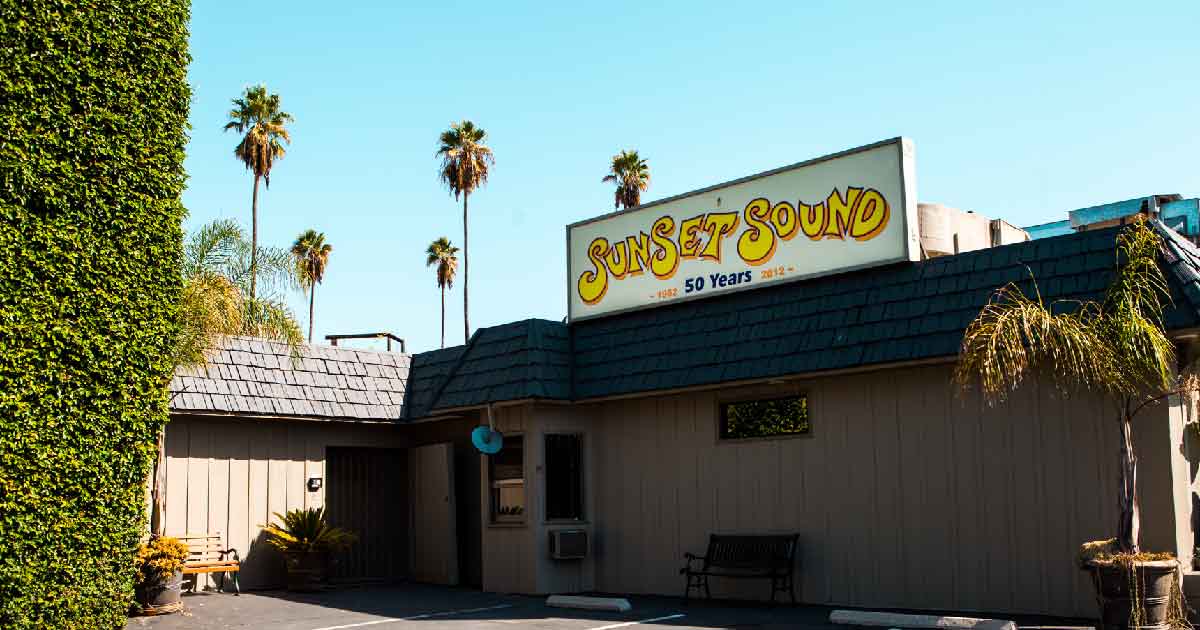
As the guy in charge of Artists and Repertoire, Sal dove right into the art of creating fabulous recordings. It wasn't long before he recommended that Disney build their own recording studio. Walt didn't feel a real need to do that and encouraged Sal to build one. So he did. He bought an old auto repair shop on Sunset Boulevard and created Sunset Sound Recorders. Over the next 16 years, Sal cranked out over 300 albums for Disney at his Sunset studio. But he was always looking for places to make recordings. He was once driving around town with Jimmy Johnson, the other founder of Disneyland Records, and made him stop at a VFW hall. After walking around the interior of the building, informally testing the acoustics with hand claps, he negotiated renting the place and ended up recording the Cinderella soundtrack there.

Image courtesy youtube.com
Sal was a musical jack of all trades during his decade and a half with Disney. He frequently was the conductor on recordings. He was the voice coach on 1963's Summer Magic starring Hayley Mills and Burl Ives. He developed the signature sound of Annette Funicello by recording her signing each song twice and then blending the two tracks to get a fuller sound. He was proud of the fact that Annette didn't think much of her singing until after she heard his first effort and was surprised that the voice coming out of the speakers was her. In the process he also managed to silence some of the executives who felt it would be easier to just overdub her (although the sales of her records did that as much as Sal's technique).

Sal also changed the format of movie soundtrack albums. Prior to Disneyland recordings, the score from a movie was usually presented in three minute segments (about the length of a 45), even on long playing records. Sal presented LPs with long continuous stretches of music, not necessarily in the order they were heard in the film, and arranged for a more casual home listening setting. In the first year of the Disneyland label, seven successful soundtrack recordings were released in this new format. Over his tenure, the label won eight Grammy Awards with many more nominations.

Image courtesy sunsetsound.com
In 1976, Sal and Disney amicably parted ways so he could concentrate on other projects. He arranged and conducted a critically acclaimed series of classical albums for London Records. In 1981, he bought the other premier recording studio in Hollywood, The Sound Factory, which started in the Sixties and has seen artists as varied as Dolly Parton, The Jackson Five and the Red, Hot Chili Peppers come through its doors. He merged The Sound Factory with his Sunset studio into the venture now known as Sunset Sound Factory. It's still serving all of Tinseltown's recording needs under the leadership of Sal's son, Paul.

Sal was declared an official Disney Legend in 2003 for all his musical contributions to the company, many of which can still be heard as background music to several areas of the theme parks. Two years later he suffered a short illness that landed him in the hospital. He wasn't able to recover and ended his phenomenal career at the age of 91.