Showing posts with label John Musker. Show all posts

Sunday, April 28, 2019

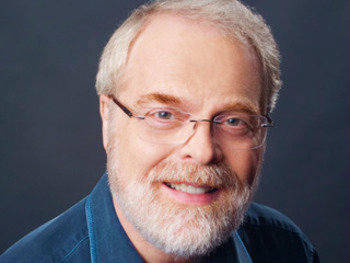
April 25 - Ron Clements

Image copyright mtishows.com
On this day, in 1953, Ronald Francis Clements was born in Sioux City, Iowa. After graduating from Bishop Heelan Catholic High School, Ron hightailed it to Southern California to become a student at the Art Center College of Design in Pasadena. His professional career actually began in 1974 at Hanna-Barbera, but he was only there a few months before getting word that he'd been accepted into Disney's Talent Development Program. At that point, it was goodbye Scooby Doo, hello Mickey Mouse (even though not much animation was being produced with Mickey at that point) and he's never looked back.

Image copyright Disney
Ron came to Disney at a perfect time. For his first two years, he apprenticed under none other than Frank Thomas, the last of Walt's Nine Old Men to still officially haunt the studios. His first work, totally uncredited of course, made it into Winnie the Pooh and Tigger Too. By 1977, Ron was working on his own as a Character Animator, contributing to both Pete's Dragon and The Rescuers. For The Fox and the Hound, he'd been promoted to Supervising Animator and worked with John Musker, a Character Animator on the film, for the first time. Ron and John really hit it off, and became writing collaborators on Disney's next project, The Black Cauldron.

Image courtesy wikipedia.com
The Black Cauldron's production process is notorious for its controversies within the company. A growing number of animators were horribly unhappy with the direction the project was taking, Ron and John among them. Only a few years before, Don Bluth had led a walkout of a whole group of employees over the same kind of complaints. Not wanting another mass exodus, Ron and John proposed to then head of the studio Ron Miller that an adaptation of the children's book series Basil of Baker Street be added to the production slate as an 'alternate' movie for staff to work on if they could no longer stomach Cauldron. Miller agreed, putting Jon and and famed storyboard artist Burny Mattinson in the director's chairs and giving Ron the task of adapting the story. When schedules shifted and became a whole lot tighter (mainly after Cauldron tanked), Burny was moved into more of a producer role and Ron became co-director for the first time.

Image copyright Disney
The Great Mouse Detective opened to positive reviews and financial success. Coming only one year after the disastrous Cauldron, Ron and John's little-movie-that-could literally saved the animation department by convincing the powers that be that they could still generate income (in spite of the fact that they let Vincent Price sing). As Detective was wrapping up production, the new bosses, Michael Eisner and Jeffrey Katzenberg, held a meeting with all the animators to generate new ideas for films. Ron brought a two page synopsis of an adaptation of Hans Christian Anderson's The Little Mermaid and a quick concept piece about setting Robert Louis Stevenson's Treasure Island in space. Eisner rejected both. Within days, however, Katzenberg quietly asked Ron to expand on his treatment of Mermaid, eventually giving Ron and John the green light to write and direct it.

Image copyright Disney
When The Little Mermaid opened on November 17, 1989, it was a smash hit, earning over $200 million in worldwide box office receipts and ushered in the era that became known as the Disney Renaissance. It also cemented the partnership between Ron and John as a co-directing powerhouse. For their follow-up film, they reworked and resubmitted their idea for a space themed Treasure Island. It was rejected again. Instead they were given the helm of an adaptation of a story from 1001 Arabian Nights called Aladdin.

Image copyright Disney
The duo struck gold again in November 1992, as Aladdin went on to become the first animated picture to gross over $500 million. For a third time they submitted what was now being called Treasure Planet as their next film and, for the third time, the studio said no, thanks, why don't you two direct this Greek mythology project we're developing. They said fine, but when the time came to sign new contracts during the production of Hercules, they made sure that one of the stipulations was that their science fiction adventure flick was guaranteed to be their next project. Despite mostly positive reviews (and near universal acclaim for James Woods' performance as Hades), Hercules failed to score at the box office like its predecessors, taking in a paltry $253 million. While still a moneymaker, the Disney Renaissance was starting to wind down.

Image copyright Disney
Following the wrap of production on Hercules, Ron and John finally got to go to work on Treasure Planet, more than a decade after first coming up with the idea. In retrospect, the fact that the movie had been rejected so many times (and that they had to kind of force the studio into making it at all), should have been an omen for everyone involved. Changing the genre of established classics is not only hard but doesn't make people already familiar with the story happy. Treasure Planet opened in November 2002 to tepid reviews and dismal sales. It became the first Disney animated movie since The Black Cauldron to fail to make back its budget. It's not a bad film, but you'd also be hard pressed to call it a good film. The Renaissance was over.

Image copyright Disney
Ron and John inherited a concept called Fraidy Cat as their next project but the production was fraught with problems. When David Stainton, then president of animation, refused to green light the movie in September 2005, both of the co-directors resigned from the company in protest. The successful duo's absence wouldn't even last a year, though. By the spring of 2006, John Lasseter installed as the new chief creative officer of animation and he asked Ron and John to return to Disney to helm an adaptation of The Frog Princess.

Image copyright Disney
As the entire industry was embracing fully computer generated animation, Lasseter was willing to give traditional animation another shot. Ron and John were a perfect duo to head 2D animation's last hurrah. Their direction, along with Randy Newman's blend of zydeco and jazz, pushed The Princess and the Frog to the highest box office receipts in years, over $270 million, but still far short of what had been realized during the Renaissance. It didn't help that Princess opened a week after Avatar (Princess is clearly the superior movie, but there really is no accounting for taste). The 2009 film managed to earn four Oscar nominations (getting edged out by Up in most of them) but is, as of right now, the last film put out by a major studio using traditional techniques. Hand drawn animation is over.

Image courtesy animationmagazine.net
Traditional storytelling, however is not. After The Princess and the Frog, Ron and John became quite secretive about what they were working on. All they would say is yes we're working. After a couple of years of development, they finally came clean about the fact that, yes, they were moving into the realm of computer animation and their next story was inspired by Pacific Island cultures. The movie that came out in November 2016, Moana, became their biggest hit yet. With songs by Lin-Manuel Miranda and overwhelmingly positive reviews, Moana brought over $643 million in box office receipts to the table. The directing team was back on top of the animation world.

Since the release of Moana, John Musker, who obviously felt like walking away a huge success was the way to go,  has retired from Disney and the animation business. Ron hasn't made that decision quite yet. Despite the fact that his long time partner in crime has folded up his directing chair, Ron may (or may not) have another epic story in him just crying out to be told. Whether he goes for it or just spends a few more years, like his old mentor Frank did, guiding the new guys at the start of their journeys, Ron has undeniably spent the last 45 years creating the highlights of two generations worth of childhoods.And for that alone, he deserves a tip of the mouse ears. Happy Birthday, Ron!
Wednesday, January 2, 2019

December 29 - Duncan Marjoribanks

Image courtesy animationguild.org
On this day, in 1953, Duncan Marjoribanks was born in Toronto, Ontario, Canada. Duncan grew up in a liberal family and was considered a far-out hippy type in high school. Painfully introverted, he was also incredibly smart and extremely talented at drawing. His talents would take him to the Sheridan Institute of Technology and Advanced Learning, Canada’s premiere school for animation located in Oakville, Ontario. Following his graduation from Sheridan in 1978, Duncan became part of a group that was hired by Hanna-Barbera prompting a move to Los Angeles, California. Duncan quickly became one of the studio’s top animators, working on shows like Scooby and Scrappy Doo and Godzilla. Then the great Animator’s Strike of 1982 happened. 

Image copyright CBS
The strike began as the union protested how much work was being sent overseas (where it was much cheaper to produce) and lasted for several months. The end result, ironically predictable, was that most US animation production disappeared. Duncan changed his career focus to designing characters and began freelancing for several studios. One of the projects he would work on, and his first as animator in a decade, was a short lived television series called Family Dog. It was created and directed by a guy named Brad Bird who was thoroughly taken with Duncan’s style and talent. Brad recommended Duncan to a friend of his, John Musker. John was starting a little project over at Disney about a mermaid and hired Duncan as the first animator on the team.
Image copyright Disney
Duncan became supervising animator for Sebastian the Crab on Disney’s 28th animated feature, The Little Mermaid. He took Samuel E. Wright’s marvelous vocal performance and the basic character designs that had already been done and created one of the most endearing and enduring characters that had been seen in decades. Don’t believe me? Just watch the scene when Sebastian finally decides to help rather than hinder Ariel and get back to me.
The success of The Little Mermaid led to Duncan staying on with Disney and supervising again for the next feature film, The Rescuers Down Under, this time for the villain, McLeach. While this film did end up being less successful, it was the grueling schedule that really took its toll on Duncan. By the time the last frame had been drawn, he needed more than a vacation and actually took a year off to live in England. Which doesn’t mean he didn’t work. He provided some character design for a short-lived Hanna-Barbera show called The Pirates of Dark Water.
Image copyright Disney
In 1991, Duncan returned to the states, and Disney, to begin supervising work on another great sidekick, Abu in Aladdin. As if his previous work wasn’t impressive enough, now he would create a memorable character without using words at all. His work in the film can also be seen in the opening sequence with the shady salesman. Duncan went right from Aladdin onto the team for Pocahontas and once again supervised a villain, Governor Ratcliffe. His portrayal of Ratcliffe was more cartoonish than the other characters, which give him more of a presence, but still this side of overly flamboyant, so he remains believable. Duncan was then slated to supervise Megera for Hercules but that never happened.

Image copyright Dreamworks SKG
Around this time, Jeffrey Katzenberg was making his spectacularly messy exit from Disney and starting his own studio, Dreamworks SKG, with Steven Spielberg and David Geffen. With big plans to stick it to his former employer, especially in the animation department, one of the first big talents Katzenberg poached was Duncan. The relationship didn't blossom the way anyone hoped. Duncan started out as supervising animator on Moses for Prince of Egypt but struggled with the job so much his only credit on the picture is plain old animator. He did some work on The Road to El Dorado, animating a few scenes with Tzekel-Kan and contributed some story ideas to Spirit: Stallion of the Cimarron before leaving Dreamworks for good. He spent a year over at Warner Brothers, working on the animated parts of the box office bomb Osmosis Jones (he did pretty good work on the movie but left before it was finished, unhappy with the direction it was taking), before returning to the fold at Disney in 2000.

Image copyright Disney
Unfortunately, Duncan's return to Burbank came at a time when the studio was producing its worst picture since The Black Cauldron. As supervising animator for Mrs. Calloway on Home on the Range, Duncan managed some moments of greatness but the movie was a critical and financial failure. Following that disaster, he was trained in computer animation and contributed to the Bowler Hat Guy for Meet the Robinsons. Duncan then got the privilege of working on Disney's last hand drawn feature, The Princess and the Frog, as head animator for Big Daddy La Buff. 

In 2009, Duncan and Disney parted ways once again. The company had decided to stop using traditional animation techniques and Duncan didn't feel comfortable working with CGI. The only thing he's really done since then was a hand drawn short utilizing the characters from Kung Fu Panda. Which is really a shame. Hopefully some day the talent behind Sebastian and Abu, who has inspired so many animators still working today, will himself find inspiration in some new project and give us all a reason to smile again.

Sunday, December 2, 2018

November 27 - Treasure Planet

On this day, in 2002, Walt Disney Pictures' 43rd animated feature, Treasure Planet, opened in theaters. Directed by Ron Clements and John Musker, of The Little Mermaid and Moana fame, Treasure Planet is one of the few box office flops in Disney's animated catalog. On a budget of 140 million dollars, the film only managed to take in 38 million in the US and limped over 100 million worldwide. The only other modern animated Disney films to not gross at least what they cost to make are The Black Cauldron and Home on the Range. Treasure Planet, while not great, is a far superior film in my opinion than those two. So what went wrong? As it turns out, several things.

The first problem Ron and John encountered was the whole idea of the picture itself. They first pitched Planet at the same time they pitched The Little Mermaid. Their plan to move Treasure Island from the high seas into space seemed natural enough. Adventure is adventure no matter where it takes place, right? It turns out that changing the genre of an established story is really difficult. Ron also felt that the outer space of this movie had to be a warm, inviting place, containing lots of life instead of the usual cold, vacuum of most science fiction. Since space suits would get in the way of characterizations, they invented the Etherium, an atmosphere filled void, to eliminate them. All of this proved to be too much for audiences to swallow.

Image copyright Disney
Perhaps the biggest misstep Ron and John made, though, was in making Jim Hawkins older. The original story involves a young boy getting into real danger and having to match wits with adults. It's a classic trope that is still very much in use today. As one critic put it, we are much less amazed by the petulant, umimpressive teen that Jim became.

One place the studio didn't hurt themselves was the voice cast. David Hyde Pierce and Emma Thompson signed on to the project pretty early. Martin Short, Joseph Gordon-Levitt, Brian Murray and Laurie Metcalf all came aboard as production continued. One of the things that gives Treasure Planet its own distinction is the fact that it was the first animated film to be released simultaneously in regular and IMAX formats. In the end, however, neither of these things helped.

Image copyright Disney
Not to say that all the reviews were negative. Planet enjoys a 69% rating on Rotten Tomatoes. Most critics said that, yes, the characters aren't as strong as Disney usually provides but the film is visually beautiful. Unfortunately, initial audiences clearly didn't care for it. Planet did manage to get an Oscar nomination for Best Animated Feature in spite of that. Since its release, Treasure Planet has slowly gained a fan base and become something of a cult classic. I think it is a film worth checking out. It's probably not going to become a favorite for most people, but it definitely deserves more recognition than it gets.

Thursday, November 29, 2018

November 25 - Aladdin

On this day, in 1992, Walt Disney Pictures' 31st animated feature, Aladdin, was released in theaters. Directed by Ron Clements and John Musker, Aladdin is the fourth film to be released during Disney's Renaissance period. Ron and John have directed seven Disney animated features together including The Little Mermaid, Hercules and Moana.

Based on the stories from the Arabic folktale One Thousand and One Nights, Aladdin tells the story of a street rat who proves his worth and marries the princess with the help of a genie. The idea for the film originated in 1988 with lyricist Howard Ashman, who wrote a big story treatment, complete with several songs. The studio said no thanks. Later, during production on Beauty and the Beast, the project was partially revived and a new script written. Ron and John then came on board when they chose Aladdin as their next film, passing on a version of Swan Lake and what would eventually become The Lion King. In April of 1991, they showed Jeffrey Katzenberg a third script they'd written. He hated it, demanded a complete rewrite and told them that their release date in November 1992 wasn't changing. Luckily, by October of 1991, a script had been decided on and the production could barrel forward.

Image copyright Disney
Except, a good chunk of the script wasn't ever written down. When Ron and John conceived the character of the Genie, they'd always had Robin Williams in mind for it. Katzenberg tried to suggest John Candy, Steve Martin or Eddie Murphy, but the directors prevailed and Robin accepted the role. Not only did he accept, but he agreed to do it for scale pay, $75,000, instead of his current rate of 8 million, mostly as a thank you for the success of Good Morning Vietnam. His only conditions: the Genie couldn't be used for marketing purposes and couldn't take up more than 25% of the space in the film's advertising. Disney reneged on both conditions, causing a rift with Robin that wouldn't be healed until well after Katzenberg left the company. Luckily, all of Robin's almost entirely ad libbed dialogue for the Genie had already been recorded.

Image copyright Disney
Because let's be honest, the Genie is what really makes Aladdin (even if some of the references in it now feel pretty dated). The wildness of Robin's improvisations not only kept the animators on their toes but have made audiences crack up ever since. And since Robin was gifted at projecting sincerity and basic human decency as well, the Genie gives the movie its heart, too. Not that I'm trying to detract from the other voice actors in the film. If the only good thing in Aladdin was the Genie, the movie would have bombed horribly. The rest of the ensemble was marvelous, it's just that the first thing people remember about the movie is the crazy blue guy.

Whatever the cause, Aladdin was a huge success. It became the first animated film to gross over half a billion dollars. Funnily enough, it debuted in the number two slot behind Home Alone 2 with just over 19 million in ticket sales. It didn't become the number one film until its eighth week out and would be number one for five weeks out of its 22 week run.

Image copyright Disney
When awards time rolled around, Aladdin was showered with mentions. It was nominated for five Oscars (two of those for Best Song), winning Best Original Score and Best Original Song (A Whole New World). The Golden Globes smiled on Aladdin with Best Score, Song and a special award for Robin as well as a nomination for Best Picture. It also won an Annie Award, three Saturn Awards, four Grammy Awards and several others.

As much as I enjoy Aladdin, I would be remiss if I didn't mention the negative reactions to the film, especially from the Arab-American Anti-Discrimination Committee. The ADC's first objection was about the way Aladdin and Jasmine are portrayed as opposed to the rest of the cast. The two main characters are decidedly a whole lot more white than everyone else and are presented as being more sophisticated than most of the other characters. It's a fair point but not one that much can be done about. The change the ADC could bring about was through its objection to one of the lyrics in the movie's opening song. The original line from Arabian Nights was "Where they cut off your ear if they don't like your face." For the home video release (and the Broadway show) the line was changed to "Where it's flat and immense and the heat is intense." My only problem with this lyric change is that the next line was left intact "It's barbaric, but, hey, it's home." In my opinion, the revised line doesn't flow with that and both lines should have been changed.