Sunday, April 28, 2019

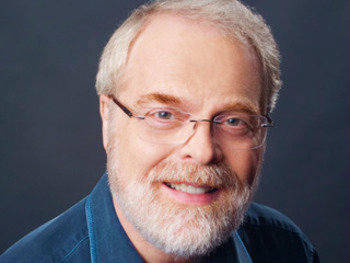
April 25 - Ron Clements

Image copyright mtishows.com
On this day, in 1953, Ronald Francis Clements was born in Sioux City, Iowa. After graduating from Bishop Heelan Catholic High School, Ron hightailed it to Southern California to become a student at the Art Center College of Design in Pasadena. His professional career actually began in 1974 at Hanna-Barbera, but he was only there a few months before getting word that he'd been accepted into Disney's Talent Development Program. At that point, it was goodbye Scooby Doo, hello Mickey Mouse (even though not much animation was being produced with Mickey at that point) and he's never looked back.

Image copyright Disney
Ron came to Disney at a perfect time. For his first two years, he apprenticed under none other than Frank Thomas, the last of Walt's Nine Old Men to still officially haunt the studios. His first work, totally uncredited of course, made it into Winnie the Pooh and Tigger Too. By 1977, Ron was working on his own as a Character Animator, contributing to both Pete's Dragon and The Rescuers. For The Fox and the Hound, he'd been promoted to Supervising Animator and worked with John Musker, a Character Animator on the film, for the first time. Ron and John really hit it off, and became writing collaborators on Disney's next project, The Black Cauldron.

Image courtesy wikipedia.com
The Black Cauldron's production process is notorious for its controversies within the company. A growing number of animators were horribly unhappy with the direction the project was taking, Ron and John among them. Only a few years before, Don Bluth had led a walkout of a whole group of employees over the same kind of complaints. Not wanting another mass exodus, Ron and John proposed to then head of the studio Ron Miller that an adaptation of the children's book series Basil of Baker Street be added to the production slate as an 'alternate' movie for staff to work on if they could no longer stomach Cauldron. Miller agreed, putting Jon and and famed storyboard artist Burny Mattinson in the director's chairs and giving Ron the task of adapting the story. When schedules shifted and became a whole lot tighter (mainly after Cauldron tanked), Burny was moved into more of a producer role and Ron became co-director for the first time.

Image copyright Disney
The Great Mouse Detective opened to positive reviews and financial success. Coming only one year after the disastrous Cauldron, Ron and John's little-movie-that-could literally saved the animation department by convincing the powers that be that they could still generate income (in spite of the fact that they let Vincent Price sing). As Detective was wrapping up production, the new bosses, Michael Eisner and Jeffrey Katzenberg, held a meeting with all the animators to generate new ideas for films. Ron brought a two page synopsis of an adaptation of Hans Christian Anderson's The Little Mermaid and a quick concept piece about setting Robert Louis Stevenson's Treasure Island in space. Eisner rejected both. Within days, however, Katzenberg quietly asked Ron to expand on his treatment of Mermaid, eventually giving Ron and John the green light to write and direct it.

Image copyright Disney
When The Little Mermaid opened on November 17, 1989, it was a smash hit, earning over $200 million in worldwide box office receipts and ushered in the era that became known as the Disney Renaissance. It also cemented the partnership between Ron and John as a co-directing powerhouse. For their follow-up film, they reworked and resubmitted their idea for a space themed Treasure Island. It was rejected again. Instead they were given the helm of an adaptation of a story from 1001 Arabian Nights called Aladdin.

Image copyright Disney
The duo struck gold again in November 1992, as Aladdin went on to become the first animated picture to gross over $500 million. For a third time they submitted what was now being called Treasure Planet as their next film and, for the third time, the studio said no, thanks, why don't you two direct this Greek mythology project we're developing. They said fine, but when the time came to sign new contracts during the production of Hercules, they made sure that one of the stipulations was that their science fiction adventure flick was guaranteed to be their next project. Despite mostly positive reviews (and near universal acclaim for James Woods' performance as Hades), Hercules failed to score at the box office like its predecessors, taking in a paltry $253 million. While still a moneymaker, the Disney Renaissance was starting to wind down.

Image copyright Disney
Following the wrap of production on Hercules, Ron and John finally got to go to work on Treasure Planet, more than a decade after first coming up with the idea. In retrospect, the fact that the movie had been rejected so many times (and that they had to kind of force the studio into making it at all), should have been an omen for everyone involved. Changing the genre of established classics is not only hard but doesn't make people already familiar with the story happy. Treasure Planet opened in November 2002 to tepid reviews and dismal sales. It became the first Disney animated movie since The Black Cauldron to fail to make back its budget. It's not a bad film, but you'd also be hard pressed to call it a good film. The Renaissance was over.

Image copyright Disney
Ron and John inherited a concept called Fraidy Cat as their next project but the production was fraught with problems. When David Stainton, then president of animation, refused to green light the movie in September 2005, both of the co-directors resigned from the company in protest. The successful duo's absence wouldn't even last a year, though. By the spring of 2006, John Lasseter installed as the new chief creative officer of animation and he asked Ron and John to return to Disney to helm an adaptation of The Frog Princess.

Image copyright Disney
As the entire industry was embracing fully computer generated animation, Lasseter was willing to give traditional animation another shot. Ron and John were a perfect duo to head 2D animation's last hurrah. Their direction, along with Randy Newman's blend of zydeco and jazz, pushed The Princess and the Frog to the highest box office receipts in years, over $270 million, but still far short of what had been realized during the Renaissance. It didn't help that Princess opened a week after Avatar (Princess is clearly the superior movie, but there really is no accounting for taste). The 2009 film managed to earn four Oscar nominations (getting edged out by Up in most of them) but is, as of right now, the last film put out by a major studio using traditional techniques. Hand drawn animation is over.

Image courtesy animationmagazine.net
Traditional storytelling, however is not. After The Princess and the Frog, Ron and John became quite secretive about what they were working on. All they would say is yes we're working. After a couple of years of development, they finally came clean about the fact that, yes, they were moving into the realm of computer animation and their next story was inspired by Pacific Island cultures. The movie that came out in November 2016, Moana, became their biggest hit yet. With songs by Lin-Manuel Miranda and overwhelmingly positive reviews, Moana brought over $643 million in box office receipts to the table. The directing team was back on top of the animation world.

Since the release of Moana, John Musker, who obviously felt like walking away a huge success was the way to go,  has retired from Disney and the animation business. Ron hasn't made that decision quite yet. Despite the fact that his long time partner in crime has folded up his directing chair, Ron may (or may not) have another epic story in him just crying out to be told. Whether he goes for it or just spends a few more years, like his old mentor Frank did, guiding the new guys at the start of their journeys, Ron has undeniably spent the last 45 years creating the highlights of two generations worth of childhoods.And for that alone, he deserves a tip of the mouse ears. Happy Birthday, Ron!
Saturday, April 27, 2019

April 24 - Clyde Geronimi


Image courtesy Disney.wikia.com
On this day, in 1989, Clito Enrico Geronimi passed away in Newport Beach, California. Born in Chiavenna, Italy on June 12, 1901, Clyde (as he was known) and his family  immigrated to the United States before he turned seven. Clyde began his career, briefly, at the Hearst Studio before becoming part of the early animation powerhouse of J.R. Bray in the early Twenties. He worked as an animator alongside Walter Lantz. Eventually Lantz moved up to the position of director and used Clyde as one of his lead animators on series like Dinky Doodle (not many people remember Dinky anymore but he did get a shout out in Who Framed Roger Rabbit). By 1926, Clyde was starting to get director credits himself with an occasional screenwriting nod to boot. When Lantz started his own studio in 1930 and began producing new Oswald the Lucky Rabbit shorts, Clyde continued to support his old friend, not knowing that only a year later, he’d be working for the guy who created, and painfully lost, Oswald.

Image courtesy cartoonresearch.com
By 1931, the Bray Studio was completely out of the cartoon business (and almost out of business entirely). As a veteran animator, Clyde had no problem getting a position over at the Walt Disney Studio. He was immediately put to work in the Shorts Department. He worked on Silly Symphonies, Mickey Mouse cartoons, Pluto shorts, pretty much everything the studio was producing. In 1938, he was moved up to Director status and the promotion quickly paid off. He directed the Silly Symphony The Ugly Duckling and won the 1939 Oscar for Best Short Subject, Cartoon. Clyde’s work would win a second Oscar just two years later for the Mickey Mouse/Pluto short Lend a Paw.

Image copyright Disney
During World War II, when a large chunk of the studio was overseas fighting, Clyde was given the task of Segment Director on The Three Caballeros. After the end of the war, he was moved permanently into the Feature Department as a director. Over the next 14 years, Clyde directed segments on Cinderella, Alice in Wonderland, Peter Pan and Lady and the Tramp. He’d been bumped to a Supervising Director position by One Hundred and One Dalmatians, but he didn’t stick around long enough to see the film get released (he did still get a directing credit though). By that time the Shorts Department at Disney was gone and, after the release of Sleeping Beauty, the features were on seemingly rocky ground. Clyde figured he’d get out while he could.

In 1959, Clyde started a new career in television animation, mostly with United Productions of America. He spent the next several years directing episodes of The Dick Tracy Show, The Adventures of Mr. Magoo, The New Casper Show, and Linus the Lion-hearted, ending his career with Spider-Man. He retired in 1969, after nearly 50 years in the animation business.

Image courtesy animatedviews.com
In 1979, at the eight Annie Awards, Clyde was presented with the Windsor McCay lifetime achievement award. It was presented to him by none other than his old co-worker, Walter Lantz. In 2017, for his 28 award winning years with the Walt Disney Studio, he was declared an official Disney Legend. His legend status was awarded posthumously, his children accepting on his behalf, for the Legend himself had quietly passed away at his home in Newport Beach, California on April 24, 1989. He was 87.

April 23 - Disney's Grand Floridian Resort


Image courtesy wikipedia.com
On this day, in 1986, an official groundbreaking ceremony was held as construction began on Disney’s Grand Floridian Resort and Spa. When making plans for his Florida Project, Walt was all about tying everything together into a coherent whole. So when it came to the hotels that would ring the lake near his Magic Kingdom, he had specific themes in mind for them. Each hotel would be a reflection of one of the lands in the theme park. The first two hotels that opened in 1971, were exactly what he envisioned. The Polynesian resort was an echo of Adventureland and the Contemporary resort mirrored Tomorrowland. A third planned hotel was going to be Asian themed, another shout out to Adventureland and still adhering to Walt’s vision, but as the company’s fortunes faltered throughout the Seventies, those plans kept getting pushed back until they were eventually forgotten altogether. 


Image courtesy wikipedia.com
When the Great Shake-up came in 1984, installing Michael Eisner as CEO, it was quickly decided that another hotel was needed near the Magic Kingdom, but the Asian idea was just as quickly shelved as being too dated. Instead, plans were made for a truly deluxe hotel that would be dated right back to the turn of the twentieth century, making it a reflection of Main Street, USA (albeit a much more affluent version). The Grand Floridian Resort (the Spa part wasn’t added until years later) would evoke the beach playgrounds the likes of the Rockefellers and Duponts enjoyed almost a hundred years earlier.


Three Victorian era beach resorts were studied while designing the Grand Floridian. The most obvious influence is the Hotel del Coronado in Coronado, California (just across the bay from San Diego) as it also boasts distinctively red tiled roofs and whitewashed walls. The Mount Washington Hotel in Breton Woods, New Hampshire, with less prominent but still bright red roofs, and Florida’s own Belleview Biltmore Hotel in Belleair (which sadly closed in 2009 and was torn down to make way for condominiums in 2015) also shaped the design.


As one of, if not the, premier resorts on Walt Disney World property, the Grand Floridian is beautiful, opulent and just drips the trappings of the upper class. There is almost always someone playing the grand piano in the lobby throughout the day and an orchestra regales guests each evening. The white sand beach area is actually quite famous (it served as the backdrop for the beach club in Hulk Hogan’s 1994 television series Thunder in Paradise). The grand wedding chapel (which can host several weddings a day) is right next door. And it’s home to some of the poshest eateries on property, including Victoria and Albert’s, a AAA Five Diamond restaurant. So why can’t the resort itself seem to get the same five diamond rating? According to the AAA website, the latest issue has something to do with the bathrooms, which is bringing it down to a 4.5 rating overall, and that, don’t get me wrong here, is still excellent. But the real reason the Grand Floridian can’t make it to that coveted five (and I’ve been told this off the record, so take it with a grain of salt) is because the monorail runs through the resort. Apparently that’s a sticking point for the powers that be at the American Automobile Association. If the hotel was off by itself somewhere, bussing guests around like commoners from, say, the All-Star resort, that would be fine. But the fact that there is such a gauche thing as a train station in the hotel and a monorail keeps going by, that is a cardinal sin.


Thursday, April 25, 2019

April 22 - Disney's Animal Kingdom

Image copyright Disney

On this day, in 1998, the fourth theme park in the Walt Disney World Resort, Disney's Animal Kingdom, began welcoming guests into the wilds of Africa. Partly because of the success of the Tru-Life Adventure films, Walt Disney had wanted to incorporate live animals into his theme park for years. When plans were being made for the Jungle Cruise attraction, he wanted to populate it with real animals. His staff convinced him that it would be too hard to control the guest experience (i.e. keeping the animals awake and visible to guests during the heat of the day would be almost impossible) so mechanical facsimiles were used instead. But the dream carried on and didn’t even die with Walt.

In 1974, Treasure Island opened for business in the middle of Bay Lake at Walt Disney World. Eventually renamed Discovery Island, the 11.5 acre park hosted a variety of birds, alligators, lemurs, tortoises and capuchin monkeys for guests to observe and interact with. It was a start, but not quite what Walt had envisioned. It would be two and a half more decades before that happened.

Image copyright Disney
Almost as soon as the gates of the Disney-MGM Studios were opened in the spring of 1989, plans were started on a fourth theme park for the Florida Project. Senior Imagineer Joe Rohde (who, if you ever get a glimpse of him out in the parks, is instantly recognizable for the large, exotic earring he frequently wears in his left ear) was the major brains behind making the new park themed around the animal world. He was so enthusiastic about it, he brought a Bengal tiger to his first meeting with then CEO Michael Eisner. And who can say no to a 400 pound predator.

Plans proceeded on what was tentatively called Disney’s Wild Animal Kingdom. 580 acres was set aside in the south western quadrant of Walt Disney World, making the new venture the largest theme park in the world. Albeit with one important distinction from other parks: there would be more area allotted to the animals than there would be for guests. To put that in perspective, Animal Kingdom has only about two thirds of the guest capacity of the Magic Kingdom but covers about four times the area. The park’s location also isolates it from the rest of the resort, shielding the animals from most of the noise and light pollution the other parks and hotels tend to generate.

Image copyright Disney
In July 1996, construction began on holding facilities for the animals and the African savanna portion of the park. Over 4 million cubic yards of dirt were added to the area, 40,000 mature trees were planted and seeds from 37 countries representing hundreds of kinds of plants and grasses were cultivated. By the fall of 1997, nearly all the animals had been rounded up and were held in a quarantine facility in northern Florida in anticipation of moving to their new homes, being watched over by staff from 69 different zoos from around the country. As the calendar rolled into 1998, the animals began migrating to their quarters in the Animal Kingdom to begin the acclimation process.

Image copyright Disney
Finally, on April 22, 1998, Earth Day of course, Disney’s Animal Kingdom (the Wild had been dropped pretty early in the construction phase) welcomed its first guests. The park was only about two-thirds open at that point. Africa, Camp Minnie-Mickey (a character meet and greet area), Safari Village (an area similar to the Magic Kingdom’s Hub; it’s where the parks icon, the Tree of Life, is and was renamed Discovery Island when the other park closed in 1999), Rafiki’s Planet Watch and Dinoland USA were all opening day areas. Two areas were slated to open at later dates: Asia and the Beastly Kingdom. Asia opened in 1999, bringing with it tigers and Expedition: Everest, but what about this Beastly area? To talk about that, I’ll need to step up on this soapbox.

Image copyright Disney
Look carefully at the original logo for Animal Kingdom at the top of this post. There are five animals in silhouette marching along that represent the three pronged vision for the park.  Animal kingdom was to present guests with lions, elephants and antelope, in other words, species that exist today. Then there would be an element of dinosaurs, or species that have gone extinct. Both of those prongs exist nicely. However. What do we see in the middle? What sort of animal is basically the focal point of the whole logo? That’s right, it’s a dragon, representing animals of our imagination. Do you see dragons anywhere in Animal Kingdom? Or unicorns? Or sea monsters or hippos in tutus? YOU DO NOT! We were promised epic adventures chasing fire breathing dragons and hunting for glimpses of elusive unicorns, but did we get them? WE DID NOT! And that promise remained in the center of every logo splashed on every product in the park for years before just quietly disappearing. Now you can try to argue that it was quickly decided that fantasy creatures wouldn’t fit in with the rest of the park and its focus on the fates of real animals and taking care of the planet. But then how do you explain Pandora, the newest land about fantasy creatures? I know, I know, Avatar is all about ‘living with the land’ and ‘greed is bad’ but it is a terrible movie (I said it and I’ll stand by it, just try to fight me on this). There are far better movies that could have been utilized to make the same point (like Disney’s own Pocahontas, which Avatar is a bad retread of). Anybody heard of Tru-Life Adventures or the DisneyNature series? Just because James Cameron was able to pony up a few dump trucks full of his own money for the thing doesn’t mean the rest of us should be deprived of our dragons (especially since the Pandora attractions don’t inspire real world conservation any more than a unicorn roller coaster would). Stepping back down now.

Image copyright Disney
All (semi) kidding aside, Disney’s Animal Kingdom is one of my favorite parks. I love the Kilimanjaro Safari ride (although don’t get me started on the removal of the elephant poachers) simply because of all the majestic animals you see, sometimes even poking their heads right into your safari vehicles (beware of ostriches looking for snacks). I can spend hours watching the gorillas or tigers on the walking trails. And, yes, I even like the Flight of the Avatar ride (which doesn’t make the movie it’s based on any better; I’d probably like it more if it was DRAGON themed). It’s hard to believe that it’s already been 21 years since that opening Earth Day, but time flies when you’re having fun. Speaking of fun, who wants to go ride Everest so we can share our impersonations of Disco Yeti?

Wednesday, April 24, 2019

April 21 - Bob Moore


Image courtesy disneydetail.me
On this day, in 1920, Robert C. Moore was born in Los Angeles, California. His father was a violinist with the Los Angeles Philharmonic Orchestra. As Bob was growing up, his father would play on recordings of various projects around town as part of his job. Allegedly, two of those projects were for a fledgling cartoon studio in 1928, soundtracks for a new series of animated shorts starring a scrappy little mouse. One was titled Plane Crazy and the other Steamboat Willie. Whether the fact that dear old dad played for Mickey Mouse sparked little Bob's imagination or not, he began taking classes at the famed Chouinard Art Institute right out of high school. He must have been pretty naturally talented as he didn't stay there long before beginning work at the Walter Lantz Studio in 1938. He was with Lantz for two years, helping to usher in the popular Andy Panda character, before becoming the second person in his family to work for the other Walter in town.

Image courtesy pinterest.com
In 1940, Bob became an animator for the Walt Disney Studio, starting out as an assistant to a third Walter, Walt Kelly. After working under Kelly on Fantasia and Dumbo, Bob became a gag man in the Story Department. As World War II raged on, he contributed to The Reluctant Dragon and The Three Caballeros before being drafted into the Navy to work on propaganda films. He came back to Story for a few years after the end of the war, transferring over to the Publicity Department in 1948. Bob worked under Hank Porter, who had drawn the Snow White and Pinocchio Sunday comics before becoming the head of Publicity Art. Under Hank's guidance, Bob created artwork for movie posters, book covers, greeting cards and any other promotional material you can think of.

When Hank passed away in 1951, Bob was promoted to Art Director of Publicity, a position he would hold for the next three decades. In the early Fifties, in addition to everything he was doing publicity wise, he also began drawing for the Western Publishing comic books the company had licensed. He worked mostly on Donald Duck stories, but his name can be found on Grandma Duck panels and Little Bad Wolf strips. During the same time period, Bob was also illustrating Little Golden Books bearing the famous Disney characters.

Image courtesy wikimedia.org
Throughout his 43 year career with Disney, Bob was tapped to do all sorts of special jobs. One of the little secrets the company doesn't necessarily like to talk about surrounds Walt's signature. He got asked to sign so many things, he simply didn't have time to scrawl autographs and run a company. He authorized a handful of his artists to sign things for him and Bob became one of the best (it's apparently really difficult to tell what is Walt's actual signature and what is Bob's forgery). In 1960, when a new school was built in Walt's boyhood home, Marceline, Mo, and named after the town's most famous citizen, Walt asked Bob to design the artwork for the lobby and gymnasium. After Walt passed away, the United States Post Office wanted to commemorate him with a stamp. Bob was one of the two guys asked to design it (Paul Wenzel, another Disney artist was other). In 1984, when the summer Olympics were held in Los Angeles, Bob, who had been retired for three years at this point, was commissioned to create the official mascot of the Games. Not only did he design Sam the Eagle, but he had to integrate him into hundreds of other signs and logos, for everything from individual events to novelty t-shirts.

Image courtesy waltdisneymuseum.org
In 1981, Bob retired from his post after over four decades of creating thousands of logos, letterheads, brochures, etc. etc. etc. For all his contributions to the company, Bob was honored in two ways. First an exclusively Disney color was named after him. For years (until everything started being done on computers), there were plenty of tubes of Moore Red all over the Ink and Paint Department. Second, in 1996, he became an official Disney Legend. On November 20, 2001, the man who cheekily referred to himself as Bob Moore, MD (the MD stood for Mouse Drawer) left this world in the same city he entered it. He was 81.

Tuesday, April 23, 2019

April 20 - Betty Lou Gerson

Image courtesy otrcat.com
On this day, in 1914, Betty Lou Gerson was born in Chattanooga, Tennessee. Betty’s family spent most of her formative years in Birmingham, Alabama, where her father was a steel company executive. When she was sixteen, the Gerson clan moved to Chicago, Illinois and she got her first taste of performing on a radio show called The First Nighter Program. What made First Nighter different from other serials of the day is that it technically wasn’t a serial. It was the first anthology program meaning a new, complete story was presented each week. If you missed last week’s episode because your cousin was in town and wanted to see the sights, you won’t be confused as to what is happening in this week’s episode, a concept we’re used to but was novel in 1930. Romantic comedies were the usual fare on First Nighter and for the two years she spent with the show, Betty was frequently paired with a young Don Ameche.

Betty’s career didn’t really take off until she was 21 and living in New York City. For the latter half of the Thirties, she became a staple in several radio soap operas. She played the title role in Arthur Grimm’s Daughter, lead the cast as Julia in Midstream, was one of the main Lonely Women and appeared on the radio version of Guiding Light. It wasn’t all melodrama for Betty though, as she continued being the resident romantically comic lead (although some weeks she was comically romantic for a change of pace) on anthologies like Curtain Time and Grand Hotel.

Image copyright Disney
In the mid Forties, Betty changed locations by moving to Los Angeles but continued working in the medium of radio. She reestablished herself on the airwaves in dramas like The Whistler, Crime Classics, Mr. President and Johnny Modero, Pier 23. She also had several roles on Lux Radio Theater including a turn as Glinda the Good Witch in a 1950 production of The Wizard of Oz.

1950 was also the year Betty first became part of the Disney family, when she was cast as the narrator of Cinderella. Her most enduring contribution didn’t come until eleven years later when her voice burst into our eardrums as the deliciously over-the-top Cruella de Vil in One Hundred and One Dalmatians. She also played Mrs. Birdwell, a contestant on the show-within-a-movie, What’s My Crime, that Horace and Jasper watch while the Dalmatians escape from de Vil Manor. Her final Disney role was a rare live action one when she did a cameo in Mary Poppins as an old Crone.

Image copyright 20th Century Fox
Betty was seen on the big screen only a handful of times in her career. For instance, she played Nurse Anderson in the 1958 version of The Fly, Yvonne Kraus in the 1949 anti-communist propaganda film The Red Menace, Kate Peacock in 1959’s The Miracle on the Hills and a half dozen small, mostly uncredited roles in mostly B-Movie film noirs. She did about the same number of live action roles for television, appearing on Perry Mason three times and once each on The Twilight Zone, The Dick Van Dyke Show, Hazel, Wanted Dead or Alive and The Rifleman. In 1966, she retired from acting but not from working. When she married her second husband (her first husband had died the year before), she supported him at his telephone answering service.

In 1996, Betty was made an official Disney Legend not only for trying to skin puppies in the name of fashion but for making us love her as she did it. She came out of retirement just once, in 1997, to provide the voice of Frances the Fish in Cat’s Don’t Dance, the only animated feature ever produced by Turner Feature Animation. Just over a year later, Betty suffered a fatal stroke on January 12, 1999 at her home in Los Angeles. She was 84.

Monday, April 22, 2019

April 19 - Tim Curry

On this day, in 1946, Timothy James Curry was born in Grappenhall, Warrington, Cheshire, England. When he was just 12, his father, a chaplain with the Royal Navy, died from pneumonia. His family moved to South London and Tim began attending a boarding school, where he became a noted boy soprano. When he went to the University of Birmingham, he concentrated on his acting, graduating in 1968 with a double degree in English and Drama. Later that year he began his professional career as part of the original London cast of Hair. It was during this production that he met a young man named Richard O'Brien who changed the course of his career.

One day, Tim saw Richard on the street near his apartment. Richard mentioned he'd been to the gym looking for a bodybuilder that could sing. Tim asked why in the world anyone would need that. Richard handed him a script with the title The Rocky Horror Show on the front and the number of the guy who was going to direct the show, Jim Sharman. Tim read the script and immediately gave Jim a call.

Image courtesy rockyhorror.fandom.com
The Rocky Horror Show opened on June 19, 1973 on London's West End with Tim leading the cast as Dr. Frank-N-Furter, a mad scientist who speaks the Queen's English (and is a queen himself). The show was a hit and won the Evening Standard Award for Best Musical. It would run for over 2,900 performances before closing in 1980. Tim didn’t do most of the run but only because he followed the show when it came to the United States. He opened as the good Doctor in Los Angeles in 1974 and on Broadway in 1975. Sadly, The Great White Way wasn’t quite ready for Rocky Horror. Tim earned a Drama Desk Award for Outstanding Actor in a Musical, but the show only lasted forty-five performances. It’s okay though as the slightly retooled film version (called The Rocky Horror Picture Show for those who can’t tell the difference between the stage and the screen) came out the same year and featured performers from the Broadway show (including Tim, Richard and Meatloaf) as well as more folks from the original London cast (Patricia Quinn, Nell Campbell and Jonathan Adams).

Image courtesy reddit.com
Tim took almost no time at all to return to Broadway, taking over the role of Tristan Tzara in Tom Stoppard’s Tony award winning play Travesties in 1975. When that show ended in 1976, he spent a few years taking supporting roles in films like the 1978 British horror film The Shout and starring on television as the title character in a miniseries about William Shakespeare. He returned to the stage in 1980 as part of the original Broadway cast of Amadeus, again playing the title role. Both Tim and co-star Ian McKellen were nominated for Tony Awards (Ian edged Tim out for the win, but I can think of a lot worse people to lose to).

Image courtesy pinerest.com
From 1981 on, Tim has remained a busy, in-demand actor. Whether he was hosting Saturday Night Live (with musical guest Meatloaf, of course) or earning an Emmy nomination for an episode of Tales from the Crypt, Tim brings a level of professionalism and, yes I’m going to say it, camp to everything he does. Highlights from his career include Wadsworth in Clue (another cult classic and one of my personal favorites), Darkness in Ridley Scott’s Legend and Pennywise the Clown in the television adaptation of Stephen King’s It. But Tim shows up all over the place, like as the hotel manager in Home Alone 2, on an episode of Will and Grace or in his own (albeit short lived) show, Over the Top (see what I mean about camp; even his sitcom knows who he is).

Image copyright Nickelodeon
One of the arenas that Tim has shined in the most has been the world of voice acting. He spent five seasons playing intrepid documentarian Nigel Thornberry on Nickelodeon’s The Wild Thornberrys. He spent another three seasons playing Captain Hook on the Fox series Peter Pan and the Pirates, for which he finally got some bling for his mantel in the form of a Daytime Emmy Award. Tim has also done extensive work recording audio books. For anyone who needs a few hour fix of his distinctive voice, they can search out his versions of A Series of Unfortunate Events, A Christmas Carol and even the book about the original Transylvanian, Dracula.

Image copyright Disney
Tim is a robust part of the Disney family. He first joined in 1993 as Cardinal Richelieu in The Three Musketeers. Three years later he sunk his teeth into Long John Silver for Muppet Treasure Island (he is arguably the best part of that film). The following year he gave voice to Forte, the villain in Beauty and the Beast: The Enchanted Christmas (there is something awfully fitting about Dr. Frank-N-Furter telling the Beast “don’t fall in love”). He’s also done television roles on TaleSpin (Thaddeos E. Klang), Darkwing Duck (Taurus Bulba), Dinosaurs, Disney’s The Little Mermaid (Evil Manta), Aladdin, Gargoyles (Dr. Anton Sevarius), Mighty Ducks, Quack Pack (Moltoc), Recess, Teacher’s Pet, Higglytown Heroes, Phineas and Ferb and he took over the role of Emperor Palpatine on Star Wars: Clone Wars when the original actor passed away. He even has a somewhat bizarre rendition of The Ballad of Davy Crockett that was released on an album called Disney’s Music from the Park (as much as I like Tim, this recording is just phenomenally bad; I’m really not sure how it made it onto the cd).

Image courtesy playbill.com
In 2007, Tim experienced another triumphant return to Broadway as King Arthur in Spamalot, a stage adaptation of another cult classic from 1975, Monty Python and the Holy Grail. He was again nominated for a Tony award and, after moving with the production to London’s West End, earned a Laurence Olivier Award nomination back in his home town. Unfortunately, Spamalot would be something of a last hurrah for Tim. While I've very deliberately talked about Tim and his career in the present tense for this post, as many of his fans know, he's enjoyed better health than of late. In mid 2012, he dropped off the face of the earth, leaving many to wonder what was going on. Later it was revealed that he suffered a massive stroke in July of that year, leaving him wheelchair bound, and for a time, speechless. Since then he's made remarkable progress. He still requires a motorized chair to get around, but was able to play the part of the Criminologist in the live production of Rocky Horror on Fox in 2016. He now frequently makes the rounds of conventions, greeting legions of fans and displaying his unconventional (if now a bit subdued) humor. Will he ever recover enough to return to the stage? Only time will tell. But I can tell you this:even if he had to spend the whole time on a souped up Hover-round, it would be so delightfully campy that you'd forget why he was in it in the first place. And that's why I wish Tim all the best and look forward to whatever comes next. Happy birthday to our favorite Transylvanian!