Sunday, December 16, 2018

December 12 - Peter Boyle

Image courtesy of Playbill.com
On this day, in 2006, Peter Lawrence Boyle passed away in New York, New York. Born October 18, 1935 in Norristown, Pennsylvania, Peter grew up as the son of Francis Boyle, a local television celebrity in Philadelphia. After graduating from high school in 1953, he entered a seminary run by the De La Salle Brothers. While he would earn his bachelor's degree from La Salle University in Philadelphia four years later, Peter did not feel a religious calling and left the order. He then enrolled in Officer Training School, graduated in 1959 and entered the United States Navy as an ensign. His military career didn't last long, however, as he suffered a nervous breakdown and had to leave the service.


Image courtesy of wikipedia.com
Peter moved to New York, got a job as a clerk with the United States Postal Service and began studying acting. He landed the role of Murray in a traveling production of Neil Simon's The Odd Couple. When the tour played in Chicago, Peter ended up leaving the company and joined the famed comic troupe The Second City. At the end of the Sixties, he had a few minor roles in films that were shooting in Chicago.

In 1970, Peter had his first starring role in a movie, the title character in Joe. Amid the controversy the film generated over its violence and language, Peter enjoyed being nominated for a Film Critics Award but thereafter tried to stay away from roles that he felt glamorized violence. He had mixed success with that ideal as he would play a mobster twice over the next few years in Crazy Joe and The Friends of Eddie Coyle. After Joe, Peter found success as Robert Redford's campaign manager in The Candidate and, perhaps his most famous film role, as the "monster" in Young Frankenstein.

Image copyright 20th Century Fox
Peter met his wife, Loraine Alterman, on the set of Young Frankenstein. She was a reporter for Rolling Stone and was friends with Yoko Ono. Peter subsequently became good friends with John Lennon, who was best man at Peter and Loraine's wedding. How's that for a kid from Philly?

For most of the rest of his film career, Peter became an accomplished character actor. He played roles as diverse as a cab driver in 1976's Taxi Driver to a retiring crime boss in the 1984 comedy Johnny Dangerously. One of my favorite roles of his is as Jack McDermott, a mental institution patient, in the 1989 comedy The Dream Team (which also features his Johnny co-star Michael Keaton). Peter also continued appearing on stage in New York. In 1980, he was on Broadway in the Carl Reiner play The Roast and off Broadway in Sam Shepard's True West. A couple of years later he lead the ensemble cast of Snow Orchid at the Circle Repertory.

Image copyright CBS
Then in 1990, his career, and his life, nearly ended when Peter suffered a devastating stroke. For six months, he was completely speechless and immobile. The next few years would involve grueling rehab sessions but Peter's recovery would be remarkable. By 1996, he was on television in an episode of The X-Files that would win him an Emmy for Outstanding Guest Actor. That same year, Peter began the role he will be forever known for as Frank Baron, the cranky father of Ray Romano, on Everybody Loves Raymond. Over the next nine years, he would be nominated for the Emmy for Best Supporting Actor seven times. He wouldn't manage to take the statue home even once though, losing many of those times to his co-star Brad Garrett.

Image copyright Disney
Peter became a member of the Disney family in 1994 as part of the cast of the Tim Allen comedy, The Santa Clause. He plays Tim's boss at a toy company who becomes concerned for his employee's well being. Peter would go on to appear in both of the sequels to The Santa Clause, but in a completely different role, Father Time. He also appeared in the Hollywood Pictures film While You Were Sleeping in 1995. That film stars Sandra Bullock and also features Glynis Johns, who played Mrs. Banks in Mary Poppins. Finally, Peter was a part of the cast of the 1997 remake of That Darn Cat in the role of Pa.

You can donate at myeloma.org
Less than two years after the end of Everybody Loves Raymond, Peter passed away due to complications from myeloma, a cancer of the plasma cells. His death was fairly unexpected as he was due to begin filming another comedy movie, The Golden Boys. Following his death, Peter's widow, Loraine, established a memorial fund in his name that supports the International Myeloma Foundation. A yearly comedy benefit, frequently hosted by Ray Romano, has helped raised millions of dollars and awareness of the deadly disease.

Saturday, December 15, 2018

December 11 - The Muppet Christmas Carol

On this day, in 1992, the fourth Muppet movie, The Muppet Christmas Carol, is released in theaters. This is hands down, my favorite adaptation of the classic Charles Dickens story. And to think it almost never happened. After Jim Henson died on May 16, 1990, the fate of his Muppet creations was very much up in the air. He had been in negotiations to sell his empire to the Walt Disney Company for the supposed sum of 150 million dollars. With Jim's unexpected death, the deal fell apart, and, without the creative genius to lead the company, it was unclear what, if anything, the Muppets might do again. Thankfully, one of Jim's sons, Brian, grabbed the baton and ran with it.

While wondering what project might be suitable to keep his father's company going, a talent agent by the name of Bill Haber planted the idea of a Christmas Carol in Brian's brain. The idea was first sold to ABC as a made-for-television movie. Long time Muppet writer Jerry Juhl began working on a script and quickly decided to make Charles Dickens the narrator in order to retain the tone of the book. Various characters were looked at to play the three ghosts, combinations like Robin for Christmas Past, Miss Piggy for Christmas Present and Gonzo for Christmas Future. Ultimately it was decided that the darkness of the story demanded new characters for the ghosts and that the usual Muppet mayhem would come from the established characters playing all the lesser roles. A script was finalized and submitted to ABC. Executives at Disney saw a copy of it, however, and said Hey, why don't we make a theatrical release out of this? So they did with Brian as director.

Image copyright Disney
When it came time to cast Ebeneezer Scrooge, Brian considered several people ranging from Ron Moody (who played Fagin in Oliver!) and David Warner (who played Bob Cratchit in the George C. Scott version of Carol) to George Carlin. He ultimately settled on Michael Caine and, in my opinion, his choice was perfect. Michael said from the beginning that he was going to play Scrooge like this was a Royal Shakespeare production, no winking at the mayhem, no acknowledging that he was talking to puppets and not real people. It was a strategy that payed off marvelously.

The songs for the movie were written by Paul Williams, who also wrote the songs for the first Muppet movie. In a move that's proven somewhat controversial, Jeffrey Katzenberg decided to cut the song When Love Is Gone from the theatrical release. It's sung by Belle during the Christmas Past sequence and is about Scrooge loving her less and his money more. Katzenberg apparently felt that the song would lose the interest of the kids in the audience. Unfortunately, its removal makes the song The Love We Found, which Scrooge sings at the end of the film, much less poignant because we can't relate it back to him losing the love of his life. The real controversy arises, however, in the fact that some versions of the home video release of the movie include When the Love Is Gone and some don't. For those of us who like the song, it's difficult to know which copy we actually want to buy.

When it was released, The Muppet Christmas Carol received mixed reviews and was a modest box office success, coming in third behind its major holiday competition, Home Alone 2 and Aladdin. Since its release, it has become a bona fide cult classic. I know it's a sad Christmas season for me if I don't watch it at least once. In fact, if anyone needs me for the next 86 minutes, I'm not available.

Thursday, December 13, 2018

December 10 - Leigh Harline

On this day, in 1969, Leigh Adrian Harline passed away in Long Beach, California from complications due to lung cancer. Born in Salt Lake City, Utah on March 26, 1907, Leigh was the youngest of 13. His parents, both from Sweden, had joined the Church of Jesus Christ of Latter-day Saints and moved to Utah in 1891. After graduating from the University of Utah as a music major, Leigh studied piano playing with J. Spencer Cornwall, the conductor of the Mormon Tabernacle Choir.

By 1928, Leigh had moved to California. He found work at several radio stations in both the San Francisco and Los Angeles markets. He did everything from announcing and singing to playing instrumentals to composing original works and conducting them for on air concerts. His work on the radio culminated in participating in the first coast-to-coast broadcast that originated on the West Coast in 1931. One of the people to hear that broadcast and be impressed by it was Walt Disney.

Image copyright Disney
Leigh became part of the Disney Studio in 1932. Over the next few years, he would score over 50 shorts. His music for several Silly Symphonies, including The Old Mill and The Pied Piper, has been described as some of the finest music ever created in Hollywood. In recognition of all he'd achieved so far, Walt had Leigh co-create the score for the studio's first animated feature, Snow White and the Seven Dwarfs. Working closely with Frank Churchill, the pair managed to earn an Oscar nomination for Best Score. Leigh would then work on Pinocchio with Paul J. Smith. This time around they would win the Academy Award for Best Score. Additionally, Leigh's song When You Wish Upon a Star would not only win for Best Original Song but become the de facto theme song for the studio, used in everything from training videos to the signature horn blows of cruise ships.

Image copyright United Artists
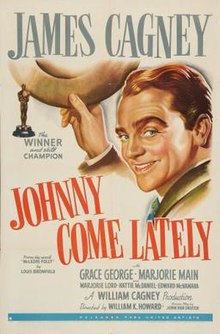
In 1941, Leigh left the studio to become a freelance composer. He scored dozens of films over the next two and a half decades for several different studios. The Pride of the Yankees, Johnny Come Lately and The Wonderful World of the Brothers Grimm all earned him additional Oscar nominations. Over the course of his career, Leigh would be nominated for Academy Awards a total of eight times. In the last several years of his life, he also made the leap to the small screen and composed for the television series Ben Casey and Daniel Boone.

Leigh was 62 when he died and was made an official Disney Legend for all his marvelous contributions to the Disney songbook in 2001.

Tuesday, December 11, 2018

December 9 - Donny Osmond

Photo courtesy twitter.com
On this day, in 1957, Donald Clark Osmond was born in Ogden, Utah. As the seventh son (and no he wasn't the last one either) of George and Olive Osmond, Donny grew up in a close-knit Mormon family that produced a large number of performers.

Four of Donny's brothers, Alan, Jay, Merrill and Wayne, formed a singing group known as The Osmonds Brothers when they were kids (Alan was the oldest at 9). They were basically a barbershop quartet and sang to raise money to pay for the hearing aids two of their other brothers needed. As they gained popularity in Utah, their father decided to have them audition for the Lawrence Welk Show. When they got to California, Welk wasn't able to meet them so the family visited Disneyland as a consolation. When Tommy Walker, Disneyland's Director of Entertainment, stumbled upon the boys signing with the parks own barbershop quartet, the Dapper Dans, he hired them to appear on an episode of the television show Disneyland After Dark. When that episode aired in 1962, Andy Williams' dad was so impressed with their singing, he told his son to book them on his show. Andy did and The Osmond Brothers quickly became regular guests. A year later, five year old Donny joined the group and it became known simply as The Osmonds. The five brothers kept performing on The Andy Williams Show until it ended in 1967. At that point they signed with The Jerry Lewis Show for its two year run.

Image courtesy of wikipedia.com
Following the cancellation of The Jerry Lewis Show, The Osmonds decided they wanted to become a rock and roll band. With Merrill singing lead and Donny singing co-lead, the group had their first hit single with "One Bad Apple" in 1971 (the song had been written for the Jackson 5 who turned it down). A string of hits followed as the brother's popularity skyrocketed. Some songs followed the Merrill/Donny formula (Yo-Yo and Double Lovin') while Donny sang solo on others (Go Away Little Girl and Puppy Love). Minor tragedy struck in early 1972, when Donny hit puberty and his voice changed. It wasn't enough to keep the hits from coming though and the boys got their own Saturday morning cartoon that same year on ABC (it would only last the one season).

Photo lifted from youtube.com
During this same time period, Donny was starting to make it as a solo artist. He would still perform full time with The Osmonds, but was becoming increasingly popular on his own. He also began creating a string of hits with his only sister, Marie, who was climbing the country charts. By 1976, The Osmonds popularity had waned, which was okay with Donny as the next phase of career started that same year: a family produced television show called The Donny and Marie Show. The show ran for three seasons before being unexpectedly cancelled. The aftermath was terrible for the family. They incurred a lot of debt when they built a state of the art television studio in Utah, Donny suffered from performance anxiety, and Marie had wrestled with an eating disorder. Every member of the family would spend the next several years trying to recreate themselves and revive their careers.

Donny would continue performing and occasionally appeared in other musicians music videos. It wasn't until 1989 that he finally returned to the charts with the songs Soldier of Love and Sacred Emotion. As the Nineties progressed, Donny found success on the stage in the title role of a revival of Joseph and the Amazing Technicolor Dreamcoat. He performed the role over 2000 times, in spite of his anxiety and was chosen by Andrew Lloyd Webber to star in the film version in 1999.

Image copyright Disney
Donny officially became part of the Disney family in 1998 (he hadn't become a member of The Osmonds until after their Disneyland After Dark performance) when he was chosen to be the singing voice of Captain Li Shang in Mulan. His rendition of I'll Make a Man Out of You has, in my opinion, become a Disney classic. Interestingly, Donny had auditioned to voice Hercules the year before but was deemed too old sounding. In 2006, he returned to the Broadway stage in a limited engagement as Gaston in Beauty and the Beast. He was so popular, his six week run was extended several weeks and he was invited back to close the show in July 2007.  He then was a part of the 2008 film College Road Trip which also starred Martin Lawrence and Raven-Symone. Donny's final appearance for Disney was as himself when he competed on the ninth season of Dancing with the Stars. He basically did it to try to show up his sister, Marie, who had competed on an earlier season. His strategy worked because he ended up being crowned champion.

Donny has had many other success in his varied career. He spent two seasons hosting a syndicated version of the game show Pyramid. He hosts his own syndicated radio show called, funnily enough, The Donny Osmond Show. And since 2008, he's appeared with his sister in a Las Vegas stage show at the Flamingo simply title "Donny and Marie." At 61, Donny not only keeps chugging along steadily, but continues to do it with the family that got him started in the first place. And that is something worth celebrating.

Monday, December 10, 2018

December 8 - Richard Fleischer

On this day, in 1916, Richard Fleischer was born in New York, New York. Students of early animation should immediately recognize Richard's last name. His father, Max, was a pioneer in animation, inventing things like rotoscoping, follow-the-bouncing-ball sing alongs and characters like Koko the Clown, Betty Boop and Popeye. That made the Fleischer family direct (and often times bitter) rivals to the Disney family. And yet Richard is also an official Disney Legend. How is this possible? He made one contribution to the Disney legacy. One colossal contribution. But his story doesn't start (or end) there.


Image copyright RKO
Richard graduated from Brown University and decided to roll on into the Yale School of Drama. It turned out to be a good decision: one of his fellow students, Mary Dickson, became his wife. In 1937, he was so bold as to start his own theatrical group at Yale. Five years later, he was in Hollywood starting a career in the movies at RKO. Unlike his father, Richard stayed away from animation. His first films were documentaries and compilations of silent pictures he dubbed "Flicker Flashbacks." In 1947, he won his first (and surprisingly, only) Academy Award as the producer of a documentary, Design for Death. It was about Japanese imperialism and what led to World War II. It was also co-written by Theodore Geisel (better known as Dr. Seuss).

The year before Design, Richard had directed his first feature film. A vehicle for a former child star, Sharyn Moffett, Child of Divorce was a success. He was given the helm of Sharyn's next film, Banjo, but that one flopped. He continued making B movies at RKO, mostly film noir thrillers. As he constantly got great reviews for his work, Richard was just as constantly trying to graduate to making A films. RKO's owner, Howard Hughes, was impressed enough with Richard's abilities that he was allowed to shoot some of the footage for 1952's His Kind of Woman, a film noir starring Robert Mitchum and Jane Russell. On the basis of that movie, Richard was lent out to another studio, the Kramer Company, to direct a comedy, The Happy Time, starring Charles Boyer and a young teen named Bobby Driscoll. Bobby had been in several Disney movies, so Walt naturally saw Time and liked the look of the picture well enough that he contacted Richard about doing a project together.

Image copyright Disney
Filming began in 1954, on location in Jamaica and the Bahamas, for one of Disney's greatest films: The studio's fifth live action movie, 20,000 Leagues Under the Sea. Originally budgeted at $5 million, the lavishness of the production (and the fact that the climatic squid fight scene had to be completely reshot) eventually pushed that to $9 million. 20K was the most expensive movie made in Hollywood up to that point. The initial reviews were somewhat mixed but audiences loved it. It's box office of over $28 million firmly established Disney as a major motion studio. And that is why Richard was made a Disney Legend in 2003. The film is widely considered to be a gem of the science fiction genre, a precursor to steampunk and has effects that still mostly hold up today. The film's sets were made into an walk-through attraction in Disneyland and it also inspired an E-ticket ride in Walt Disney World. 20K put Richard smack dab in the middle of the A list.

Image copyright Fox
Following his success with 20K, Richard signed a contract with Fox and would spend the next fifteen years making pictures for them. His first Fox film was The Girl in the Red Velvet Swing with Joan Collins and Ray Milland. He went on to work with Orson Welles in Compulsion, Raquel Welch in Fantastic Voyage, and Tony Curtis in The Boston Strangler. Richard directed Doctor Dolittle which was popular but failed to recoup its budget. His last two films with Fox, Che! with Omar Sharif and Tora! Tora! Tora!, were both expensive flops and ended his association with the studio (they also ended his association with exclamation points as he never used them in movie titles again).

Image copyright MGM
Throughout the Seventies, Richard free lanced, making movies with the likes of Richard Attenborough, George C. Scott, Mia Farrow, Anthony Quinn and Michael Caine. His most famous movie from this period was the Charlton Heston science fiction vehicle, Soylent Green. As the world entered the Eighties, Richard's output slowed down. He made only five films during that decade, including two starring the future governor of California, Arnold Schwarzenegger, Conan the Destroyer and Red Sonja. His final directing gig was Million Dollar Mystery, basically an hour and a half commercial for Glad-Lock trash bags and a contest that eventually awarded someone a million dollars. Needless to say it was not a big hit, critically or financially.

For the remainder of his life, Richard mainly put together two biographies. The first was his own story, Just Tell Me When to Cry, released in 1993, and chronicled trials with all the actors, writers and producers he'd worked with over the years. In 2005, he released his love letter to his father, Out of the Inkwell: Max Fleischer and the Animation Revolution, all about the elder filmmaker's career. Less than a year later, Richard died peacefully in his sleep at his home in Woodland Hills, California. He was 89 years old.

Sunday, December 9, 2018

December 7 - Harry Morgan

Image courtesy of cbsnews.com
On this day, in 2011, Harry Morgan passed away in his sleep at his home in Los Angeles, California. Born April 10, 1915 in Detroit, Michigan as Harry Bratsberg, he did most of his growing up on the other side of the state in the city of Muskegon. Harry graduated from Muskegon High School in 1933 having distinguished himself as a state champion debater and traveled south to get a law degree from the University of Chicago. All went according to plan until his junior year when he started acting and completely forgot all about the law.

In 1937, Harry moved east to New York City and joined the Group Theatre. Working under Lee Strasberg, he enjoyed a number of roles on Broadway including being part of the original cast of Clifford Odets' Golden Boy. His summers were spent at the Pine Brook Country Club in Nichols, Connecticut performing alongside fellow Group members such as Karl Malden and Elia Kazan.

Image copyright United Artists
By 1942, Harry had made the leap to the big screen where he dropped his last name of Bratsberg and started using a stage name of Henry Morgan. Since there was a well known humorist of the time with that name, he quickly changed it to Harry Morgan. His first appearance in movies was with Maureen O'Hara in To the Shores of Tripoli. He would appear in dozens of films over the next 25 years including The Ox-Bow Incident with Henry Fonda, High Noon with Gary Cooper, The Glenn Miller Story with Jimmy Stewart, Inherit the Wind with Spencer Tracy and Frankie and Johnny with Elvis Presley.

Image copyright NBC
Interspersed with all his film roles, Harry also appeared regularly on television. He had recurring parts on such series as Have Gun - Will Travel, The Richard Boone Show and Kentucky Jones. His first big starring role came in 1967 as Sgt. Joe Friday's partner, Bill Gannon, on the NBC drama Dragnet. Harry and his co-star, Jack Webb, worked well together. They'd been in three films together prior to Dragnet and would be in two shows together after, The D.A. and Hec Ramsey. In 1974, Harry made a guest appearance on a show called M*A*S*H as an eccentric Major General. The following season, he joined the show permanently as a completely different character, Colonel Sherman T. Potter. Harry won an Emmy Award in 1980 for his portrayal of the kind Colonel and would continue the role in a short lived spin-off show, AfterMASH.

Image copyright Disney
Harry became part of the Disney family when he appeared in a string of Disney movies throughout the Seventies. His roles include: E.J. Crampton in The Barefoot Executive (which also happened to be John Ritter's film debut), Jesse McCord in Snowball Express, The Angel in Charley and the Angel (Fred MacMurray's last Disney film), Homer McCoy in The Apple Dumpling Gang, General Stilton in The Cat From Outer Space (which also featured McLean Stevenson whose character Harry replaced on MASH) and Major Gaskill in The Apple Dumpling Gang Rides Again.

Harry would continue working throughout the Nineties. He did a series of made-for-tv movies with Walter Matthau. He reprised his role from Dragnet for a comedic movie of the same name and an episode of The Simpsons. He also had a recurring role on 3rd Rock From the Sun. After the turn of the millennium, Harry gave up acting for a quiet life at home. In 2006, he was inducted into the Hall of Great Western Performers at the National Cowboy and Western Heritage Museum in Oklahoma City. When he passed away in 2011, he was 96 years old.

December 6 - Delmer J. Yoakum

Photo courtesy of wikipedia.com
On this day, in 1915, Delmar James Yoakum was born in St. Joseph, Missouri. Del's mother was an artist and her friends were artists, so, growing up he was constantly surrounded by them. In the late Thirties, he was fortunate enough to get a scholarship to spend four summers in a row studying at the Kansas City Art Institute under famed muralist Thomas Hart Benton. When World War II broke out, Del joined the United States Navy as an ensign. When fighting concluded, he relocated himself to Los Angeles, California. There he studied under cubist artist Henry Lee McFee, Italian artist Rico Lebrun and spent time taking classes at Chouinard Art Institute, Jepson Art Institute and the Roski School of Fine Arts at USC.

Starting in 1952, Del began a two decade career as a motion picture scenic artist. He created backdrops and dioramas for use in films like The King and I, The Snows of Kilimanjaro, and the Mount Rushmore scene in North by Northwest. His work can be seen in several Marilyn Monroe films (like 1959's Some Like It Hot which was nominated for a Best Set Decoration Oscar). His creation of the city of Jerusalem for 1953's The Robe helped clinch a Best Set Decoration Oscar win for that movie.

Image copyright Disney
For the Walt Disney Studio, Del's artistry was used in a new medium. Walt hired him to paint the backdrops for several of the attractions built at Disneyland over the years. The most famous of these works can be seen from the Disneyland Railroad. The Grand Canyon and Primeval World dioramas are the result of Del and his team using over 300 gallons of paint to depict a typical day in that part of the world at that particular time. He also created portions of the scenery for Pirates of the Caribbean, It's a Small World and the Haunted Mansion.

Throughout his life, even more so after his retirement from Hollywood in 1972, Del also created fine art in both watercolors and oil. He won numerous awards for his paintings and some of them can be found in places as diverse as the San Diego Art Museum and Coventry Cathedral in Coventry, England. In spite of his obvious talent, Del once quipped "Painting became my life. If I had to do it all over again, I'd do the same thing, but I'd be better at it." Del quietly passed away on October 25, 1996. He was 90 years old.