Showing posts with label Pinocchio. Show all posts

Friday, July 5, 2019

June 25 - Milt Kahl

Image courtesy d23.com
On this day, in 1934, Milton Erwin Kahl began working at the Walt Disney Studio. Born on March 22, 1909 in San Francisco, California, Milt loved drawing so much he dropped out of high school to follow his dreams of becoming a cartoonist. He started by working in newspapers layout artist for first the Oakland Post-Enquirer and then the San Francisco Bulletin. After getting his feet wet, he went out on his own, starting a commercial art business, just in time for the Great Depression to begin its strangle hold on the nation's economy. Milt struggled to keep his shop open until one day, in 1933, when he went to the movies for a mental health break and saw a Silly Symphony, The Three Little Pigs. He thought it was the most fantastic thing he'd ever seen and was immediately hooked on animation. By June 1934, his own enterprise was at an end and he applied at the Walt Disney Studio for a job. His talents were so impressive, he skipped the inbetweener position and began as an assistant animator.

Image copyright Disney
Milt began his Disney career in the Shorts Department, making contributions to classics like The Lonesome Ghosts, Mickey's Circus and the Academy Award winning Silly Symphony The Ugly Duckling. It didn't take long for him to move up to animator. I mean pretty much everyone got promotions once production started on Snow White and the Seven Dwarfs, but Milt really deserved his. For the studio's first feature, he was in charge of animating the Woodland Animals and the Prince. By the second feature, Pinocchio, all of Milt's peers were awe of his talents. Ollie Johnston remembers Fred Moore coming into his office one day just raving about Milt's drawings. Ollie went to look for himself and was blown away. Walt was so impressed he made Milt Pinocchio's supervising animator.

Not only did Milt become one of Walt's Nine Old Men (as did Ollie), he's generally considered the leader of the group. He was comfortable and talented enough to do technically hard things like realistic looking fawns or stag antlers, he could also do artistically hard things like humans. Throughout the decades, Milt was responsible for finalizing the look of hundreds of characters in dozens of films. The list of characters he personally animated is almost mind blowing:

Image copyright Disney
Snow White and the Seven Dwarfs - Forest Animals and Prince

Pinocchio - Pinocchio and some of Jiminy Cricket

Bambi - Bambi, Thumper, several deer

Saludos Amigos - riding a llama sequence

Make Mine Music - The Martins and the Coys

Song of the South - Br'er Rabbit, Br'er Fox, Br'er Bear (especially the Tar Baby sequence)

Fun and Fancy Free - Lulubelle, Lumpjaw and various bears

Image copyright Disney
Melody Time - Johnny Appleseed, Guardian Angel, Slue Foot Sue, Pecos Bill

The Adventures of Ichabod and Mr. Toad - Angus MacBadger, Rat, Mole, an angry mob, Brom Bones

Cinderella - Fairy Godmother, Prince Charming, The King, The Grand Duke

Alice in Wonderland - Alice, the White Rabbit, the Dodo, flamingos and hedgehogs

Peter Pan - Peter Pan, Wendy Darling, John Darling, Michael Darling, Mr and Mrs. Darling, Nana

Image copyright Disney
Lady and the Tramp - Lady, Tramp, Beaver, Trusty

Sleeping Beauty - Prince Phillip, King Hubert, King Stefan, animals, Samson

One Hundred and One Dalmatians - Roger, Anita, Pongo, Perdita

The Sword in the Stone - Wart, Merlin, Sir Ector, Kay, Archemedes, Madame Mim, dogs

Mary Poppins - Master of Hounds, hounds, fox

Image copyright Disney
The Jungle Book - Mowgli, Baloo, Bagheera, Shere Khan, King Louie, Kaa, the Vultures

The Aristocats - Thomas O'Malley, Duchess, Madame Bonfamille, Edgar, George

Bedknobs and Broomsticks - King Leonidas, Secretary Bird

Robin Hood - Robin Hood, the Sheriff of Nottingham, Little John, Allan-a-Dale, Maid Marian, Friar
 Tuck, King Richard

The Many Adventures of Winnie the Pooh - Tigger, some Winnie the Pooh, a little Piglet

The Rescuers - Madame Medusa, Mr. Snoops, Penny, Brutus and Nero

Image courtesy waltdisney.org
Once you've wrapped your mind around that list, realize this: not only did he animate all those characters, but for the titles in bold, he was also that film's directing animator. Meaning he animated his characters and made sure that all the other characters were being handle correctly as well. I don't think it's an understatement to say that if Milt's commercial art business hadn't failed, the Walt Disney Studio wouldn't have been as successful as it was.

Milt retired in 1976, as production was wrapping up on The Rescuers and after 42 years creating magic for millions of moviegoers. He moved back to the Bay Area and spent the remainder of his days making wire sculptures of ballerinas and other human forms. On April 19, 1987, Milt succumbed to pneumonia at his home in Mill Valley, California. Just two years later, in the second class of inductees, Milt and his fellow Old Men would be declared official Disney Legends. If he'd been there to accept the award, he would probably have declared, with his usual humility, "Aww... You're full of it!" And indeed, every time we watch a Disney classic, because of Milt, we are full of It.

Wednesday, May 29, 2019

May 27 - Ken O'Connor

Add caption
On this day, in 1998, A. Kendall O'Connor passed away in Burbank, California. Born on June 7, 1908 in Perth, Australia, Ken began his professional career at the age of 16 as a reporter for the newspaper his father owned. At some point, someone died (he can’t remember who) and no one had a picture of them for their obituary. Ken drew a better than passing portrait of them and became the paper’s resident artist as well. As his interest in art grew, he began taking classes, selling the cartoons and oil paintings his studies produced for spending money. In 1930, Ken’s father started working for the Australian National Travel Association and the whole O’Connor clan moved to San Francisco, California to promote tourism to the Land Down Under. Ken continued his art education at the California School of Fine Arts (now known as the San Francisco Art Institute) and earned money by becoming the art director for a local poster company.

Image copyright Disney
In 1935, the Walt Disney Studio was desperately hiring artists in order to have a staff that could actually create a feature length Snow White and the Seven Dwarfs. Ken’s father encouraged his reluctant son to apply. He was quickly hired as an inbetweener and just as quickly moved into the special effects department. His main job was to be a rotoscoper. Rotoscoping is a process where you make a live action movie of something you want your animated character to do (like dancing) and then make rough tracings of each frame of film. Those rough drawings then get handed off to animators, overdrawn with the character and cleaned up, giving you a much more realistic representation of action than freeforming would. It’s a very tedious process but was probably the best way young Ken could have ever learned about how the process of animation differs from a still life painting. And learn he did.

Image copyright Disney
Following the release of Snow White, Ken became an assistant in the layout department. His first project was the 1937 short Clock Cleaners. Because a Mickey Mouse short can be a lot less realistic than Walt wanted his features to look, Ken could take a lot of artistic license to achieve the effects he wanted. Or as he put it, having learned the rules of perspective at art school, he could violate all of them to make the picture much more dramatic. So he did and everyone noticed. Ken’s incredible work on Clock Cleaners marked the beginning of a brilliantly long career in layout, an area of animation most people don’t even know exists.

Image copyright Disney
A layout artist is quite literally in charge of how you will see everything in an animated movie. They create the backgrounds, or sets, that the action will take place in. They also work with directors to decide what angle the audience will see things from. In live action, a scene can be shot from multiple angles and then cut differently if the first take isn’t something the production team likes. Animation is completely different. If the angle of a scene doesn’t work for some reason, there isn’t different footage that can be spliced in to fix it. What you have is the only thing that was painstakingly drawn. If you look at it and decide it would be better to, say, see a character from the side view instead of dead on, you have to restart the scene from scratch. In the days of hand drawn animation, it was cost prohibitive to do even a small amount of redraws. Determining all that beforehand is the only way to do it. It’s better now with computers and 3D rendering and all that, but even now, better is a relative term.  A good layout artist was and is crucial to creating successful animated movies. It turned out that Ken wasn’t just good, he was one of the best.

Image copyright Disney
For Pinocchio, Ken crafted the overhead shot of the puppet being led astray by Foulfellow and Gideon, parading through the streets of the town. He filmed some live action reference footage to help with that one. For Cinderella, he designed and built a detailed model of the pumpkin coach, which was approved by Walt with zero (that’s right zero) changes, becoming the coach that’s seen in the film. Having the model improved the action of those scenes immensely. For Lady and the Tramp, Ken knew it was going to be important to be able to show things from Lady’s perspective and shot all sorts of reference film from about a foot and a half off the ground. For Alice in Wonderland, he spent hours working out the proper horizons and vanishing points and multiple perspectives for all the scenes featuring playing cards, knowing that if just one of them was off, the whole scene would look wonky. All told, Ken would work on 13 of the 21 animated features that were released during his years with Disney, making invaluable contributions to each and every one of them.

Image copyright Disney
Ken wasn’t only good at camera angles, he was good at coming up with new techniques as well. For the Trees segment of Melody Time, he suggested using pastels on the cels and then coating them with lacquer to keep them from smudging to get the unique look of that scene. In Dumbo, when Timothy and Dumbo get drunk, he knew it would be nearly impossible to keep the colors of the pink elephants consistent. What you are actually seeing there is the color of the background. Each individual cel is painted all black except for an elephant shaped clear spot. A simple but highly effective solution. For the Dance of the Hours segment in Fantasia, he deliberately changed the general motifs of the animation each time the music entered a new movement, going from vertical shapes to elipses to diagonals.

Image copyright Disney
The Shorts Department didn’t let Feature Animation hog all of Ken’s talents over the years. He was part of the teams that created classics like Toot, Whistle, Plunk and Boom, The Whale Who Wanted to Sing at the Met and several of the educational shorts like 1946’s The Story of Menstruation.

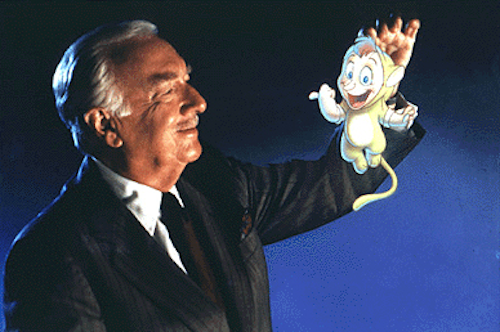
Ken officially retired in 1974, but would continue to consult on a variety of projects. He contributed to the films that became part of the World of Motion and Universe of Energy pavilions at Epcot and the short Back to Neverland, starring Robin Williams and Walter Cronkite, that was a staple of the animation tour at the Disney-MGM Studios for many years. He also spent time as a professor at CalArts, teaching the next generation of animation giants, including Brad Bird, John Lasseter and John Musker. In 1992, for his nearly four decades of making Disney animation the best in the world, Ken was declared a true Disney Legend. Six years later, the Australian reporter who reluctantly turned into an artistic heavyweight would pass away at home from natural causes. He was 90 years old.

Monday, May 13, 2019

May 11 - Albert Hurter

On this day, in 1883, Albert Hurter, Jr. was born in Zurich, Switzerland. The eldest of three sons, Albert was inspired to become an artist by his father, a technical drawing teacher at Zurich’s Berufsschule. At a young age, he was diagnosed with rheumatic heart disease, brought on by rheumatic fever (which can occur after getting strep throat). The series of diseases is something that would be easily curable by the early 1900’s, but which did irreversible damage to Albert’s heart, not killing him outright, but shortening his life considerably. Luckily, the disease didn’t keep him from living in the meantime.

Image courtesy wikipedia.com
In 1903, Albert moved to Berlin to begin his formal art training. He studied diligently for seven years, returning to Switzerland shortly before Albert Senior died. Partly to escape from the overwhelmingly fond memories of his father (and partly because that’s where an exciting new art form was starting to explode), Albert soon moved to America, taking up residence in New York City. He began working in animation at the Barre-Bower Studio on the Mutt and Jeff shorts in 1912. Six years later, he suddenly left Barre-Bower (and the animation business altogether), apparently over continuous disagreements with his fellow co-workers (although what exactly those fights were supposedly about, no one really knows).

Image courtesy bpib.com
Albert moved west to Southern California. For the next decade he eked out a living, designing clothes, furniture and magazine layouts for whoever would pay him. In 1931, he reconnected with Ted Sears, an old co-worker from his Barre-Bower days, who was then working for the Walt Disney Studio. Disney was always looking for new talent and hired Albert on Ted’s word. It quickly became apparent that Albert was a genius when it came to anthropomorphizing both animals and objects. Walt moved him into the Story Department (which, including Albert, now had three members) and turned him loose. Albert also sketched quickly and with great proliferation. Given a simple story idea (like "The Three Little Pigs"), he could go into seclusion for days, coming out the other side with dozens (if not hundreds) of characters, gags, settings, props, animal sidekicks, etc.

Image courtesy pinterest.com
Albert worked mostly on the Silly Symphonies, but when features came along, his fingers are all over Snow White and the Seven Dwarfs, Pinocchio, Dumbo and Fantasia. It's almost impossible to overstate how many characters that came out of the studio in the Thirties and early Forties had their origin in Albert's brain. It's as equally impossible to pinpoint specific bits of animation that can be considered 'Albert's,' since most of his work was more on the concept end. Not only could he come up with all sorts of variations on a theme, his sketches often inspired the animators around him to explore new directions and themes. And the grounding he got in classic art back in Berlin elevated everything Disney did to artistic heights Mutt and Jeff could only dream of.

image courtesy bpib.com
One of the few characters that didn't change a whole lot from his early sketches was the first Disney Princess, Snow White. He nailed her right from the beginning. A big chunk of his ideas, though, ended up getting used on different projects from the one that gave birth to them. One general rule of thumb around the studio was that nothing Albert drew should ever be thrown away because eventually a project will come along that it will be perfect for. Albert's weak heart finally give out on him on March 28, 1942, but his sketches would continue to influence the look of Disney films for over a decade longer, showing up in Peter Pan and Lady and the Tramp.

In his will, Albert, who never married or had any children, designated money to publish a book of his work, leaving it up to his old pal, Ted Sears, to make it happen. Ted toiled away faithfully and honored his friends last wish. Seven years after Albert's death, He Drew As He Pleased was published, featuring over 700 of his doodles, drawings and incredible concepts. I've only seen a fraction of what's in it but what I have seen is absolutely delightful (it is out of print but copies are available on Amazon for around $250). I really get the feeling that if Albert had lived longer or been slightly later in Disney history, made it past World War II perhaps, he would be better known. But, regardless of his lack of fame, his talent and influence are undeniable. Without Albert, the Disney we know and love, might never have existed.

Monday, April 15, 2019

April 14 - Harry Holt

Image courtesy allears.net
On this day, in 2004, Harry Holt passed away in Casselberry, Florida. Born on April 11, 1911, Harry never had any formal art training, he was just a kid who loved to draw and did it constantly. In 1936, he was visiting his mother in Southern California when a friend showed him a newspaper advertisement for artists needed at the Walt Disney Studio. It was the height of the Great Depression, Harry was unemployed and he figured he had nothing to lose by applying. His talent was enough (or as he might put it, the studio’s need was enough) to secure him a job as an apprentice in the animation department.

Image copyright Disney
Harry’s first assignment was as an inbetweener on the Silly Symphony Woodland Café. Once he’d satisfactorily cut his teeth, he was quickly moved onto the studio’s main project at the time, Snow White and the Seven Dwarfs, again as an inbetweener. One specific scene that Harry worked on is of the Evil Queen in her old hag disguise rowing down the river. By the studio’s next feature, Pinocchio, he’d become an assistant animator working directly under Eric Larson, one of Walt’s Nine Old Men.

As World War II ramped up, Harry was kept busy at the studio working on training films for the Navy. Not only did the work provide his living, it also granted him deferments from being sent to the battlefront. By the time all his deferments ran out, his 31st birthday had passed and he could no longer be drafted under rules Congress had also just enacted. Content to remain in Southern California, safely churning out films for the military, Harry became a full-fledged animator in 1943. Over the next thirteen years, he worked mainly in the shorts department creating memorable moments for both Pluto and Donald Duck.

Image courtesy lambiek.net
During the latter half of the Forties, Harry brought in extra cash by moonlighting as a comic book artist. Working under Benjamin Sangor at the American Comics Group, he drew comedic animals for the Merry Go-Round Comics label and had his own feature under the Barnyard Comics brand, Blackeye and Blubber.

By 1956, Harry could see the writing on the wall for the Shorts Department and he decided to leave Disney under his own power. He took a job offer with Fred Niles Communication Center in Chicago, Illinois. Now working for the largest producer of television commercials in the eastern half of the United States, Harry was made art director of both the company’s live action and animated efforts. He enjoyed his work for four years, but couldn’t stand the icy winters and moved back to Southern California in 1960.

Image copyright Hanna-Barbera
Disney had just released Sleeping Beauty, but had also laid off three fourths of its animation staff and was seriously considering not making anything other than live action films. With no chance of returning to his old job, Harry took a position with Hanna-Barbera. For the next few years he lent his talents to such classic cartoons as The Flintstones, The Jetsons and Top Cat. During this time he also worked over at MGM on the Tom and Jerry series.

In 1966, Harry returned to Disney to start the second phase of his career with the Mouse. This time he was hired over at WED Enterprises (the department that eventually became Imagineering) and he spent his time turning artist’s sketches into three dimensional models, known as maquettes, which would in turn be developed into full sized Audio-Animatronic figures. Harry helped develop the look of characters in the Country Bear Jamboree, the Haunted Mansion, Pirates of the Caribbean, Peter Pan’s Flight, Snow White’s Scary Adventures, and the Mickey Mouse Revue.

By 1976, Harry was made Art Director in charge of Quality Control and Product Design, which basically meant he was in charge of the look of the merchandise sold at Walt Disney World. One of the highlights of this phase of his career was the creation of the Amerikids figurines in 1979, his American answer to the European styled Hummel figures.

Image copyright Disney
In 1980, Harry was assigned to the team working on all the plans for Epcot Center. Again he spent most of his time creating maquettes for the attractions, although some of the Aztec style art that made it onto the front of the pyramid in the Mexico pavilion of World Showcase was done by his hand. The following year, Harry moved to Japan for several months, working his usual magic for the installation of several attractions and shows for the company’s first international theme park, Tokyo Disneyland. Many of the molds that had been used for figures and props in Disneyland and the Magic Kingdom had fallen into disrepair and needed Harry’s expertise in making them functional again.
Then in 1982, shortly after his return from Japan, Harry officially retired from the Walt Disney Company. Spoiler alert: like so many of the guys who’d been around since the Thirties, his retirement didn’t stick. In 1987, Harry was asked to take up residence in a little nook of the Disneyana Collectibles Store on Main Street USA in the Magic Kingdom. His job was to sit at an animator’s desk, interact with guests and complete sketches of some of his most famous characters to give away. It started out as a promotional stunt for the upcoming Disney-MGM Studios, which was going to feature its own animation department. Harry proved so popular with guests (most of whom had no idea who he actually was) that he enjoyed his part time gig for seven years, only stopping when the work became too much for his then 83 year old body. For the next decade, he lived quietly at home in Central Florida with his wife of 27 years, still drawing nearly every day, until passing away a few days after turning 93.

Monday, March 25, 2019

March 23 - Norman Palmer

Image courtesy d23.com
On this day, in 2013, Norman Palmer passed away in his sleep at his home in Northridge, California. Norm was born on October 7, 1918 in Santa Ana, California the fourth generation of his family to be native to the area. He graduated from Hollywood High School in 1937 and became a projectionist for the Walt Disney Studio the following year. After six months on the job, he moved into the Editing Department and stayed there for the rest of career.

Image copyright Disney
After helping edit features like Pinocchio and Fantasia, World War II came along and Norman did his patriotic duty, enlisting in the United States Navy. He quickly became part of the Field Photo branch and began working with the likes of legendary director John Ford. He spent most of his tour editing films for the Joint Chiefs of Staff in Washington but he did spend some time on the front as an aerial photographer doing reconnaissance work.

When the war was over, Norman returned to Burbank and resumed his editing duties for Disney. It wasn't long before a young lady in the Ink and Paint Department caught his eye. In December 1947, Barbara Major became Mrs. Norman Palmer and happily remained his wife until her death 52 years later.

Image copyright Disney
As the Fifties began, Norman made two important contributions to the company. First, he created a whole new genre of wildlife pictures with the Tru-Life Adventure series. His ability to edit thousands of hours of raw footage down into entertaining nature films, perfectly paired with just the right music, set the standard for years to come. It's really his editing that won Oscars for movies like The Living Desert, Water Birds and In Beaver Valley. Second, he took on the potentially thankless task of mentoring the boss' kid. When Roy E. Disney joined his father and uncle's company, he started in the Editing Department and learned everything he needed to know from Norman.

After the Tru-Life Adventures ran their course, Norman continued editing other live action movies for the studio like The Incredible Journey, The Gnome-Mobile and The Shaggy D.A. He also edited more than two dozen episodes of the Wonderful World of Color (and all its later versions) right up to his retirement in 1983. In 1998, for his 45 years of hit making genius in the editing room, Norman was made an official Disney Legend. He also received a posthumous homage in the video game Bendy and the Ink Machine: one of the game's characters is a projectionist named Norman Polk. He was 95 when he died.

Thursday, January 3, 2019

December 30 - Bill Tytla

Image courtesy of d23.com
On this day, in 1968, Vladimir Peter Tytla passed away at home on his farm in Flanders, Connecticut. Bill, as he was known, came into this world on October 25, 1904 in Yonkers, New York as the son of Ukrainian immigrants. Supposedly at the age of nine, he saw Winsor McCay's Gertie the Dinosaur and instantly fell in love with the medium of animation. While in high school, Bill started taking night classes at the New York Evening School of Industrial Design. It wasn't long before his love of art began to win out over his love of pretty much every other subject and he didn't bother going to high school anymore. By the time he was 16, Bill worked at the New York branch of Paramount Studios doing the lettering for their title cards.

Image courtesy of Wikipedia.com
Bill soon moved over to the Raoul Barre Studio and began working on the Mutt and Jeff shorts. He then sign on with John Terry and eventually ended up at John's brother Paul's studio, Terrytoons. By this time, Bill was making a good living as an animator but the medium was a little simplistic and crass for his taste. He still dreamed of becoming a master artist. He enrolled in classes again, this time at the Art Students League of New York. Then, in 1929, he relocated to Paris, France and studied painting and sculpture. Unfortunately, being surrounded by the works of the old masters didn't help his confidence any. He ended up destroying most of his work from this period because of its inferiority and hightailed it back to America.

Determined that his studies would make him a master animator if not painter or sculptor, Bill resumed working for Terrytoons. He became good friends with a fellow artist there, Art Babbitt. When Art left New York for Hollywood and the Walt Disney Studio, he would spend the next two years trying to entice Bill to follow him. Bill resisted. He was making great money during the Great Depression after all. But finally, he decided to make a visit to his old friend Art. He was so impressed by the city and the studio, he took a pay cut to move there.

Image copyright Disney
Starting in 1935, Bill worked on Silly Symphonies like The Cookie Carnival and Mickey shorts like Mickey's Fire Brigade. His work was so filled with passion that he reportedly tore holes in his paper with his pencil. His work was also so incredibly good that Walt was quickly throwing money at him to get him to stay. Bill and Art became the studio's top money makers and even became roommates again, like they'd been while working at Terrytoons. That arrangement would stand until Bill's 30 year marriage began in 1938.

Image copyright Disney
When work began on Disney's first feature, Snow White and the Seven Dwarfs, Bill was one of the first animators assigned to the project. Working closely with Fred Moore, he designed the look of the whole film and helped define each of the dwarfs personalities. One of the best scenes in the film where you can experience Bill's talent is watching Grumpy's transformation after Snow White kisses him. Following the success of Snow White, Bill's next assignment was the villain of Pinocchio. His ability to express the strong inner feelings of the somewhat crazy kidnapper makes Stromboli marvelous to watch.

Image copyright Disney
Bill's followup to Stromboli would be the Giant in Brave Little Tailor. Ollie Johnston, one of Walt's Nine Old Men, rightly argues that the look, feel and personality of giants in cartoons was set once Bill had done it. The short was nominated for an Oscar but lost to another Disney short, Ferdinand the Bull. Bill then moved on to animating the sorcerer, Yen Sid, in The Sorcerer's Apprentice. Once that became part of the larger project of Fantasia, though, Bill would get assigned perhaps the most iconic character of his career, Chernabog. The fierce, domineering and downright scary demon is clearly only that way because Bill Tytla was his animator. Growing tired of drawing "heavies," as he put it, his next assignment was decidedly more light hearted. He got to become the title character of 1941's Dumbo, which he modeled partly on his baby son.

Image copyright Disney
Then came the infamous Disney Studio Strike of 1942. Even though he was one of the best paid animators, Bill sympathized with his friends and, to the consternation of Walt, joined them on the picket line. Even though he returned to work once the strike was over, it was never the same. The war economy meant much less stimulating assignments. For Saludos Amigos, Bill animated Pedro the airplane and Jose Carioca, neither much of a challenge for him. He lent his talent to a couple of wartime shorts, but his growing dread of a Japanese attack on California led him to make a decision he would regret for the rest of life. On February 24, 1943, Bill resigned from the Disney Studio and went to live on a farm he owned in Connecticut.

Image copyright Warner Brothers
For a while, Bill went back to work for Terrytoons as an animator but soon left to become a director at a Paramount owned studio, Famous Studios. Over the next decade he directed shorts featuring Popeye, Little Lulu, Casper the Friendly Ghost and Little Audrey. In the early Fifties, he joined Tempo Productions, a studio formed by former Disney compatriots David Hilberman and Zack Schwartz, and began producing animated television commercials for the likes of Camel cigarettes, Plymouth cars and Tide. His last project was on the 1964 Warner Brothers film The Incredible Mr. Limpet, which starred future Disney Legend Don Knotts.

During production on Limpet, Bill's health began to decline and, shortly after it wrapped, he suffered a series of small strokes that left him blind in one eye. Near the end of his life, he tried several times to return to Disney, but, since Walt had passed a couple of years before, he was told there wasn't a place for him anymore. The excuse was given that there wasn't enough work for the animators the company already had, but Bill's heart just became even heavier with regret. He would pass away in 1968, mere weeks after his final rejection. Thirty years later, in recognition of his animation genius he was made an official Disney Legend.

Tuesday, January 1, 2019

December 27 - Jack Bradbury


Image courtesy of comicvine.gamespot.com
On this day, in 1914, John Morin Bradbury was born in Seattle, Washington. Jack was always interested in the comic strips he saw in the newspapers growing up and felt that drawing them must be a pretty great way to spend one’s time. So he practiced his skills as often as he could, waiting for an opportunity to break into the business. In 1933, he saw the Disney produced Silly Symphony The Three Little Pigs and not only was enamored of it himself, but noticed how everyone in town seemed to be talking about it. He heard rumors that the Disney Studio was hiring and sent a portfolio down to Hollywood. He was invited to come down for a two week trial run, mostly at his own expense. Jack put $50 in his pocket and took the offer. He passed the test and, at just 20 years of age, started his life in cartoons for the princely sum of $15 per week.
Image copyright Disney
For the next four years, Jack worked as an inbetweener on such classic Mickey Mouse shorts as The Band Concert and Through the Mirror. As work ramped up on Snow White and the Seven Dwarfs, he began working under Eric Larson and Milt Kahl. The employees of the studio were encouraged to work up their own little pieces of animation and actually have them filmed so they could be critiqued and given pointers on how to improve. As the big drive to finish Snow White wound down, Jack made a couple of those pieces and asked Ham Luske, who’d been supervising animator for Snow White’s title character, to look at them. Ham approved of them and showed them to Walt, who also approved.
Image copyright Disney
In 1938, Jack became a full animator. He worked on shorts like Ferdinand the Bull (one of his sequences is when Ferdinand sits on the bee) and Barnyard Symphony. He also lent a hand to the next several features the studio produced. Jack’s work can be seen in some of Figaro’s scenes in Pinocchio, the Pegasus family in Fantasia and the stage fight in Bambi. Then, in 1941, Jack got caught up in the big animator’s strike at the studio. After being out for several weeks, he was invited back to work when the strike ended but his return didn’t last long. By the end of the year, Jack was one of a number of animators who would be permanently laid off.
Image copyright Disney/Western Publishing
From 1942-44, Jack went across town to work for Friz Freleng at Warner Brothers, mostly working on Bugs Bunny shorts. Following his stint there, he went to work for American Comics Group working on comic book stories for characters like Fremont Frog and Spencer Spook. In 1947, Jack began working for Western Publishing, the company that produced comic books based on works by Disney, Walter Lantz and Warner Brothers. For the next 31 years, he drew practically every Disney character that existed for comic books and the Little Golden Books. He was so adept at it that Walt reportedly told Western that if Jack drew it, it didn’t need to be submitted for approval.

Starting in late 1969, Jack would begin to suffer from macular degeneration. As his eyesight worsened, he gradually moved from drawing comics to writing them instead. He finally had to call it quits for good in 1978. Towards the end of his life, Jack enjoyed a resurgence of interest in his work and would occasionally make appearances at various comic cons. He would pass away from kidney failure on May 15, 2004 in Sylmar, California. He was 89.

Thursday, December 13, 2018

December 10 - Leigh Harline

On this day, in 1969, Leigh Adrian Harline passed away in Long Beach, California from complications due to lung cancer. Born in Salt Lake City, Utah on March 26, 1907, Leigh was the youngest of 13. His parents, both from Sweden, had joined the Church of Jesus Christ of Latter-day Saints and moved to Utah in 1891. After graduating from the University of Utah as a music major, Leigh studied piano playing with J. Spencer Cornwall, the conductor of the Mormon Tabernacle Choir.

By 1928, Leigh had moved to California. He found work at several radio stations in both the San Francisco and Los Angeles markets. He did everything from announcing and singing to playing instrumentals to composing original works and conducting them for on air concerts. His work on the radio culminated in participating in the first coast-to-coast broadcast that originated on the West Coast in 1931. One of the people to hear that broadcast and be impressed by it was Walt Disney.

Image copyright Disney
Leigh became part of the Disney Studio in 1932. Over the next few years, he would score over 50 shorts. His music for several Silly Symphonies, including The Old Mill and The Pied Piper, has been described as some of the finest music ever created in Hollywood. In recognition of all he'd achieved so far, Walt had Leigh co-create the score for the studio's first animated feature, Snow White and the Seven Dwarfs. Working closely with Frank Churchill, the pair managed to earn an Oscar nomination for Best Score. Leigh would then work on Pinocchio with Paul J. Smith. This time around they would win the Academy Award for Best Score. Additionally, Leigh's song When You Wish Upon a Star would not only win for Best Original Song but become the de facto theme song for the studio, used in everything from training videos to the signature horn blows of cruise ships.

Image copyright United Artists
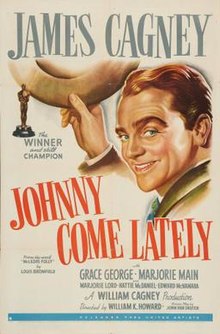
In 1941, Leigh left the studio to become a freelance composer. He scored dozens of films over the next two and a half decades for several different studios. The Pride of the Yankees, Johnny Come Lately and The Wonderful World of the Brothers Grimm all earned him additional Oscar nominations. Over the course of his career, Leigh would be nominated for Academy Awards a total of eight times. In the last several years of his life, he also made the leap to the small screen and composed for the television series Ben Casey and Daniel Boone.

Leigh was 62 when he died and was made an official Disney Legend for all his marvelous contributions to the Disney songbook in 2001.

Saturday, November 3, 2018

November 1 - Retta Davidson

On this day, in 1921, animator Retta Davidson was born in Arcadia, California. She should not be confused with another female animator named Retta Scott (because every company has two women named Retta, right?). After graduating from high school in 1939, Retta joined the Walt Disney Studio in the the Ink and Paint Department. Her work from this era can be "seen" in Pinocchio, Bambi, and Fantasia. The onset of World War II would change that.

As many of the studio's male animators were being drafted into various parts of the US war machine, the studio began to get desperate for people to continue making movies and therefore a profit. In 1941, the women of the Ink and Paint Department were invited to submit their own drawings to be considered as replacements. Retta became one of just 10 women to be promoted to animator. She would only be in the position a year, however, before the war would claim her as well. She went to work for the Navy for four years. In 1946, Retta returned to Disney and began working as an assistant animator to whoever was lucky enough to nab her for their project. She continued in this role until 1966, when, still reeling from the death of Walt, she left the studio to become a freelance artist.

Retta spent time in Hollywood creating television commercials and working with Chuck Jones on such projects as Duck Dodgers and the Return of the 24 1/2th Century. She would later move to Montreal, Canada to teach animation at Concordia College there and Sheridan College in Toronto. Retta would be a part of the team that produced the animated version of Lord of the Rings in 1978 and the team that created the 1981 Canadian animated movie Heavy Metal (which happened to feature the voice of yesterday's post, John Candy).

In 1980, Retta came back to the Disney family to help train a whole new batch of animators. She was given a coordinating animator credit on both The Fox and the Hound and The Black Cauldron. Retta continued as a trainer until her retirement in 1985. She would pass away in Carlsbad, California on June 12, 1998. She was 76.

Thursday, November 1, 2018

October 30 - Paul J. Smith

On this day, in 1906, composer Paul J. Smith was born in Calumet, Michigan. By the time Paul graduated from high school, the family had moved to Caldwell, Idaho where his dad, Joseph, was a professor at the College of Idaho. Not surprisingly, Paul spent three years studying music at that very same college. The boys in the family all turned out to be pretty musical. Joseph composed several songs for the college, Paul's brother Arthur became a studio musician and played on the soundtracks of all kinds of movies and television shows and Paul himself became a legend.

In 1925, Paul moved on from the College of Idaho to attend the Bush Conservatory of Music in Chicago, Illinois. While there, his talent earned him a scholarship to Julliard but for some reason he never used it. After graduating from Bush, Paul would spend two years teaching at Elmhurst College. In 1932, he moved to Los Angeles, California to go back to school at UCLA. This time he majored in English and wrote four musical comedies during his time there.

When Paul landed a job at the Disney Studio in 1934, he hit the ground running. He loved to push the boundaries of scoring animation just as much as Walt loved to push the boundaries of the animation itself. After composing for some shorts, Paul co-wrote the music for Snow White and the Seven Dwarfs with Frank Churchill and Leigh Harline. He would continue this pattern of scoring some shorts then creating music for a feature film over and over for the next few decades. All told, Paul wrote the score for over 70 of Disney's shorts. His feature credits include Pinocchio (which earned him an Academy Award), Fantasia, Bambi, Saludos Amigos, The Three Caballeros, the animated portions of Song of the South, Fun and Fancy Free, Melody Time, So Dear to My Heart, and Cinderella.

About the time of Cinderella's release, the studio began producing its Tru-Life Adventure series of animal documentaries. Paul would score most of them, using the same techniques that he used to compose music for animation. Frank Thomas and Ollie Johnston would later acknowledge that those films became immeasurably better because of Paul's innovative scores. Throughout the Fifties and early Sixties, Paul would move into scoring many of the studio's live action classics. 20,000 Leagues Under the Sea, The Shaggy Dog, Pollyanna, Swiss Family Robinson, and The Parent Trap are just a few of the movies that benefited from Paul's touch.

In 1962, after 28 years with the Disney studio, Paul officially retired from the company but not from making music. He scored 26 episodes of Leave It to Beaver and 35 episodes of the Wonderful World of Color. He's even credited with some of the background music in a special celebrating Donald Duck's 50th birthday in 1984. On January 25, 1985, Paul passed away at the age of 78 due to complications brought on by Alzheimer's Disease. In 1994, for all his marvelous musical contributions, he was made an official Disney Legend.

Also on this day, in American history: John J. Loud

Thursday, October 18, 2018

October 16 - Ham Luske

On this day, in 1903, Hamilton Luton Luske was born in Chicago, Illinois. He attended the University of California, Berkeley and earned a degree. In business. Ham was also, however, an incredibly gifted artist. The places he went with his talent are even more remarkable when you know that he never had any formal art education.

Ham's first real job was as a cartoonist for the Oakland Post-Inquirer. Today we think of cartoonists as the folks who's work is relegated to the funnies section (or if they're a bit more serious the opinion page). Back in the Twenties though, before photos could be reproduced in newsprint, cartoonists were also responsible for creating advertisements. Every paper needed at least one good artist on staff.

In 1931, Ham joined the Walt Disney Studio as an animator. His first contribution was some of the animals in the Mickey Mouse short The Barnyard Broadcast. His rendering of Max Hare in the 1935 Silly Symphony The Tortoise and the Hare helped that short win an Oscar. Ham was in charge of the character of Jenny Wren in Who Killed Cock Robin? that same year. Jenny was modeled after Mae West, who was so delighted with the caricature, she wrote a letter to Walt complimenting the artistry. His successes with those two shorts led him into a pivotal role in the future of the studio.

As Walt was developing his first animated feature, Snow White and the Seven Dwarfs, he knew that if audiences didn't connect with the title character, the whole venture was doomed. Walt also knew that he had only one animator he could trust with Snow White: Ham Luske. In order to deliver the goods, Ham created a groundbreaking technique: live-action reference films. His idea wasn't to trace a live model's movements, but to have very specific movements captured on film to inspire the animators in their drawings. He would plan out what the model would do, always keeping in mind how those moves would be used in the animated finale. Not only did this technique convince millions of audience members to actually cry during Snow White, it proved simple and effective enough to teach a whole new crop of animators how to improve their craft, ensuring the studio's success for years to come.

After Snow White, Ham plunged headlong into directing. He was co-supervising director for Pinocchio with Ben Sharpsteen. Ham was then a sequence director on Fantasia, The Reluctant Dragon and Saludos Amigos. When World War II came to the United States, he would direct training films for the troops with names like Weather at War. At the war's conclusion, Ham returned to Disney, directing sequences in almost every animated feature from 1946's Make Mine Music through 1961's 101 Dalmatians. If you remember watching the classic Donald Duck featurette Donald in Mathmagic Land in school, that was Ham's work, too. He would strike Oscar gold again in 1964 as the director of the animated parts of Mary Poppins, this time winning for Best Visual Effects.

The last few years of Ham's career had him moving into the world of television. He became associate producer and director of episodes of Disneyland and its later evolutions. Ham passed away in Los Angeles, California on February 19, 1968 at the age of 64. He was made an official Disney Legend in 1999 for his 37 years of magic making.

Also on this day, in American history: Noah Webster