Showing posts with label Nine Old Men. Show all posts

Wednesday, July 17, 2019

July 10 - The Fox and the Hound

Image copyright Disney
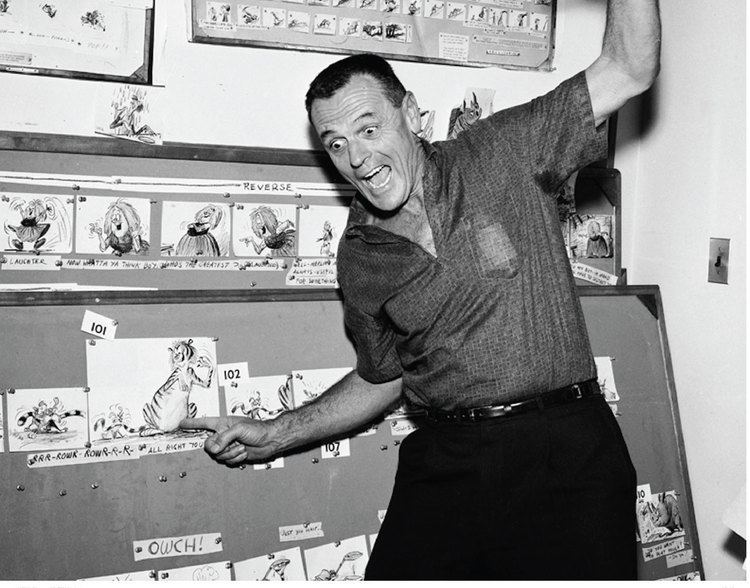
On this day, in 1981, Walt Disney Pictures released its 24th animated feature, The Fox and the Hound. Based on a novel of the same name, Fox the movie began its journey in 1977 when Woolie Reitherman, one of Walt’s Nine Old Men and a long-time Disney director and producer, read the story. Of course he may have only chosen it because his son had a pet fox once, but whatever the reason, Woolie would come to regret that choice (even though what transpired over the next few years would probably have happened no matter what movie was in production at the time).

Things started off well enough. Ollie Johnston and Frank Thomas, two more of the Nine Old Men, took the lead of a team made up of a new generation of animators including John Laseter, Brad Bird, John Musker, Ron Clements, Tim Burton, the list goes on and includes most of the names of the people responsible for the Disney Renaissance period a decade later. Fox was a transitional film between two generations of great animators and, like most hand offs between the old and new guards, it did not go smoothly, but not because of conflicts among the animators.
Image copyright Disney
For their part, Ollie and Frank had finished most of their animation by 1978 when they both retired and left the finishing of the film to the young bucks. Maybe they had confidence in the next generation, maybe they saw what was coming and didn’t want to watch first hand. Around the same time, studio management, under Ron Miller, began to be unhappy with some of Woolie’s decisions and added a co-director to the picture, Art Stevens. Art had been an animator since the Forties and had just co-directed The Rescuers. As Woolie was most likely still smarting from what was essentially a public slap down, it quickly became apparent that the two directors had very different visions on what kind of film they were making.
Image copyright Disney
It’s hard to tell who had lost their way more in this dynamic, the aging director, who was running out of ideas (as we shall see in a moment) or Disney management, who would next produce the debacle known as The Black Cauldron. How a movie got made at all with those two factions constantly fighting is something of a minor miracle. Looking at Woolie’s insanity first, at some point in 1979, he decided that the film’s second act needed a boost. At the point that Todd, the fox, is left in the woods, Woolie wanted to insert two cranes, played by Phil Harris and Charro, singing a song to him called “Scoobie-Doobie Doobie Doo, Let Your Body Turn Goo.” He even went as far as having Charro record soundtracks and live reference footage before Art declared it a terrible idea and, through management (and just plain good sense), got the scene cut.
Image copyright Disney
Even though they were right about the cranes, Studio management wasn’t all about making good decisions at this point in company history. A large group of animators was becoming highly dissatisfied with how things were being run in general. The grumbling came to a head on September 13, 1979 when Don Bluth and fifteen other animators suddenly resigned their positions and asked that their names be taken off the credits of Fox. With 17% of the animation staff gone, Disney had to scramble to hire new people to fill the gaps and finish the movie. And somewhere in the middle of all that, Woolie had his last fight with management as director, got pulled from the position, was relegated to a producer credit only and the release date was pushed back from Christmas 1980 to Summer 1981.
Image copyright Disney
When it was finally released, in spite of all the infighting and behind the scenes drama, The Fox and the Hound received mostly favorable reviews. Critics generally said it wasn’t anything particularly special but it did show glimpses of that old Disney magic at times. The fight scene between Todd, Copper and the bear is generally cited as a masterpiece of animation and everyone loves Pearl Bailey’s performance as Big Mama the owl. Financially, Fox did okay as well. Because of the delays in production, costs for the picture totaled $12 million, making it the most expensive animated film ever made up to that point, even adjusted for inflation (which is kind of laughable today; animated movies routinely cost over $100 million to produce versus Fox’s $35 million in 2019 dollars). Fox grossed a comfortable $39.9 million in its initial run and an additional $23.5 million in a rerelease seven years later, making it a profitable if somewhat ho-hum addition to the Disney family.

Image copyright Disney
In the end, The Fox and the Hound holds an awkward place in Disney history. It marked the end of the era of Walt’s Nine Old Men. Woolie Reitherman was the only one who remained by the time of its release and Fox left a bitter taste in his mouth. He spent the next few years working on a handful of projects that never moved into actual production and was killed in a car accident in 1985.  The next crop of animated genius was in place but still had to go through the painful valley of The Black Cauldron before they would start to come into their own and launch the Disney Renaissance. The baton might have been passed and audiences might have been mildly entertained, but no one who was running could really say they’d enjoyed the race.

Saturday, July 6, 2019

June 26 - Woolie Reitherman

Image courtesy alchetron.com
On this day, in 1909, Wolfgang Reitherman was born in Munich, Bavaria, Germany. Woolie, as he was generally known, and his family moved to Southern California when he was but a babe. He graduated from Pasadena Junior College and became a draftsman for the Douglas Aircraft Company. His interest in the more artistic side of drawing felt stifled at Douglas, however, and he began taking classes at the Chouinard Art Institute. Woolie graduated from Chouinard in 1933 and was immediately hired on at the Walt Disney Studio as an animator.

Woolie began in the Shorts Department (of course, it was the only department for a few more years) with his first project, the Silly Symphony Funny Little Bunnies. He then lent his talents to classics like The Band Concert, Elmer Elephant and Goofy and Wilbur. As most of the crew was being pulled into the new Features Department in the mid Thirties, Woolie was tasked with doing all the Magic Mirror sequences for Snow White and the Seven Dwarfs. He continued to mostly work on features from that point on. For Pinocchio, he was in charge of the dramatic parts with Monstro the Whale and he specialized in action sequences after that.

Image courtesy d23.com
Woolie's talent, combined with his seemingly endless amount of energy, helped him rise to the top of studio's animation pool and he became part of the elite group Walt affectionately called his Nine Old Men. He managed to tackle the dinosaur fight in the Rite of Spring part of Fantasia and produce several scenes with Timothy Q. Mouse in Dumbo before World War II interrupted his career. In 1942, Woolie left the studio to join the United States Air Force. He served as a pilot in Africa, India, China and the South Pacific,  becoming an ace and earning both the rank of Major and the Distinguished Flying Cross. He received an honorable discharge in 1946 and returned to work at the Walt Disney Studio.

Image copyright Disney
Following the war, Woolie slipped back into his old role of head animator directing parts of Fun and Fancy Free as well as the Headless Horseman for The Adventures of Ichabod and Mr Toad. Over the next dozen years he directed sequences in Cinderella (Gus Gus and Jacques), Alice in Wonderland (the White Rabbit), Peter Pan (Captain Hook and Tick-Tock Croc), Lady and the Tramp (Tramp and the rat) , Sleeping Beauty (Prince Phillip's fight with Maleficent) and One Hundred and One Dalmatians (the Twilight Bark). Then, in 1963, Walt did something he'd never done before and made Woolie the sole director of The Sword in the Stone (up to that point multiple directors were in charge of various scenes in a film).

Image copyright Disney
Following Stone, Woolie would continue to be sole director of whatever he did. His next project was Winnie the Pooh and the Honey Tree, the studio's first Pooh short. He then helmed The Jungle Book, followed by Winnie the Pooh and the Blustery Day, which won the Academy Award for Best Animated Short. When Walt passed away during the production of those last two films, Woolie was credited as the one that managed to corral everyone's egos and keep them focused on getting the job done without their guiding light of the last thirty years. For the remainder of his career, he also added the role of producer to his resume, the position formerly held by Walt.

Image copyright Disney
Woolie charged on successfully throughout the Seventies, adding his name to the list of the highest grossing directors in the process. He produced and directed Robin Hood, The Many Adventures of Winnie the Pooh and The Rescuers. His career ended on a slightly sour note. His last film for the studio was The Fox and the Hound, for which he was initially slated to co-direct. He had some pretty epic conflicts with Art Stevens, his co-director, however and was taken off the project, being left with a co-producing credit instead. Following that, he tried to get a couple of ideas off the ground only to be vetoed in favor of The Black Cauldron. Seeing the writing on the wall, Woolie chose to retire in 1981 after 47 years making animation magic.

Woolie's life ended tragically just a few years later. On May 22, 1985, the car he was driving veered into a tree blocks away from his Burbank, California home, killing him in the process. He was 75 and the third of the Nine Old Men to pass away. Four years later, Woolie would be officially named a Disney Legend along with the rest of the Men in just the second class of Legend inductees.


Friday, July 5, 2019

June 25 - Milt Kahl

Image courtesy d23.com
On this day, in 1934, Milton Erwin Kahl began working at the Walt Disney Studio. Born on March 22, 1909 in San Francisco, California, Milt loved drawing so much he dropped out of high school to follow his dreams of becoming a cartoonist. He started by working in newspapers layout artist for first the Oakland Post-Enquirer and then the San Francisco Bulletin. After getting his feet wet, he went out on his own, starting a commercial art business, just in time for the Great Depression to begin its strangle hold on the nation's economy. Milt struggled to keep his shop open until one day, in 1933, when he went to the movies for a mental health break and saw a Silly Symphony, The Three Little Pigs. He thought it was the most fantastic thing he'd ever seen and was immediately hooked on animation. By June 1934, his own enterprise was at an end and he applied at the Walt Disney Studio for a job. His talents were so impressive, he skipped the inbetweener position and began as an assistant animator.

Image copyright Disney
Milt began his Disney career in the Shorts Department, making contributions to classics like The Lonesome Ghosts, Mickey's Circus and the Academy Award winning Silly Symphony The Ugly Duckling. It didn't take long for him to move up to animator. I mean pretty much everyone got promotions once production started on Snow White and the Seven Dwarfs, but Milt really deserved his. For the studio's first feature, he was in charge of animating the Woodland Animals and the Prince. By the second feature, Pinocchio, all of Milt's peers were awe of his talents. Ollie Johnston remembers Fred Moore coming into his office one day just raving about Milt's drawings. Ollie went to look for himself and was blown away. Walt was so impressed he made Milt Pinocchio's supervising animator.

Not only did Milt become one of Walt's Nine Old Men (as did Ollie), he's generally considered the leader of the group. He was comfortable and talented enough to do technically hard things like realistic looking fawns or stag antlers, he could also do artistically hard things like humans. Throughout the decades, Milt was responsible for finalizing the look of hundreds of characters in dozens of films. The list of characters he personally animated is almost mind blowing:

Image copyright Disney
Snow White and the Seven Dwarfs - Forest Animals and Prince

Pinocchio - Pinocchio and some of Jiminy Cricket

Bambi - Bambi, Thumper, several deer

Saludos Amigos - riding a llama sequence

Make Mine Music - The Martins and the Coys

Song of the South - Br'er Rabbit, Br'er Fox, Br'er Bear (especially the Tar Baby sequence)

Fun and Fancy Free - Lulubelle, Lumpjaw and various bears

Image copyright Disney
Melody Time - Johnny Appleseed, Guardian Angel, Slue Foot Sue, Pecos Bill

The Adventures of Ichabod and Mr. Toad - Angus MacBadger, Rat, Mole, an angry mob, Brom Bones

Cinderella - Fairy Godmother, Prince Charming, The King, The Grand Duke

Alice in Wonderland - Alice, the White Rabbit, the Dodo, flamingos and hedgehogs

Peter Pan - Peter Pan, Wendy Darling, John Darling, Michael Darling, Mr and Mrs. Darling, Nana

Image copyright Disney
Lady and the Tramp - Lady, Tramp, Beaver, Trusty

Sleeping Beauty - Prince Phillip, King Hubert, King Stefan, animals, Samson

One Hundred and One Dalmatians - Roger, Anita, Pongo, Perdita

The Sword in the Stone - Wart, Merlin, Sir Ector, Kay, Archemedes, Madame Mim, dogs

Mary Poppins - Master of Hounds, hounds, fox

Image copyright Disney
The Jungle Book - Mowgli, Baloo, Bagheera, Shere Khan, King Louie, Kaa, the Vultures

The Aristocats - Thomas O'Malley, Duchess, Madame Bonfamille, Edgar, George

Bedknobs and Broomsticks - King Leonidas, Secretary Bird

Robin Hood - Robin Hood, the Sheriff of Nottingham, Little John, Allan-a-Dale, Maid Marian, Friar
 Tuck, King Richard

The Many Adventures of Winnie the Pooh - Tigger, some Winnie the Pooh, a little Piglet

The Rescuers - Madame Medusa, Mr. Snoops, Penny, Brutus and Nero

Image courtesy waltdisney.org
Once you've wrapped your mind around that list, realize this: not only did he animate all those characters, but for the titles in bold, he was also that film's directing animator. Meaning he animated his characters and made sure that all the other characters were being handle correctly as well. I don't think it's an understatement to say that if Milt's commercial art business hadn't failed, the Walt Disney Studio wouldn't have been as successful as it was.

Milt retired in 1976, as production was wrapping up on The Rescuers and after 42 years creating magic for millions of moviegoers. He moved back to the Bay Area and spent the remainder of his days making wire sculptures of ballerinas and other human forms. On April 19, 1987, Milt succumbed to pneumonia at his home in Mill Valley, California. Just two years later, in the second class of inductees, Milt and his fellow Old Men would be declared official Disney Legends. If he'd been there to accept the award, he would probably have declared, with his usual humility, "Aww... You're full of it!" And indeed, every time we watch a Disney classic, because of Milt, we are full of It.

Thursday, February 21, 2019

February 15 - Cinderella

Image copyright Disney
On this day, in 1950, Walt Disney Productions' twelfth animated feature, Cinderella, had its world debut in Boston, Massachusetts. The Disney Studio had limped through World War II. With most foreign markets unavailable (and folks at home focused on making sacrifices for the war effort), the features Disney released during those years had failed to turn much, if any, profit. With a limited staff (most of the guys had enlisted), Walt cobbled shorts together into "package" films just to keep the place open. By the war's end, more than $4 million in debt threatened to force Walt into bankruptcy (again). As the boys returned home, Walt, desperate for a hit, turned attention to the land of fairy tales and implored them to dig up a diamond.

Walt's first take on Cinderella happened in 1922 when he produced a Laugh-O-Gram cartoon based on the French tale. In the early Thirties, he wanted to make a Silly Symphony of the story, but it quickly became apparent that it would be too hard to condense the narrative enough. In 1938, it was decided that Cinderella would probably make a good feature and work began on a script. Ideas were kicked around and refined over the next few years. Production was ready to start in earnest when most work the studio was doing was stopped by order of the United States Government. It wouldn't be until 1948 that Walt blew the dust off Cinderella's script and everyone sharpened their pencils once more.

Image copyright Disney
Cinderella marked the first film that all of Walt's Nine Old Men would work together on as supervising animators. It also marked the first film that Walt wasn't overseeing on a daily basis. He was in England off and on supervising the filming of the studio's first live action picture, Treasure Island.  While that gave the Men more autonomy, it also made the movie more expensive. Every time Walt would show up, he had all sorts of little changes he wanted done to work that was already finished. By October 1949, pencils and paintbrushes had finally been laid down and Cinderella was ready for her coming out party.

Image copyright Disney
The picture was Disney's biggest critical success since Dumbo and its biggest financial success since Snow White and the Seven Dwarfs. Cinderella grossed over $8 million and became the sixth highest grossing film of 1950. It did even better in England, coming in at fifth. Not only did Cinderella wipe out the studio's debt, it provided enough cash flow to last the rest of the Fifties. It received three Academy Award nominations (Best Sound, Best Song and Best Score) and won the Golden Bear (Music Film) at the first Berlin International Film Festival.

Since then, Cinderella has become a staple in the Disney family. She's spawned two animated sequels and a live action adaptation. She even has two castles, one in the Magic Kingdom at Walt Disney World and another in Tokyo Disneyland (never mind the fact that that upstart Aurora has three). She may not be the smartest or the most assertive Disney Princess, but she does possess that special something that means she'll be around for many more years to come.

Monday, February 18, 2019

February 13 - John Lounsbery

On this day, in 1976, John Mitchell Lounsbery passed away in Los Angeles, California. Born in Cincinnati, Ohio on March 9, 1911, John's family moved to Denver, Colorado when he was a young child. After graduating from East Denver High School, he started taking art classes at the Art Institute of Denver. When he graduated from the Institute in 1932, he moved to Southern California and became a student at the ArtCenter College of Design in Pasadena. Once he'd pretty well established himself there, an instructor recommended that he apply for a job at the Walt Disney Studio. He did and his Disney journey began on June 2, 1935.

Image copyright Disney
Thrown right into the deep end, John's first assignment was to assist Norm Ferguson on animating the witch for Snow White and the Seven Dwarfs. John was an accomplished swimmer, though (he became one of Walt's Nine Old Men after all) and by Pinocchio, he was taking the lead on J. Worthington Foulfellow and his sidekick, Gideon. He was then put in charge of Ben Ali, Hyacinth and the rest of the gators and hippos for the Dance of the Hours segment in Fantasia. By Dumbo, John was a directing animator and he never looked back, contributing to almost every classic Disney feature produced during the Golden Age of the studio.

The list of characters that John was in charge of bringing to life is almost too long to believe:

Image copyright Disney
Dumbo and Timothy Mouse in Dumbo.

Donald Duck, Jose Carioca and Panchito for The Three Caballeros

The wolf in Peter and the Wolf and Willie, the whale who sings at the met, in Make Mine Music

Br'er Rabbit, Fox and Bear for Song of the South

Jiminy Cricket, Mickey Mouse, Donald Duck and Willie the Giant in Fun and Fancy Free

Image copyright Disney
The Once Upon a Wintertime, Blame It On the Samba and Pecos Bill segments in Melody Time

Ichabod Crane, Katrina van Tassel, Brom Bones and various other people and creatures in The Adventures of Ichabod and Mr. Toad

Lucifer, mice, Bruno and Major in Cinderella

Caterpillar, Cheshire Cat, Mad Hatter and assorted flowers and creatures for Alice in Wonderland

Image copyright Disney
The entire Darling family (including Nana) as well as pirates (including Captain Hook) and the lost boys for Peter Pan

Thomas Jefferson in Ben and Me

Lady, Tramp, Tony, Joe, Peg and a slew of others for Lady and the Tramp

King Hubert, King Stefan, Queen Leah, Prince Phillip and some goons in Sleeping Beauty

The Colonel, Jasper and Horace Badun and Sergeant Tibbs for One Hundred and One Dalmatians

Image copyright Disney
Wart, Merlin, Archimedes, Madame Mim and several others in The Sword and the Stone

Most of the farmyard animals who sing Jolly Holiday in Mary Poppins

Mowgli, the elephants, King Louie, Baloo, Bagheera, and Shere Khan for The Jungle Book

The humans and Roquefort in The Aristocats

King Leonidas in Bedknobs and Broomsticks

Robin Hood, Little John and the Sheriff of Nottingham in Robin Hood

Now John didn't draw all of these characters by himself of course. He was a directing animator, after all. His assistants and inbetweeners did all the grunt work after he drew key poses, but he was still responsible for how they looked and moved. It's no wonder why he was part of the Nine Old Men, even if he is one of the less well known names of the group. And he isn't as well known because he was a quiet, unassuming guy who wasn't flashy but just showed up every morning, put in an incredible days work and went home at five.

Image copyright Disney
By the mid-Seventies, John had moved up again to directing whole films, not just overseeing half the characters. His first gig in the director's chair was the third short featuring that tubby little cubby, Winnie the Pooh and Tigger Too. The led to becoming co-director for The Rescuers with Woolie Reitherman. Unfortunately, John's story comes to an abrupt end at this point. In the midst of production on The Rescuers, he went into the hospital for some surgery and didn't come back out. Just like that, his incredible 41 year career was over. And while his body of work will never be forgotten, John, sadly, is not known outside of animation circles like Frank Thomas or Marc Davis. If he had lived longer, my guess is that would not be the case as he was the first of the Nine Old Men to die. John was made an official Disney Legend, with the rest of his fellow Men, posthumously in 1989.

Friday, January 18, 2019

January 12 - Marc Davis

Image copyright Disney
On this day, in 2000, Marc Fraser Davis passed away in Glendale, California. Marc began life about a hundred miles north of the place he ended it. Born on March 30, 1913 in Bakersfield, California, he was a Californian through and through. Well, mostly. While he attended art classes at the California School of Fine Arts in San Francisco and the Otis Art Institute in Los Angeles, he actually graduated from the Kansas City Art Institute in Missouri. Needless to say, he didn’t spend much more time in Middle America than his schooling took but his presence there at all probably helped start his career working under one of the area’s most famous sons.
Coming on board the Disney juggernaut in 1935, Marc quickly earned the admiration of his fellow animators. Ollie Johnston recalled that, while several people contributed to the design of Snow White, it was Marc who made her walk in grace and beauty.

Marc wasn’t just good at bringing women to life. The consummate draftsman also made animals more believable. It started with his work on Bambi, Faline and Thumper in Bambi. He then gave us Br’er Rabbit, Br’er Fox and Br’er Bear in Song of the South. Bongo in Fun and Fancy Free and Mr. Toad in The Adventures of Ichabod and Mr. Toad round out his furry contributions to the Disney family.  

Image copyright Disney
But truth be told, it really was drawing women where Marc excelled the most. He was so good at grace and beauty, he would often be given the difficult task of animating either the heroine or the villainess in a picture. Over the years, not only did he join Ollie as one of Walt’s Nine Old Men, he earned himself the nickname of Disney’s Ladies Man. Name a major female character from the Fifties and it’s almost a guarantee that Marc animated her. Cinderella, Alice, Tinkerbell, Aurora and Maleficent, and, lastly, Cruella de Vil (who technically didn’t appear until the early Sixties), were all created under Marc’s steady hand. Then, when One Hundred and One Dalmatians wrapped up production, he gave up animation forever.

As the Sixties began, Disneyland was almost constantly being updated and expanded and a huge amount of effort was being put into several projects for the upcoming World's Fair. WED Enterprises (the precursor to Imagineering) was designing and building almost more attractions than they could handle. Marc had made some contributions during the late Fifties to Adventureland's Jungle Cruise and the Mine Train Through Nature's Wonderland. As the excitement in the department continued into the new decade, he decided to devote the rest of his career to designing characters and writing stories for the theme park instead of the silver screen.

Image copyright Disney
Marc still applied the same techniques in his new role. He still spent hours developing characters for an attraction and would use storyboards to plan out what guests would experience. His dedication payed off. As the technology behind Audio-Animatronics developed and matured, Marc would become a master at using them to tell stories. His first big project to open after his career shift was the classic show found in The Enchanted Tiki Room. For the 1964 World's Fair, he had a hand in all four of the attractions that Disney built: Ford's Magic Skyway, Great Moment's With Mr. Lincoln, It's a Small World and The Carousel of Progress.

When the World's Fair was safely behind them, Imagineers returned to creating new experiences for Disneyland. Marc's designs can be seen throughout both Pirates of the Caribbean and the Haunted Mansion, both of which opened in New Orleans Square. He then lent his style to the Country Bear Jamboree and America Sings, which was the replacement attraction for his earlier work Carousel of Progress.

Image copyright Disney
The last several years of Marc's career were spent developing an attraction that was never quite built. It was to occupy a massive area in Frontierland at the Magic Kingdom in Florida. Known as the Western River Expedition, it was supposed to be Florida's answer to Pirates of the Caribbean since, Disney executives reasoned, Floridians wouldn't be interested in pirates because the state was practically built by them. Instead, Marc designed a Western themed ride that would involve buffalo, a stagecoach robbery, a Native American adobe village, and a show with saloon girls, a bank robbery and plenty of cowboys. A mine train roller coaster would be housed in the same show building (yes, it would be the largest one Disney had ever built). From the outside, the building would look like and be called Thunder Mesa Mountain. From all accounts, it would have been a spectacular thing to see. So what happened?

Image copyright Disney
Guests to the Florida Project had one complaint they could all agree on, that's what happened. The question "Where are the pirates?" became the one most asked after the Magic Kingdom opened. So Disney hastily built a version of Pirates of the Caribbean, using a large chunk of the money allocated for Marc's Expedition. Then an economic downturn hit the country. Then Big Thunder Mountain Railroad (part of the plans for the attraction from the beginning) was built using most of the land that was to go to Expedition. And that was basically it. All the sketches and models that Marc slaved over were relegated to the research vault. Not to despair too much, though. Plenty of Imagineers have snuck elements of Marc's designs into other attractions including Splash Mountain and Expedition Everest, and I'm sure will continue to do so as often as they can.

In 1978, Marc retired after an incredible 43 year career with the Walt Disney Company.  He was named an official Disney Legend in 1989 for all of his iconic contributions to both the world of animation and beloved attractions that endure to this day. Shortly after he passed away, he was honored once more when CalArts established the Marc Fraser Davis Scholarship Fund, ensuring that creative genius will be able to flourish far into the future.

Monday, November 19, 2018

November 17 - Les Clark

On this day, in 1907, Leslie James Clark was born in Ogden, Utah. Les and his family moved from Utah to Idaho before finally settling in Los Angles, California. He attended Venice High School and had a job in a local ice cream shop where he had hand lettered all the menus. There were two brothers, by the name of Walt and Roy, who frequented the shop and had complimented Les on his menus. Les finally worked himself up to asking Walt for a job. Walt asked for more examples, Les showed him some and Walt said Nice lines, show up for work on Monday. And just like that, the first of what would become Walt's Nine Old Men had joined the studio.

Photo borrowed from moma.org
Les' temporary position began in the Ink and Paint Department. He would also occasionally operate the camera. He eventually started working under Ub Iwerks and had become an accomplished in-betweener by the time the studio was developing a new mousy character. Les helped animate Mickey Mouse in Steamboat Willie and, after Ub left the company, would become the expert on drawing the cornerstone character of the studio. He refused to rest on his laurels, however, and continuously took art classes in an effort to hone his talent.

When it came time to launch the Silly Symphony series, Les was an integral part of the team, animating the iconic dance of The Skeleton Dance. He would continue his fancy footwork when Snow White and the Seven Dwarfs was in production as the animator charged with making the dwarfs dance with Snow White. For the next few decades, Les would have a hand in every major animation project the studio did. From Pinocchio to Make Mine Music, he was a lead animator. Starting with Song of the South, he began to fill the directing animator role and did so on Fun and Fancy Free, Melody Time, Cinderella, Alice in Wonderland, Peter Pan and Lady and the Tramp. Les was a sequence director on Sleeping Beauty and contributed to 101 Dalmatians.

Photo lifted from exploratorium.edu
After the completion of Sleeping Beauty, Walt asked Les to transition into a new role as the director of special projects for the burgeoning television department and the educational films the studio was beginning to produce. Les spent the final two decades of his career with Disney creating things like Donald in Mathmagic Land, Donald's Fire Survival Plan and shorts on topics as varied as The Social Side of Health and one called VD Attack Plan.

After 48 years of making magic with Disney, Les retired in 1976. Just a few years later, he would pass away from cancer on September 12, 1979 in Santa Barbara, California. For his immense body of work, the plucky Venice soda jerk would become an official Disney Legend alongside his fellow Nine Old Men and his one-time mentor Ub Iwerks in 1989.


Saturday, September 8, 2018

September 8 - Frank Thomas

On this day, in 2004, Franklin Rosborough Thomas passed away in La Canada Flintridge, California.

 Born in Fresno, California in 1912, Frank grew up the son of the President of Fresno State College. He figured out what he wanted to do in life pretty early. By the time Frank was nine, he'd already asked his dad how to make a living drawing pictures. When he was a sophomore at (surprise!) Fresno State, Frank wrote and directed a movie poking fun at college life. The local theater even ran it for a while. Frank's career was on its way.

After finishing his schooling at Stanford University, Frank enrolled in the Chouinard Art Institute. He moved into a rooming house in Hollywood where one of the other boarders worked for a little outfit called the Walt Disney Studio. That boarder told Frank he should apply and on September 24, 1934, he became Disney employee no. 224.

For Frank, animation was all about personality. Doing funny things in interesting places wasn't enough for him. "Until a character becomes a personality, it cannot be believed," he said. And no one could infuse their characters with more personality than Frank. Some of the most iconic scenes are as memorable as they are because Frank animated them. Think of the following:

The dwarfs crying at Snow White's grave.

Bambi and Thumper learning how to skate on the ice.

Lady and the Tramp eating spaghetti.

Pinocchio singing in the marionette theater.

Merlin and Madame Mim in their wizard's duel.

King Louie singing "I Want to be Like You" with Baloo.

Scenes with Winnie the Pooh and Piglet exploring life together.

Every one of these scenes has become so much more than ink and paint on acetate because Frank was a master at infusing personality into his drawings. And it wasn't just about touching or rambunctious scenes either. Frank was a directing animator for some fantastic villains, too: Lady Tremaine, the Queen of Hearts and Captain Hook.

Frank easily earned his place as one of Walt's Nine Old Men. He even joined Walt on his goodwill tour of South America in 1941. Frank was absent from the studio from 1942-46 as he had joined the Air Force as part of the First Motion Picture Unit, creating training movies, but hit the ground running on his return like he'd only been on a short vacation.

After Walt's death, Frank would spend another 11 years at the studio creating such characters as Pongo and Perdita for 101 Dalmatians, Baloo, Mowgli and Kaa for The Jungle Book, Prince John and Sir Hiss for Robin Hood, and Bernard and Bianca for The Rescuers. After more than 43 years of outstanding animation artistry, Frank retired from the Disney Studio on January 31, 1978. But his work didn't end there.

Throughout his career, Frank was best friends with another of the Old Men, Ollie Johnston. The two were practically inseparable at Disney and they would remain so in retirement. After both had laid down their drawing pencils in 1978, they began new careers as authors. The first book they published together was called "Disney Animation: The Illusion of Life". It is generally recognized as the bible of hand drawn animation. I have a copy myself, not because I'm an artist but because it's a gorgeous, richly detailed book. The duo went on to co-write three other books: Too Funny for Words, Walt Disney's Bambi, and the Disney Villain (which I also own, a signed copy no less, be very jealous).

Several homages have been given to Frank and Ollie over the years. In the 1995 Mickey Mouse short "Runaway Brain", the mad scientist's name is Dr. Frankenollie. Brad Bird, director of The Incredibles movies, loved Frank and Ollie so much he immortalized them in not one but two of his films. He made them the train engineers in The Iron Giant and the two geezers talking about the "old school" in the first Incredibles, which would come out after his death. 

Frank was named a Disney Legend in 1989 along with the other Nine Old Men.

Monday, September 3, 2018

September 3 - Eric Larson

On this day, in 1905, Eric Cleon Larson was born in Cleveland, Utah

Eric attended the University of Utah as a journalism major. While studying as a Ute, he became editor of the campus magazine and was known for his wit, both in written articles and cartoons. He even got a few into the local newspaper. After graduation, Eric hit the road as a freelancer, ending up in Los Angeles in 1933. One of the first things he did in town was develop a radio serial named "The Trail of the Viking" for KHJ Radio. That same year, a friend witnessed Eric's drawing skills and suggested he apply at the Disney Studio.

Almost immediately hired on as an assistant animator, Eric would be instrumental in developing, and later maintaining, the high artistic quality the Disney Studio became known for. He also solidly earned his place as one of Walt's Nine Old Men.

 The list of characters Eric created is extensive:

 As an animator on Snow White and the Seven Dwarfs, he was responsible for the woodland creatures that follow Snow White around.

As an animation director for Pinocchio, he created Figaro, a character he would frequently claim as his favorite.

He was in charge of the centaurs and horses in the "Pastoral Symphony segment of Fantasia.


He became a supervising animator by Bambi, creating Friend Owl.

His next two movies also involved birds: the Aracuan bird in The Three Caballeros and Sasha the Bird for Make Mine Music.

He was a directing animator on Song of the South, Melody Time and So Dear to My Heart.

He co-animated the title character in Cinderella with fellow Old Man, Marc Davis.

For 1951's Alice in Wonderland, he brought the caterpillar to life, which is a bit of a self portrait.

He flew everyone to Neverland in Peter Pan.

Peg, the Pekingese leader of the pound, was his contribution to Lady and the Tramp.

He was a Sequence Director on Sleeping Beauty.

He assisted in creating several of the puppies for 101 Dalmatians.

Eric also contributed to The Sword in the Stone, Mary Poppins, Winnie the Pooh and the Honey Tree, The Jungle Book, The Aristocats, Bedknobs and Broomsticks, Robin Hood and dozens of shorts.

One of the last pieces of actual animation Eric did for the studio was the title sequence for The Rescuers in 1977.

After Walt's death in 1965, it became more and more apparent with each passing year that the talent pool the studio had enjoyed for decades was steadily shrinking. In 1973, Eric began ramping up the Talent Program to usher in the next generation of animators. He became a devoted mentor to such newcomers as Andreas Deja, who created Jafar for Aladdin and Scar for The Lion King, and a laundry list of others: Glen Keane, Gary Goldman, and Betsy Baytos to name a few. Deja once said that "no one was more concerned with passing on the Disney legacy than Eric."

By 1981, the rest of the Nine Old Men had either retired or passed away. As the last representative of the old school, Eric spent his final years with the company as an animation consultant, gently shepherding the new kids who'd come into their own on films like The Fox and the Hound. After watching over The Black Cauldron and The Great Mouse Detective, Eric retired in September of 1986 after more than 52 years spent creating Disney magic. Two years later, he would pass away in La Canada Flintridge, California, near Glendale, on October 25, 1988.

Eric was posthumously made a Disney Legend, along with his fellow Old Men, in 1989.