Showing posts with label Snow White and the Seven Dwarfs. Show all posts

Friday, July 19, 2019

July 11 - Hal Adelquist

Image courtesy wikipedia.org
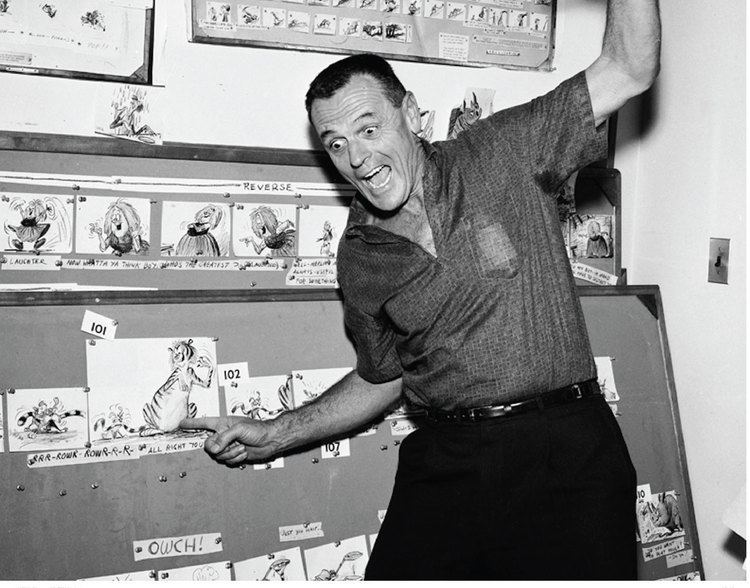
On this day, in 1914, Hal Adelquist was born in Salt Lake City, Utah. When he was about three, Hal and his parents moved to California, living in Oakland for a couple of years then settling in Los Angeles. While attending Los Angeles High School, he was able to develop his burgeoning talent as a cartoonist as well as hone his organizational and planning skills on the Publicity Committee. Hal graduated in 1932 and less than a year later was working at the Walt Disney Studio.

Despite his drawing talents, Hal quickly moved into the production side of animation with the studio. For much of his first few years at Disney, he served as an assistant director on Snow White and the Seven Dwarfs, although you won’t find his name on any official credits list. After Snow White was released, Hal was put in charge of organizing classes for the studio’s stable of animators. He made sure that new hires and seasoned pros alike worked on their characterization skills and learned how to make demo reels of their art.

Image courtesy originalmmc.com
By the end of the Thirties, Hal had moved into the Personnel Department. His first duties there reminded him of his days on the Publicity Committee as he planned all the company picnics and various other outings. When the animators went on strike in 1941, he was in the dubious position of being in charge of the department. Several resignation letters tendered at that time, including the Legendary Carl Barks’, were addressed to Hal. He clearly acted with both professionalism and dignity throughout the strike process, however, or he would never have been chosen for his next role.

It wasn’t long after the strike that Hal was moved into the Story Department. While there, and in spite of the fact that he was technically studio management, Walt’s Nine Old Men collectively picked him to be their spokesperson in all matters that arose between the studio and the animators. For over a decade, Hal juggled the egos of Disney’s animation superstars and balanced them with the ego of the studio’s owner, smoothing the way for the production of classics like The Three Caballeros, Cinderella and Peter Pan. His skills and charisma must have been outstanding during this period because even though he was essentially representing labor after the strike, Walt still hand picked him in 1954 to be a major part of the studio’s new television show.

Image courtesy cartoonbrew.com
When Walt agreed to create The Mickey Mouse Club for ABC, he turned the project over to Bill Walsh as producer and Hal as general coordinator. A simplified explanation of the two men’s relationship would be Bill made the decisions and Hal made the decisions happen. But don’t be fooled by that simplification. Hal had just as much influence on the look and feel of the show as practically anyone else. He had input on everything from the iconic mouse ears to who was hired as Mouseketeers to who the  Talent Round-Up winners were. Once filming began, Hal was production supervisor for Fun with Music Day, Anything Can Happen Day and Talent Round-Up Day, in other words 60% of the episodes.

Image courtesy mouseplanet.com
As the first season of The Mickey Mouse Club wrapped up filming, Hal was tasked with creating and staging the live shows of The Mickey Mouse Club Circus at Disneyland. For two months covering the 1955 Holiday season, guests could see some of their favorite Mouseketeers performing with professionals from the Ted DeWayne Circus. It was easily one of the most difficult shows to stage that the park ever undertook.

Between the launching of the television show and the running of the circus, Hal was beginning to crack under the strain of his job. His habit of an occasional steadying cocktail took a sharp turn towards alcoholism. Whether it was his growing drinking problem or something else entirely (nobody knows for sure), Walt and Hal had a major falling out in early 1956. Hal was replaced in his Club producing duties by Mike Holoboff and demoted to basically being a scout for acts for Talent Round-Up Day. In the spring of that year, Hal took a ten city tour with Jimmy Dodd to do just that, but it would be his last project with the company. Shortly after returning to Los Angeles, Hal resigned his position.

Image courtesy originalmmc.com
The remainder of Hal’s life is fairly tragic and sketchy on details. About a year after resigning from Disney, he approached Walt to ask to be rehired. He was willing to take literally any job the studio had, but Walt said no. Hal then drifted to the East Coast, winding up in New York City. The New York Times interviewed him in 1977 in the common room of one of the city’s homeless shelters. He’d apparently bounced around among jobs as varied as an executive at the Freedomland Amusement Park in the Bronx to washing cars. In between jobs, he admitted that he was sometimes reduced to panhandling but considered himself to be pretty good at it and encouraged the reporter to learn how because you just never know.  From all accounts, he was still a pretty charismatic guy in good possession of his mental capabilities, which leads me to believe that he never got control of his dependency on solving his problems at the bottom of a bottle. Four years later, Hal had drifted back to the West Coast. He was living with his mother in Long Beach, California when he passed away on March 26, 1981. He was 66.

Saturday, July 6, 2019

June 26 - Woolie Reitherman

Image courtesy alchetron.com
On this day, in 1909, Wolfgang Reitherman was born in Munich, Bavaria, Germany. Woolie, as he was generally known, and his family moved to Southern California when he was but a babe. He graduated from Pasadena Junior College and became a draftsman for the Douglas Aircraft Company. His interest in the more artistic side of drawing felt stifled at Douglas, however, and he began taking classes at the Chouinard Art Institute. Woolie graduated from Chouinard in 1933 and was immediately hired on at the Walt Disney Studio as an animator.

Woolie began in the Shorts Department (of course, it was the only department for a few more years) with his first project, the Silly Symphony Funny Little Bunnies. He then lent his talents to classics like The Band Concert, Elmer Elephant and Goofy and Wilbur. As most of the crew was being pulled into the new Features Department in the mid Thirties, Woolie was tasked with doing all the Magic Mirror sequences for Snow White and the Seven Dwarfs. He continued to mostly work on features from that point on. For Pinocchio, he was in charge of the dramatic parts with Monstro the Whale and he specialized in action sequences after that.

Image courtesy d23.com
Woolie's talent, combined with his seemingly endless amount of energy, helped him rise to the top of studio's animation pool and he became part of the elite group Walt affectionately called his Nine Old Men. He managed to tackle the dinosaur fight in the Rite of Spring part of Fantasia and produce several scenes with Timothy Q. Mouse in Dumbo before World War II interrupted his career. In 1942, Woolie left the studio to join the United States Air Force. He served as a pilot in Africa, India, China and the South Pacific,  becoming an ace and earning both the rank of Major and the Distinguished Flying Cross. He received an honorable discharge in 1946 and returned to work at the Walt Disney Studio.

Image copyright Disney
Following the war, Woolie slipped back into his old role of head animator directing parts of Fun and Fancy Free as well as the Headless Horseman for The Adventures of Ichabod and Mr Toad. Over the next dozen years he directed sequences in Cinderella (Gus Gus and Jacques), Alice in Wonderland (the White Rabbit), Peter Pan (Captain Hook and Tick-Tock Croc), Lady and the Tramp (Tramp and the rat) , Sleeping Beauty (Prince Phillip's fight with Maleficent) and One Hundred and One Dalmatians (the Twilight Bark). Then, in 1963, Walt did something he'd never done before and made Woolie the sole director of The Sword in the Stone (up to that point multiple directors were in charge of various scenes in a film).

Image copyright Disney
Following Stone, Woolie would continue to be sole director of whatever he did. His next project was Winnie the Pooh and the Honey Tree, the studio's first Pooh short. He then helmed The Jungle Book, followed by Winnie the Pooh and the Blustery Day, which won the Academy Award for Best Animated Short. When Walt passed away during the production of those last two films, Woolie was credited as the one that managed to corral everyone's egos and keep them focused on getting the job done without their guiding light of the last thirty years. For the remainder of his career, he also added the role of producer to his resume, the position formerly held by Walt.

Image copyright Disney
Woolie charged on successfully throughout the Seventies, adding his name to the list of the highest grossing directors in the process. He produced and directed Robin Hood, The Many Adventures of Winnie the Pooh and The Rescuers. His career ended on a slightly sour note. His last film for the studio was The Fox and the Hound, for which he was initially slated to co-direct. He had some pretty epic conflicts with Art Stevens, his co-director, however and was taken off the project, being left with a co-producing credit instead. Following that, he tried to get a couple of ideas off the ground only to be vetoed in favor of The Black Cauldron. Seeing the writing on the wall, Woolie chose to retire in 1981 after 47 years making animation magic.

Woolie's life ended tragically just a few years later. On May 22, 1985, the car he was driving veered into a tree blocks away from his Burbank, California home, killing him in the process. He was 75 and the third of the Nine Old Men to pass away. Four years later, Woolie would be officially named a Disney Legend along with the rest of the Men in just the second class of Legend inductees.


Sunday, June 23, 2019

June 14 - Evelyn and Claude Coats

Image courtesy disneybooks.blogspot.com
On this day, in 1910, Evelyn Henry was born in Edmonton, Ontario, Canada. When she was three, the family moved to Southern California, first to San Diego and then to Los Angeles. Evelyn studied art at Los Angeles High School and became a master at silk screening. In 1932, she was hired over at the Walt Disney Studio in the Ink and Paint Department as an inker, tracing the animators' pencil drawings onto cels. One of her first projects was the Silly Symphony The Three Little Pigs. Evelyn continued working on the Symphonies, contributing to the Academy Award winning The Old Mill for instance, while occasionally branching out into other series, like Mickey's first color short, The Band Concert.  

Image courtesy disneybooks.blogspot.com
During production on Snow White and the Seven Dwarfs, Evelyn was promoted to head of Ink and Paint. She was specifically in charge of supervising the late night and weekend shifts all the women had to work if the studio was ever going to be finished in time for the  film's release date. At one point there was a brief break in the grueling schedule and Evelyn used it to marry one of the studio's background artists, Claude Coats. Following Snow White, she continued supervising the work that started up on the next animated feature, Pinocchio

Image copyright Disney
In 1939, she decided to retire from Disney to focus on raising a family. She turned the Ink and Paint Department over to her friend, Grace Bailey, and walked away for forever. Or so she thought. When the Great Animator's Strike came along in 1941, the studio was desperate for people to keep things moving along. They called Evelyn asking her if she could return to ink some cels for old times sake. She said sure and crossed the picket lines for several months (she later said she did not support the strikers in any way), helping to keep production on Dumbo rolling along. When the strike ended, she returned to her home in Burbank, at that point finished with her professional career.

Her husband, Claude, on the other hand, continued on to bigger and better things. Born on January 17, 1913 in San Francisco, California, he lived most of his childhood in Los Angeles as well, eventually graduating from Polytechnic High School. He went to the University of Southern California as an architecture student but changed majors and graduated with a degree in art, specifically drawing. He went on to study water color painting at the Chouinard Art Institute and became a member of the California Water Color Society. This led to an interview at the Walt Disney Studio and, in 1935, Claude began an apprenticeship as a background artist.

Image courtesy pinterest.com
Claude started out doing backgrounds for Mickey Mouse shorts such as Mickey's  Fire Brigade and Pluto's Judgement Day but it was his work for the Silly Symphony series that really got him noticed. His distinctive, richly layered backgrounds on films like The Old Mill and Ferdinand the Bull helped push both of them into the winner's circle at the Academy Awards. (It also brought him in contact with a fetching young woman in the Ink and Paint department.) These accolades convinced Walt to hand pick Claude to create the backgrounds for the studio's first feature, Snow White and the Seven Dwarfs. Over the course of his career, he would paint backgrounds for 15 features, ending with Lady and the Tramp, and influence the look of several more. But his contributions wouldn't end there.


Image courtesy wdwforgrownups.com
In 1955, Walt once again hand picked Claude to join WED Enterprises, what would eventually come to be called Walt Disney Imagineering, as an art director and show designer. Along with the Legendary Mary Blair, he was responsible for crafting the look of three of the four attractions Disney built for the 1964 World's Fair: Carousel of Progress, Ford Magic Skyway and it's a small world. Following the fair, Claude served as a designer for such classic attractions as Mr. Toad's Wild Ride, Pirates of the Caribbean, World of Motion and Horizons. When he retired in November 1989, there was an attraction of his design in Disneyland, the Magic Kingdom, EPCOT Center and Tokyo Disneyland, every Disney park that existed except the newly opened Disney MGM Studios. For all of his spectacular work on the screen and in the parks, Claude was declared an official Disney Legend in 1991. You've also seen his name outside the Haunted Mansion on a tombstone that reads "At Peaceful Rest Lies Brother Claude – planted here beneath this sod."

Claude passed away on January 9, 1992 at the Coats' home in Burbank, California. He was just eight days shy of his 79th birthday. Evelyn remained there, spending her time volunteering at the Braille Institute, Goodwill and the Los Angeles County Museum of Art. She passed away on July 13, 2009. She was 99.


Wednesday, May 15, 2019

May 15 - The Mickey Mouse Theater of the Air

Image courtesy fredallensotrhome.blogspot.com
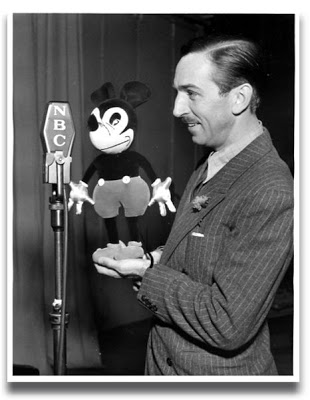
On this day, in 1938, the final episode of The Mickey Mouse Theater of the Air, “Old MacDonald,” was broadcast on the NBC radio network from the Disney Little Studio on the RKO Pictures lot. Originally created as a way to promote Snow White and the Seven Dwarfs, Theater of the Air’s first episode was broadcast on January 2, 1938 (Snow White premiered at the Carthay Circle Theater December 21, 1937 but wouldn’t be shown nationwide until February 1938). Pepsodent, the toothpaste company, sponsored the musical variety series to run on consecutive Sunday afternoons, geared mainly towards children. Theater of the Air proved so popular it expanded from its thirteen show contract into twenty episodes all together. Every episode opened with Who’s Afraid of the Big Bad Wolf, from The Three Little Pigs, and closed with Heigh-Ho from Snow White.

Image courtesy 2719hyperion.blogspot.com
Each week, the songs and skits revolved around a different story theme. Some of them were based on stories that had appeared in the Silly Symphony series (King Neptune, Mother Goose and Who Killed Cock Robin?) while others concerned tales that the studio wouldn’t revisit until decades later (Cinderella, Sleeping Beauty, King Arthur and Robin Hood). All the central Disney characters, Mickey, Minnie, Donald and Goofy, made regular appearances on the show with frequent visits from Snow White herself (it was her movie being promoted after all). Walt himself did the voice of Mickey for the first few episodes then passed the baton off to Joe Twerp (who only ever voiced the Big Cheese for these broadcasts). Walt got so busy at during the run of Theater of the Air, that even his voice was impersonated during the latter half.

After the last show aired, Theater of the Air quietly disappeared. Walt was too busy working on Pinocchio to devote any time to it and he wasn’t enamored of the radio to begin with (he felt his characters had to be seen to truly be enjoyed). But, for a few months at the beginning of 1938, kids got a regular dose of Disney without having to leave their living rooms, something that wouldn't happen again for seventeen years (and then everyone would see the characters).

Monday, May 13, 2019

May 11 - Albert Hurter

On this day, in 1883, Albert Hurter, Jr. was born in Zurich, Switzerland. The eldest of three sons, Albert was inspired to become an artist by his father, a technical drawing teacher at Zurich’s Berufsschule. At a young age, he was diagnosed with rheumatic heart disease, brought on by rheumatic fever (which can occur after getting strep throat). The series of diseases is something that would be easily curable by the early 1900’s, but which did irreversible damage to Albert’s heart, not killing him outright, but shortening his life considerably. Luckily, the disease didn’t keep him from living in the meantime.

Image courtesy wikipedia.com
In 1903, Albert moved to Berlin to begin his formal art training. He studied diligently for seven years, returning to Switzerland shortly before Albert Senior died. Partly to escape from the overwhelmingly fond memories of his father (and partly because that’s where an exciting new art form was starting to explode), Albert soon moved to America, taking up residence in New York City. He began working in animation at the Barre-Bower Studio on the Mutt and Jeff shorts in 1912. Six years later, he suddenly left Barre-Bower (and the animation business altogether), apparently over continuous disagreements with his fellow co-workers (although what exactly those fights were supposedly about, no one really knows).

Image courtesy bpib.com
Albert moved west to Southern California. For the next decade he eked out a living, designing clothes, furniture and magazine layouts for whoever would pay him. In 1931, he reconnected with Ted Sears, an old co-worker from his Barre-Bower days, who was then working for the Walt Disney Studio. Disney was always looking for new talent and hired Albert on Ted’s word. It quickly became apparent that Albert was a genius when it came to anthropomorphizing both animals and objects. Walt moved him into the Story Department (which, including Albert, now had three members) and turned him loose. Albert also sketched quickly and with great proliferation. Given a simple story idea (like "The Three Little Pigs"), he could go into seclusion for days, coming out the other side with dozens (if not hundreds) of characters, gags, settings, props, animal sidekicks, etc.

Image courtesy pinterest.com
Albert worked mostly on the Silly Symphonies, but when features came along, his fingers are all over Snow White and the Seven Dwarfs, Pinocchio, Dumbo and Fantasia. It's almost impossible to overstate how many characters that came out of the studio in the Thirties and early Forties had their origin in Albert's brain. It's as equally impossible to pinpoint specific bits of animation that can be considered 'Albert's,' since most of his work was more on the concept end. Not only could he come up with all sorts of variations on a theme, his sketches often inspired the animators around him to explore new directions and themes. And the grounding he got in classic art back in Berlin elevated everything Disney did to artistic heights Mutt and Jeff could only dream of.

image courtesy bpib.com
One of the few characters that didn't change a whole lot from his early sketches was the first Disney Princess, Snow White. He nailed her right from the beginning. A big chunk of his ideas, though, ended up getting used on different projects from the one that gave birth to them. One general rule of thumb around the studio was that nothing Albert drew should ever be thrown away because eventually a project will come along that it will be perfect for. Albert's weak heart finally give out on him on March 28, 1942, but his sketches would continue to influence the look of Disney films for over a decade longer, showing up in Peter Pan and Lady and the Tramp.

In his will, Albert, who never married or had any children, designated money to publish a book of his work, leaving it up to his old pal, Ted Sears, to make it happen. Ted toiled away faithfully and honored his friends last wish. Seven years after Albert's death, He Drew As He Pleased was published, featuring over 700 of his doodles, drawings and incredible concepts. I've only seen a fraction of what's in it but what I have seen is absolutely delightful (it is out of print but copies are available on Amazon for around $250). I really get the feeling that if Albert had lived longer or been slightly later in Disney history, made it past World War II perhaps, he would be better known. But, regardless of his lack of fame, his talent and influence are undeniable. Without Albert, the Disney we know and love, might never have existed.

Tuesday, April 30, 2019

April 27 - Harry Stockwell

Image courtesy findagrave.com
On this day, in 1902, Harry Bayless Stockwell was born in Kansas City, Missouri. Born with a golden voice, Harry studied at the Eastman School of Music in Rochester, New York before moving to the Big Apple. He made his Broadway debut in 1929 in one of Busby Berkeley’s musical extravaganzas, Broadway Nights. The following year he appeared in the 1930 edition of legendary producer and composer Earl Carroll’s Vanities (which also featured the soon to be legendary Jack Benny in his Broadway debut). In 1933, Harry started a yearlong run in another musical revue on the Great White Way, As Thousands Cheer.

Harry made his film debut in MGM’s 1935 comedy Here Comes the Band as Ollie Watts. That role led to appearances in Broadway Melody of 1936 and All Over Town in 1937. That same year, Harry made Disney history when he was cast as the very first Disney Prince in the studio’s first animated feature, Snow White and the Seven Dwarfs. Unfortunately for Harry, the Prince in Snow White wasn’t important enough to the story to get a name (he’s usually just referred to as Snow Prince) but Harry did get his voice immortalized forever in a classic Disney song, One Song.

Image copyright Disney
Following Snow White, Harry spent most of the rest of his career on the stage. In 1943, he took over the role of Curly in Oklahoma! on Broadway, a role he would play off and on for the next five years. In 1945, he originated the role of Crown Prince Rudolph in the musical drama Marinka, which, while not a well-known show did run for 165 performances.  He later starred in productions of Gentlemen Prefer Blondes, The New Moon and as Judge Aristide Forestier in Can-Can. His later movie roles were few and far between. They numbered exactly three: a Blackface Singer in 1945’s Rhapsody in Blue, a Passenger in 1959’s It Happened to Jane and Military #2 in 1973’s The Werewolf of Washington, which starred his son Dean.

Besides playing Prince to Disney’s first Princess, Harry’s biggest contribution to the theatrical world may be the two sons he had with his first wife, Betty. His son Guy appeared in 30 films and hundreds of television episodes before his death in 2002. His son Dean enjoyed a career that spanned seven decades (most notably as Al Calavicci on the show Quantum Leap) before his recent retirement. Harry’s own career was pretty much wrapped up by the early Seventies and he quietly lived out the remainder of his life with his second wife of 34 years, Nina Olivette (who was also a Broadway performer), in Manhattan, New York. He passed away there on July 19, 1984. He was 82.

Monday, April 15, 2019

April 14 - Harry Holt

Image courtesy allears.net
On this day, in 2004, Harry Holt passed away in Casselberry, Florida. Born on April 11, 1911, Harry never had any formal art training, he was just a kid who loved to draw and did it constantly. In 1936, he was visiting his mother in Southern California when a friend showed him a newspaper advertisement for artists needed at the Walt Disney Studio. It was the height of the Great Depression, Harry was unemployed and he figured he had nothing to lose by applying. His talent was enough (or as he might put it, the studio’s need was enough) to secure him a job as an apprentice in the animation department.

Image copyright Disney
Harry’s first assignment was as an inbetweener on the Silly Symphony Woodland Café. Once he’d satisfactorily cut his teeth, he was quickly moved onto the studio’s main project at the time, Snow White and the Seven Dwarfs, again as an inbetweener. One specific scene that Harry worked on is of the Evil Queen in her old hag disguise rowing down the river. By the studio’s next feature, Pinocchio, he’d become an assistant animator working directly under Eric Larson, one of Walt’s Nine Old Men.

As World War II ramped up, Harry was kept busy at the studio working on training films for the Navy. Not only did the work provide his living, it also granted him deferments from being sent to the battlefront. By the time all his deferments ran out, his 31st birthday had passed and he could no longer be drafted under rules Congress had also just enacted. Content to remain in Southern California, safely churning out films for the military, Harry became a full-fledged animator in 1943. Over the next thirteen years, he worked mainly in the shorts department creating memorable moments for both Pluto and Donald Duck.

Image courtesy lambiek.net
During the latter half of the Forties, Harry brought in extra cash by moonlighting as a comic book artist. Working under Benjamin Sangor at the American Comics Group, he drew comedic animals for the Merry Go-Round Comics label and had his own feature under the Barnyard Comics brand, Blackeye and Blubber.

By 1956, Harry could see the writing on the wall for the Shorts Department and he decided to leave Disney under his own power. He took a job offer with Fred Niles Communication Center in Chicago, Illinois. Now working for the largest producer of television commercials in the eastern half of the United States, Harry was made art director of both the company’s live action and animated efforts. He enjoyed his work for four years, but couldn’t stand the icy winters and moved back to Southern California in 1960.

Image copyright Hanna-Barbera
Disney had just released Sleeping Beauty, but had also laid off three fourths of its animation staff and was seriously considering not making anything other than live action films. With no chance of returning to his old job, Harry took a position with Hanna-Barbera. For the next few years he lent his talents to such classic cartoons as The Flintstones, The Jetsons and Top Cat. During this time he also worked over at MGM on the Tom and Jerry series.

In 1966, Harry returned to Disney to start the second phase of his career with the Mouse. This time he was hired over at WED Enterprises (the department that eventually became Imagineering) and he spent his time turning artist’s sketches into three dimensional models, known as maquettes, which would in turn be developed into full sized Audio-Animatronic figures. Harry helped develop the look of characters in the Country Bear Jamboree, the Haunted Mansion, Pirates of the Caribbean, Peter Pan’s Flight, Snow White’s Scary Adventures, and the Mickey Mouse Revue.

By 1976, Harry was made Art Director in charge of Quality Control and Product Design, which basically meant he was in charge of the look of the merchandise sold at Walt Disney World. One of the highlights of this phase of his career was the creation of the Amerikids figurines in 1979, his American answer to the European styled Hummel figures.

Image copyright Disney
In 1980, Harry was assigned to the team working on all the plans for Epcot Center. Again he spent most of his time creating maquettes for the attractions, although some of the Aztec style art that made it onto the front of the pyramid in the Mexico pavilion of World Showcase was done by his hand. The following year, Harry moved to Japan for several months, working his usual magic for the installation of several attractions and shows for the company’s first international theme park, Tokyo Disneyland. Many of the molds that had been used for figures and props in Disneyland and the Magic Kingdom had fallen into disrepair and needed Harry’s expertise in making them functional again.
Then in 1982, shortly after his return from Japan, Harry officially retired from the Walt Disney Company. Spoiler alert: like so many of the guys who’d been around since the Thirties, his retirement didn’t stick. In 1987, Harry was asked to take up residence in a little nook of the Disneyana Collectibles Store on Main Street USA in the Magic Kingdom. His job was to sit at an animator’s desk, interact with guests and complete sketches of some of his most famous characters to give away. It started out as a promotional stunt for the upcoming Disney-MGM Studios, which was going to feature its own animation department. Harry proved so popular with guests (most of whom had no idea who he actually was) that he enjoyed his part time gig for seven years, only stopping when the work became too much for his then 83 year old body. For the next decade, he lived quietly at home in Central Florida with his wife of 27 years, still drawing nearly every day, until passing away a few days after turning 93.

Saturday, March 2, 2019

February 26 - The Academy Awards

On this day, in 1942, Walt Disney received the Irving G. Thalberg Memorial Award at the 14th Academy Awards ceremony. First presented in 1938, the Thalberg award is an honorary Oscar (even though it's not the traditional statue but instead a bust of its namesake) given to "creative producers, whose bodies of work reflect a consistently high quality of motion picture production" (to be official about it). It's not awarded every year. Walt was only the fourth person to be honored with one but it wasn't, of course, the first time he'd left the ceremony with a statue.

The Walt Disney studio has a long history of impressing Academy voters with the films they've produced over the last 90+ years. Which, in my opinion, is how we get into a bit of a grey area when it comes to those golden statuettes. The answer to the trivia question "Who has received the most Academy Awards?" is, hands down, Walt Disney. His 26 wins in 59 nominations dwarfs anyone else's total by more than triple. But while he was the guy signing everyone's paychecks, how much of his work is represented in those statistics versus the work of the people cashing those paychecks? Would the studio have done such stellar pictures if Walt hadn't been cheerleading everyone on with a meticulous eye for detail and a bankroll to match? Most probably not. Could Walt have made such stellar pictures on his own? Definitely not. But it's a debate that's gone on as long as collaborative art has been made and will go on until the last director on earth says "That's a wrap": how much belongs to the ones who made it and how much to the one who paid it.

The first time the Walt Disney Studio earned itself an Oscar was for the Silly Symphony Flowers and Trees in 1932, which was also the first time that one was given for Best Animated Short. In fact, Disney went on to win Best Animated Short the first eight times it was given out. The last of the dozen times Walt won in that category happen posthumously in 1968 for Winnie the Pooh and the Blustery Day. His other wins came as producer on Best Documentary (2 wins), Best Documentary Short (2 wins), and Best Short Subject (5 wins). He was also presented with 3 honorary Oscars for the creation of Mickey Mouse, Fantasia, and his most famous win, one big statue and seven little statues for Snow White and the Seven Dwarfs.

Eventually, Walt wasn't the only one in the studio winning awards. At first, it was just for music, like when Leigh Harline, Paul Smith and Ned Washington won Best Score and for Pinocchio and Best Song for "When You Wish Upon a Star" in 1940. Then, as Disney started making live action pictures (and was newly eligible for the whole gamut of categories), the wealth was really spread around (for instance, when Mary Poppins won five, Walt didn't get any of them). And the flow continues right up to today, with films produced by Disney garnering over a dozen nominations and bringing home four wins at the 91st ceremony just a couple days ago. It was a showing I'm sure would have put a sparkle in Walt's eye and had him saying "Not bad. Not quite up to me yet, but you'll get there."

Monday, February 18, 2019

February 13 - John Lounsbery

On this day, in 1976, John Mitchell Lounsbery passed away in Los Angeles, California. Born in Cincinnati, Ohio on March 9, 1911, John's family moved to Denver, Colorado when he was a young child. After graduating from East Denver High School, he started taking art classes at the Art Institute of Denver. When he graduated from the Institute in 1932, he moved to Southern California and became a student at the ArtCenter College of Design in Pasadena. Once he'd pretty well established himself there, an instructor recommended that he apply for a job at the Walt Disney Studio. He did and his Disney journey began on June 2, 1935.

Image copyright Disney
Thrown right into the deep end, John's first assignment was to assist Norm Ferguson on animating the witch for Snow White and the Seven Dwarfs. John was an accomplished swimmer, though (he became one of Walt's Nine Old Men after all) and by Pinocchio, he was taking the lead on J. Worthington Foulfellow and his sidekick, Gideon. He was then put in charge of Ben Ali, Hyacinth and the rest of the gators and hippos for the Dance of the Hours segment in Fantasia. By Dumbo, John was a directing animator and he never looked back, contributing to almost every classic Disney feature produced during the Golden Age of the studio.

The list of characters that John was in charge of bringing to life is almost too long to believe:

Image copyright Disney
Dumbo and Timothy Mouse in Dumbo.

Donald Duck, Jose Carioca and Panchito for The Three Caballeros

The wolf in Peter and the Wolf and Willie, the whale who sings at the met, in Make Mine Music

Br'er Rabbit, Fox and Bear for Song of the South

Jiminy Cricket, Mickey Mouse, Donald Duck and Willie the Giant in Fun and Fancy Free

Image copyright Disney
The Once Upon a Wintertime, Blame It On the Samba and Pecos Bill segments in Melody Time

Ichabod Crane, Katrina van Tassel, Brom Bones and various other people and creatures in The Adventures of Ichabod and Mr. Toad

Lucifer, mice, Bruno and Major in Cinderella

Caterpillar, Cheshire Cat, Mad Hatter and assorted flowers and creatures for Alice in Wonderland

Image copyright Disney
The entire Darling family (including Nana) as well as pirates (including Captain Hook) and the lost boys for Peter Pan

Thomas Jefferson in Ben and Me

Lady, Tramp, Tony, Joe, Peg and a slew of others for Lady and the Tramp

King Hubert, King Stefan, Queen Leah, Prince Phillip and some goons in Sleeping Beauty

The Colonel, Jasper and Horace Badun and Sergeant Tibbs for One Hundred and One Dalmatians

Image copyright Disney
Wart, Merlin, Archimedes, Madame Mim and several others in The Sword and the Stone

Most of the farmyard animals who sing Jolly Holiday in Mary Poppins

Mowgli, the elephants, King Louie, Baloo, Bagheera, and Shere Khan for The Jungle Book

The humans and Roquefort in The Aristocats

King Leonidas in Bedknobs and Broomsticks

Robin Hood, Little John and the Sheriff of Nottingham in Robin Hood

Now John didn't draw all of these characters by himself of course. He was a directing animator, after all. His assistants and inbetweeners did all the grunt work after he drew key poses, but he was still responsible for how they looked and moved. It's no wonder why he was part of the Nine Old Men, even if he is one of the less well known names of the group. And he isn't as well known because he was a quiet, unassuming guy who wasn't flashy but just showed up every morning, put in an incredible days work and went home at five.

Image copyright Disney
By the mid-Seventies, John had moved up again to directing whole films, not just overseeing half the characters. His first gig in the director's chair was the third short featuring that tubby little cubby, Winnie the Pooh and Tigger Too. The led to becoming co-director for The Rescuers with Woolie Reitherman. Unfortunately, John's story comes to an abrupt end at this point. In the midst of production on The Rescuers, he went into the hospital for some surgery and didn't come back out. Just like that, his incredible 41 year career was over. And while his body of work will never be forgotten, John, sadly, is not known outside of animation circles like Frank Thomas or Marc Davis. If he had lived longer, my guess is that would not be the case as he was the first of the Nine Old Men to die. John was made an official Disney Legend, with the rest of his fellow Men, posthumously in 1989.

Thursday, January 24, 2019

January 19 - Adriana Caselotti

On this day, in 1997, Adriana Caselotti passed away in Los Angeles, California. She was born in Bridgeport, Connecticut on May 16, 1916 as the second daughter in a family of musical Italian immigrants. Her father, Guido, was a vocal coach and her mother, Maria, sang with the Royal Opera Theatre of Rome. Even her older sister, Louise, would one day sing opera and give voice lessons. When Adriana was seven, her family returned to Italy so her mother could tour with an opera company. While there, she received her education at the convent of San Getulio near Rome. When the family returned to the States in 1926, her three year Italian adventure had been so immersive, she actually had to relearn English. Now located in Southern California, Adriana studied singing under her father and by 1935 was starting to appear in MGM films as a chorus girl. Then her father got a phone call that changed everything.

As production started gearing up on Snow White and the Seven Dwarfs over at the Walt Disney Studio, the time came to hire voice actors. Knowing just how important the right voice was going to be in selling this picture to the audience, the company casting scout started calling local voice coaches, looking for leads on great voices. Guido Caselotti had gained a healthy reputation in the years since settling in Los Angeles and was near the top of the list. When Guido answered the phone, Adriana snuck into the other room and listened in on the conversation with the extension phone (those of you who've never experienced a land line before won't understand the gleeful deviousness of doing that). As the talk turned to any voices Guido might be able to recommend,  Adriana immediately piped up with an impromptu audition. Apparently it was good enough to get her an official one.

As the story goes, Walt would sit behind a screen while listening to the actors who came to try out for a role so he wouldn't be influenced by how they looked, not something terribly important in animation. Afterwards, Walt would like to say that when he heard Adriana sing, he was pretty sure he was listening to Snow White. Whether or not that was true, over 150 other women were given a shot before the role was offered to her at the ripe old age of 19. She was paid about $20 each day she came in to record dialogue and songs. After 48 days of working her magic in front of the microphone, she made a total of $970, the equivalent of $17,000 today.

Adriana always maintained that she had no real idea of what she was working on. She knew it was going to be longer than the usual cartoon short but was only thinking it would be twenty minutes max. It didn't really sink in until the film's gala premiere when, surrounded by Hollywood stars, the story took over an hour and twenty minutes to tell. A lot of people like to say something about the fact that Adriana never got a credit for providing the voice of the original Disney princess, but it's not like she was singled out to be slighted. No one received voice credit in a Disney film until the mid-Forties. What's less clear is whether or not Adriana's subsequent career was deliberately squashed by the studio or not.

Image copyright Disney
Shortly after Snow White hit the silver screen, Jack Benny reputedly wanted Adriana to appear on his radio show. When he asked Walt about it, Walt said no, he couldn't allow the illusion of Snow White to be spoiled. She would later be involved in a law suit against the studio, alleging she was owed part of the profits for the songs she recorded that were released as records. The case was dismissed. Adriana would only have two more roles in film following Snow White. In the Tin Man's song in The Wizard of Oz, she sang the part of Juliet, specifically doing the line "Wherefore art thou Romeo?". Then, in It's a Wonderful Life, she can be heard singing in Martini's bar while Jimmy Stewart is praying. And that was it. She tried to get an opera career going at one point but nothing ever came of it.

Now, was Adriana's complete lack of a career because her voice was too recognizable as Snow White's or was it because mean Uncle Walt wouldn't let her have one? Arguments could probably be made for both sides, but considering Adriana herself never (publicly at least) complained about her treatment from Disney (in spite of the lawsuit) and she continued to have an amiable relationship with the studio for years to come, I'd have to say it just wasn't in the cards for her. She would do plenty of publicity for Disney over the years, frequently wearing a familiar blue and yellow dress and gamely singing "I'm wishing." In 1972, she went on a Thanksgiving Day episode of The Julie Andrews Hour and sang a couple of duets from Snow White with Julie and later was a guest on The Mike Douglas Show as well.

Image copyright Disney
In 1992, when Disneyland was refurbishing their Snow White Grotto, Adriana stepped into the recording studio once more to make a new track of "I'm Wishing" for the wishing well. Even though she was 75 at the time, she still sounded the same. I remember seeing an interview with her once (probably from around that time) where she said the reason she could still sound like everyone expected her to after almost six decades was because she had always done Snow White in a falsetto. Whatever the reason, it worked (even if she kind of didn't). But, hey, if you can only ever have one role in your acting career, you can't do much better than the first Princess. Speaking of firsts, Adriana was made an official Disney Legend in 1994 (not even posthumously, for once) and was the first woman voice actor to receive the honor. And if that doesn't make you Happy, you must be Dopey.

Thursday, January 3, 2019

December 30 - Bill Tytla

Image courtesy of d23.com
On this day, in 1968, Vladimir Peter Tytla passed away at home on his farm in Flanders, Connecticut. Bill, as he was known, came into this world on October 25, 1904 in Yonkers, New York as the son of Ukrainian immigrants. Supposedly at the age of nine, he saw Winsor McCay's Gertie the Dinosaur and instantly fell in love with the medium of animation. While in high school, Bill started taking night classes at the New York Evening School of Industrial Design. It wasn't long before his love of art began to win out over his love of pretty much every other subject and he didn't bother going to high school anymore. By the time he was 16, Bill worked at the New York branch of Paramount Studios doing the lettering for their title cards.

Image courtesy of Wikipedia.com
Bill soon moved over to the Raoul Barre Studio and began working on the Mutt and Jeff shorts. He then sign on with John Terry and eventually ended up at John's brother Paul's studio, Terrytoons. By this time, Bill was making a good living as an animator but the medium was a little simplistic and crass for his taste. He still dreamed of becoming a master artist. He enrolled in classes again, this time at the Art Students League of New York. Then, in 1929, he relocated to Paris, France and studied painting and sculpture. Unfortunately, being surrounded by the works of the old masters didn't help his confidence any. He ended up destroying most of his work from this period because of its inferiority and hightailed it back to America.

Determined that his studies would make him a master animator if not painter or sculptor, Bill resumed working for Terrytoons. He became good friends with a fellow artist there, Art Babbitt. When Art left New York for Hollywood and the Walt Disney Studio, he would spend the next two years trying to entice Bill to follow him. Bill resisted. He was making great money during the Great Depression after all. But finally, he decided to make a visit to his old friend Art. He was so impressed by the city and the studio, he took a pay cut to move there.

Image copyright Disney
Starting in 1935, Bill worked on Silly Symphonies like The Cookie Carnival and Mickey shorts like Mickey's Fire Brigade. His work was so filled with passion that he reportedly tore holes in his paper with his pencil. His work was also so incredibly good that Walt was quickly throwing money at him to get him to stay. Bill and Art became the studio's top money makers and even became roommates again, like they'd been while working at Terrytoons. That arrangement would stand until Bill's 30 year marriage began in 1938.

Image copyright Disney
When work began on Disney's first feature, Snow White and the Seven Dwarfs, Bill was one of the first animators assigned to the project. Working closely with Fred Moore, he designed the look of the whole film and helped define each of the dwarfs personalities. One of the best scenes in the film where you can experience Bill's talent is watching Grumpy's transformation after Snow White kisses him. Following the success of Snow White, Bill's next assignment was the villain of Pinocchio. His ability to express the strong inner feelings of the somewhat crazy kidnapper makes Stromboli marvelous to watch.

Image copyright Disney
Bill's followup to Stromboli would be the Giant in Brave Little Tailor. Ollie Johnston, one of Walt's Nine Old Men, rightly argues that the look, feel and personality of giants in cartoons was set once Bill had done it. The short was nominated for an Oscar but lost to another Disney short, Ferdinand the Bull. Bill then moved on to animating the sorcerer, Yen Sid, in The Sorcerer's Apprentice. Once that became part of the larger project of Fantasia, though, Bill would get assigned perhaps the most iconic character of his career, Chernabog. The fierce, domineering and downright scary demon is clearly only that way because Bill Tytla was his animator. Growing tired of drawing "heavies," as he put it, his next assignment was decidedly more light hearted. He got to become the title character of 1941's Dumbo, which he modeled partly on his baby son.

Image copyright Disney
Then came the infamous Disney Studio Strike of 1942. Even though he was one of the best paid animators, Bill sympathized with his friends and, to the consternation of Walt, joined them on the picket line. Even though he returned to work once the strike was over, it was never the same. The war economy meant much less stimulating assignments. For Saludos Amigos, Bill animated Pedro the airplane and Jose Carioca, neither much of a challenge for him. He lent his talent to a couple of wartime shorts, but his growing dread of a Japanese attack on California led him to make a decision he would regret for the rest of life. On February 24, 1943, Bill resigned from the Disney Studio and went to live on a farm he owned in Connecticut.

Image copyright Warner Brothers
For a while, Bill went back to work for Terrytoons as an animator but soon left to become a director at a Paramount owned studio, Famous Studios. Over the next decade he directed shorts featuring Popeye, Little Lulu, Casper the Friendly Ghost and Little Audrey. In the early Fifties, he joined Tempo Productions, a studio formed by former Disney compatriots David Hilberman and Zack Schwartz, and began producing animated television commercials for the likes of Camel cigarettes, Plymouth cars and Tide. His last project was on the 1964 Warner Brothers film The Incredible Mr. Limpet, which starred future Disney Legend Don Knotts.

During production on Limpet, Bill's health began to decline and, shortly after it wrapped, he suffered a series of small strokes that left him blind in one eye. Near the end of his life, he tried several times to return to Disney, but, since Walt had passed a couple of years before, he was told there wasn't a place for him anymore. The excuse was given that there wasn't enough work for the animators the company already had, but Bill's heart just became even heavier with regret. He would pass away in 1968, mere weeks after his final rejection. Thirty years later, in recognition of his animation genius he was made an official Disney Legend.