Saturday, April 20, 2019

April 18 - Hayley Mills

Image courtesy disney.fandom.com
On this day, in 1946, Hayley Catherine Rose Vivien Mills was born in Marylebone, London, England. As the daughter of Sir John Mills, an actor who appeared in over 120 films, it was probably inevitable that Hayley would become a star herself. Talent does run in her family: her mother, Mary, was a playwright, her sister, Juliet, was on the soap opera Passions for decades, her brother, Jonathan, became a screenwriter and her son, Crispian, is a musician.

Hayley was first noticed when she was 12. Her father was set to star in a British crime drama, Tiger Bay. The producers were looking for a boy to play the other lead in the movie, a street rat who witnesses a crime. A pre-production meeting with John took place with Hayley tagging along. I’m not sure what exactly happened at that meeting, but the role was changed to a girl, Hayley got the part, the film was a huge success in England and she went on to win a BAFTA Award for Best Newcomer. Just as important to our story (and maybe Hayley’s, too), Bill Anderson, a producer at the Walt Disney Studio in America, happened to see Tiger Bay.

Image copyright Disney
Disney was gearing up to do a big screen adaptation of the 1913 novel, Pollyanna. The studio was having difficulty coming up with an actress to play the title role, until Bill said he’d seen someone who might be perfect in a British film. Walt watched Tiger Bay and agreed, hiring Hayley to play his upbeat orphan alongside Karl Malden and Jane Wyman. When Pollyanna was released in 1960, it was almost unanimously praised as Disney's best live action film to date, but failed to ignite audiences (or at least failed in the eyes of the studio, which was hoping for twice the box office of $2.5 million it achieved). It was enough to catapult Hayley to international stardom. For her work on the film, she was presented with a Juvenile Academy Award, the 12th and last ever presented. Interestingly, when Hayley was unable to attend the Oscar ceremony, another Disney Legend, Annette Funicello, accepted for her.

Image copyright Disney
For her followup to Pollyanna, Walt cast Hayley in her two most enduring roles:  Sharon McKendrick and Susan Evers in The Parent Trap. The film, also starring Maureen O'Hara and Brian Keith, was a bona fide hit. It reached number six on the box office list for 1961 (just behind another Disney classic, The Absent Minded Professor) grossing over $25 million. It also marked the first time Hayley sang on screen, a duet with herself called Let's Get Together. The single version topped out at number eight on the Billboard Hot 100 chart and had the cheeky singing credit "Hayley Mills and Hayley Mills". The same year she did a British film, Whistle Down the Wind, which also became an English hit and, along with The Parent Trap, earned her the vote for biggest star in Britain 1961.

Image copyright Disney
Hayley's third film for the studio came in 1962, In Search of the Castaways. Starring opposite Maurice Chevalier this time, Castaways became the hit of the Christmas season, reaching number three at the box office for the year. The next year, she starred with Burl Ives in the musical Summer Magic. Not as big a commercial success as her two previous films, Hayley still managed to earn a Golden Globe nomination for her performance. In 1964, she appeared in a critically acclaimed British adaptation of The Chalk Garden with her father and her fifth Disney film, The Moon-Spinners. The last of her string of hits with the studio came the next year when she played Patti Randall in That Darn Cat! opposite Dean Jones (in his first Disney film). Her six films in six years had turned Hayley into the most popular young actress of the decade.

Hayley's major affiliation with The Walt Disney Company ended about the same time as her major popularity did. Her career, however carried on. Over the next decade, she appeared in eleven more films. Some she did with her father (The Family Way in 1966) and some she did with her new husband, director Roy Boulting (Twisted Nerve in 1968 and Mr. Forbush and the Penguins in 1971). In 1970, Hayley made her West End stage debut in a production of Ibsen's The Wild Duck. After starring in a South African film, The Kingfish Caper, in 1975, she simply stopped acting for a while (it may have had something to do with the affair she had with Leigh Lawson, a fellow cast member in A Touch of Spring on the West End; a year later her marriage had ended and she and Leigh had a son, Jason, together).

Image copyright Disney
In 1981, Hayley returned to acting on British television in a mini-series called The Flame Trees of Thika. The positive critical reception gave her the courage to accept more roles and revive her career. She narrated an episode of The Wonderful World of Disney. The buzz that generated prompted the company to throw her into back into her old roles of Sharon and Susan from The Parent Trap in a series of made-for-tv sequels: The Parent Trap II, The Parent Trap III, and (for some sad reason) Parent Trap: Hawaiian Honeymoon. In 1987, Hayley starred in a new show on The Disney Channel called Our Miss Bliss. Bliss only lasted 13 episodes before moving to NBC, where it was reformatted (unfortunately for Hayley, minus Miss Bliss) and renamed to something you might be more familiar with, Saved By the Bell. Her longest gig of recent times was on a British drama, Wild at Heart, where she starred as Caroline Du Plessis for six seasons starting in 2007.

Image courtesy geocities.ws
Hayley has also been regularly appearing on stages around the world since her return to acting in the early Eighties. She played Anna in both an Australian production and a touring company of The King and I (I happened to catch a performance of that when it came through Orlando in the late Nineties; she sounded exactly like she did in The Parent Trap). She won a Theatre World Award in 2000 for her off-Broadway debut in Noel Coward's Suite in Two Keys. In 2015, she toured Australia with her sister, Juliet, in the comedy Legends!

Haley was one of the earliest people to be declared a Disney Legend. As part of the class of 1998, she only trailed Fred MacMurray, Ib Iwerks and the Nine Old Men in receiving the honor. And the honors coming her way may not be done yet. At the age of 73, Hayley's career is far from over. Later this year, she'll be featured in a new BBC drama, Pitching In. Hopefully the new venture will make us  more Wild at Heart and less craving a Hawaiian Honeymoon. 

Thursday, April 18, 2019

April 17 - Ron Miller

On this day, in 1933, Ronald William Miller was born in Los Angeles, California. The son of Canadian immigrants, Ron played football at John C. Fremont High School before continuing his sports career at the University of Southern California. While he was there, he went on a blind date after a USC football game with a fetching young woman by the name of Diane Marie Disney. It was love at first sight and the couple was married on May 9, 1954. Ron then did a tour in the United States Army, returning to Los Angeles in 1956 to play professional football for the Rams. His career as a tight end only lasted one season. His father-in-law saw him play in exactly two games. In the first one, Ron was knocked unconscious on a carry early in the game and didn’t wake up until the third quarter. The second only went marginally better. Walt informed his son-in-law that he wasn’t interested in raising his own grandchildren, so why didn’t Ron come work for Disney before he got himself killed? Ron felt good about achieving his dream to play in the pros, agreed that Walt’s idea was probably a much safer way to go and hung up his jersey at the end of the season.

Image courtesy thecount.com
Ron’s first job at his father-in-law’s company had actually occurred a few years earlier. While waiting for his draft notice to come through from the army, he shuttled plans for Disneyland back and forth between the WED Enterprises offices in Burbank and the construction site in Anaheim. For his return, Walt sponsored Ron’s membership in the Director’s Guild of America and made him an assistant on Old Yeller (but whether it was an assistant director or an assistant to the director is unclear, he didn’t get any official credit).

Shortly after getting his feet wet in production, Warner Brothers called Ron asking if he would audition to replace an actor they were having problems with on their popular Western Cheyenne. The audition led to a screen test, but didn’t go any further. When Walt got wind of what was going on, he told his son-in-law to forget acting and concentrate on being a producer. Ron acquiesced. The actor in question, Clint Walker, soon settled with Warner Brothers and returned to the show, so it’s a moot point whether Walt was simply being heavy handed with Ron or if he had some knowledge as to how the situation was going to turn out and was saving Ron some headaches. Either way, Ron never tried acting again.

Image courtesy latimes.com
Putting his nose to the grindstone, Ron began moving up the production ladder, moving from associate producer to producer and, eventually, executive producer. He worked on classic films like Son of Flubber, Summer Magic and That Darn Cat! His first gig as a full-fledged producer was for the 1968 comedy Never a Dull Moment, starring Dick Van Dyke and Edward G. Robinson. Throughout the Seventies, Ron racked up producing credits on movies like Tron, Pete’s Dragon, Escape to Witch Mountain, The Rescuers and The Fox and the Hound. He also produced several episodes of The Wonderful World of Disney anthology show, earning six Emmy nominations and one win along the way.

Image courtesy nobhillgazette.com
In 1978, Ron became the President of the Walt Disney Company, the number two man to then-CEO Card Walker. Ron was the more experimental of the two men. He embraced new computer animation techniques for Tron. He was a driving force behind the development and construction of Epcot Center. He created The Disney Channel. When he moved into the CEO position in 1984, he created Touchstone Pictures to open up the company creatively, which it desperately needed. But he also made colossal blunders, too.

Under Card, the company had been playing its cards very conservatively, spending most of the almost two decades since Walt’s passing trying to guess what the founder would have done. As a result, Disney stopped innovating (for the most part), putting out mostly mediocre fare that really didn’t even play to the company’s strengths much less build on them. Profits fell even though Disney held assets that could have prevented that from happening, if utilized properly. A fact that didn’t escape the notice of investors. One of them, Saul Steinberg, attempted a hostile takeover. As CEO, Ron negotiated a buyout of Saul’s 11.5% ownership, saving the company but at a huge cost (Saul made about $60 million off the deal). A group of shareholders sued. Around the same time, Ron was praising all the wonderful synergistic things that were going to happen along with the next animated classic the company was putting out, so it’s okay that it was the most expensive one yet (spoiler alert: The Black Cauldron failed on nearly every level). When a second hostile takeover reared its ugly head, it proved to be too much. After just 18 months at the helm of the company, Ron was asked to resign and replaced with Michael Eisner and Frank Wells.

Image courtesy wineindustryadvisor.com
Following his forced retirement, Ron and Dianne relocated to the Napa Valley. A few years earlier, they’d purchased some land there with the intention of cultivating a vineyard for their twilight years. That plan just got moved up a bit. They founded the Silverado Vineyards, which currently produces five varieties of wine.

In 2009, Ron and Dianne help found the Walt Disney Family Museum in San Francisco, California. Ron served on the board of the museum from the beginning and was the President for several years. After Dianne passed away in 2013, Ron continued to look after the museum and the winery, until succumbing to heart failure himself earlier this year. On February 9, 2019, he passed away in Napa, California, never quite shaking the stigma that comes with getting fired on such a grand scale, but always believing that he had left Disney stronger for his service. He was 85.

Wednesday, April 17, 2019

April 16 - Victor Haboush

Image courtesy cartoonbrew.com
On this day, in 1924, Victor Haboush was born in Cleveland, Ohio. When Victor was just one, his family moved to Indianapolis, Indiana where his father, a Lebanese immigrant, opened a grocery store. Like most teens whose parents own a business, Victor and his brothers got to spend many an hour working (or as he put it, slaving) away with dad. Joining the Coast Guard part way into World War II didn’t mean less work, but it did mean a change of location. Victor ended up being part of the forces that stormed the beaches of Normandy and, once he’d survived that ordeal, switched theaters and spent the remainder of his tour in the Pacific. One of his brothers wasn’t so lucky; he suffered a mortal wound at Leyte. During the war, Victor’s parents moved to Los Angeles, so after he was discharged, he moved into their new home and began attending the Art Center College of Design in Pasadena on the G.I. Bill.

While toiling away at his classes, Victor’s teacher and mentor, Lorser Feitelsen, introduced him to Eyvind Earle, a former Art Center student and current background artist at the Walt Disney Studios. Eyvind was impressed with Victor’s talent and submitted his name to the powers that be at work. The studio was desperately looking for new blood and hired him as an inbetweener at $35 a week. One week into his new job, when it became apparent just how well he could draw, Victor was transferred to the Layout Department and his salary jumped to $160 a week (a mind boggling sum to his dad, especially when all they were asking him to do was draw). He started in his new position in March 1952 on the very tail end of production on Peter Pan.

Image copyright Disney
Victor’s first real project, and his first screen credit, came on the next animated feature, Lady and the Tramp. He then teamed up with Ward Kimball on two shorts from the Adventures in Music series (okay, it was supposed to be a series but only two were ever produced): Melody and Toot, Whistle, Plunk and Boom. The latter film won the 1954 Academy Award for Best Short Subject (Cartoon) and is still frequently shown in classrooms today to teach kids about the different kinds of instruments. Victor rounded out the Fifties working under Wilfred Jackson on Sleeping Beauty. He estimates he spent over six months just drawing the thorn forest (and another several weeks trying to teach others the proper way to depict thorns growing).

Image copyright Disney (not that they'll admit it)
Victor was also a part of Disney’s short lived Commercials Department in the mid Fifties. Working closely with Tom Oreb, he produced ads for Cheerios, Hudson cars and Peter Pan peanut butter, among other products. Walt never cared for the work the department did and shut the department down only months after starting it up (reportedly to give his niece something to do).

By the time he was neck deep in thorns, Victor had already begun doing some freelance work, mostly on television commercials. In 1960, after doing some very early concept drawings for 101 Dalmatians, he left Disney to join Hanna-Barbera as one of the first folks on team producing The Flintstones. Unfortunately, he didn’t get along with Bill Hanna and he took a lot longer to get things done than his new studio could afford (no spending six months on thorns here), so he got fired only a few weeks into the job. While he would occasionally return to do a bit of work on The Flintstones or The Jetsons, and was instrumental in developing the Mr. Magoo series for television over at United Productions of America, Victor mostly used his newfound unemployment as a catalyst to start his own company.

Image courtesy youtube.com
In the mid-Sixties, Victor Haboush and Associates burst onto the commercial scene. Over the next thirty years, Victor would create over 1,500 ads for a wide variety of clients, winning all kinds of Clios and Gold Lions at Cannes. Some of his more memorable campaigns include the "Crashing Bell" series for Taco Bell, "The Hook" series for Kibble N' Bits, the Jonathan Winters ads for Hefty Bag, a whole slew of McDonald's commercials (including "How the Hamburglar Got His Stripes" and "The Day Birdie the Early Bird Learned to Fly") and spots for Schlitz Malt Liquor featuring their Bull. Through it all, he credited his remaining brother as the foundation of the company as the COO with all the business sense.

After three decades of incredible work in advertising, Victor had had enough. He hung up his professional cap and retired to paint full time. He was coaxed back into the world of animation one more time. Brad Bird managed to convince him to do some concept art and character development for his 1999 film The Iron Giant. For the next decade, he quietly made his art, working and reworking each image until it met with his satisfaction. He passed away on May 24, 2009 at the age of 85.


Tuesday, April 16, 2019

April 15 - Hans Conried

Image courtesy imdb.com
On this day, in 1917, Hans Georg Conried was born in Baltimore, Maryland. Raised as an only child (he had a brother who died at the age of five and a half-brother who lived elsewhere), Hans was pretty much given everything he could ever want as a child. He began appearing in local stage shows (mostly Shakespearean plays) at the age of 12. After graduating from high school, he attended Columbia University in New York City to study commercial art (at the urging of his father) and acting (because he wanted to). By 1934, his father’s failing health left Hans as the sole supporter of the family. It was soon decided that the Conried Clan should move to Southern California to see if the change of climate would help dear old dad. Once the family was settled, Hans spent his days working for a sports equipment manufacturer and his nights on stage with the Santa Monica Players.

One day, in late 1935, Hans heard an announcement on his favorite radio station that they were going to add locally produced broadcasts of uncut Shakespeare works. He got so excited by the prospect that he went to the station and basically accosted the manager with his enthusiasm. Once the manager understood that Hans wasn’t there to complain, he took note of the young man’s wonderful voice and extensive Shakespearean credits and hired him to be a part of the upcoming broadcasts. On January 14, 1936, Hans began his radio career as part of the cast of KECA’s live broadcast of Othello. He would be a regular voice on airwaves for the next two decades. He was a regular on Hedda Hopper’s Hollywood, Ceiling Unlimited with Orson Welles and spent several years playing the dim witted Professor Kropotkin on My Friend Irma.

Image courtesy theguardian.com
Hans made the leap to the silver screen in 1938. His first role was as a snobbish student in the MGM romantic comedy Dramatic School, starring Paulette Goddard and Luise Rainer. While he would appear in dozens of films over the years, none of his roles really ever rose above that of bit part (in fact most of them for the first two years were uncredited). He often said that the highlight of his movie career came in 1953 when he got to star in The 5,000 Fingers of Dr. T, the only movie ever written by Dr. Seuss. The film was a dismal financial and critical failure (so much so that Dr. Seuss tried his best never to mention it, ever) but Hans felt it was the most fun he’d ever had making a movie.

Image courtesy allmovie.com
When World War II finally came to America in 1941, Hans, as the only surviving son in his family, managed to keep from being drafted until September 1944. He was sent to be trained as a tank crewman, but the Army quickly realized that he was too tall for the job. He was then moved into a heavy artillery unit and shipped out to the Philippines. He wasn’t there long before Jack Kruschen, a friend and fellow actor, got him moved into the Armed Forces Radio Service. Hans spent the remainder of his tour there, travelling around Japan, Korea and the Philippines, setting up radio stations and performing for his fellow troops. While there he fell in love with Japanese culture and became a lifelong self-proclaimed Japanophile (his word).

Image copyright Jay Ward Productions
After returning to the United States in 1946, Hans began what would become the bread and butter of his career for the next thirty years: television appearances. One of his first gigs was on a quiz show produced in Los Angeles call Pantomime Quiz. An amiable rivalry sprung up on the show between Hans and his good friend, Vincent Price, and their often hilarious back and forth played out over several seasons. He quickly became one of the early popular personalities on the small screen through his frequent guest shots on The Jack Paar Show starting in the late Fifties. From then on, he had guest appearances on everything from I Love Lucy to The Love Boat. But his strongest collaborative relationship that beamed into everyone’s living rooms on a regular basis was with the animating team of Jay Ward and Bill Scott. The creative duo were the masterminds behind Crusader Rabbit, The Adventures of Rocky and Bullwinkle and Friends and Hoppity Hooper. Hans provided the voice for Snidely Whiplash on Rocky and Bullwinkle, Uncle Waldo on Hooper and was the live action host for Jay's Fractured Flickers (where he used many of his friends from Pantomime Quiz as interviewees). 

Image copyright Disney
Hans cemented his place in the Disney family when he took on dual roles in the company's 14th animated feature, Peter Pan. Not only did he play George Darling, he also gave voice to (and filmed the live action reference pieces for) the classic villain Captain Hook (which is the traditional way to cast those parts). As if that weren't enough, he played two roles in the classic short Ben and Me (Thomas Jefferson and a crook), was the prosecutor in The Story of Anyburg, USA, JB in The Goofy Success Story and became the Slave in the Magic Mirror for several episodes of Wonderful World of Color. On the live action front, Hans appeared as Thimblerig in the Davy Crockett series, Professor Whatley in The Shaggy D.A., and as Dr. Heffel in The Cat From Outer Space.

Image courtesy pinterest.com
In between all his screen appearances, Hans found time to grace stages, both on and off Broadway, as well. He was part of the original Broadway casts of Cole Porter's Can-Can, Candor and Ebbs' 70, Girls, 70, and a revival of Irene. Throughout the Sixties and early Seventies, he loved to take on regional theater productions or even join touring companies. His days of live theater, however, came to a halt one day in 1974, when he suffered a mild stroke. He recovered but was never again quite able to handle to physical stress of performing night after night. It also put a damper on his live action career in general. He soldiered on, though, and remained an active voice over actor right up to the end of life. He suffered a mild heart attack in 1979, then, on January 4, 1982, he had a major one. The following day, he passed away in a hospital in Burbank, California. He was only 64.


Monday, April 15, 2019

April 14 - Harry Holt

Image courtesy allears.net
On this day, in 2004, Harry Holt passed away in Casselberry, Florida. Born on April 11, 1911, Harry never had any formal art training, he was just a kid who loved to draw and did it constantly. In 1936, he was visiting his mother in Southern California when a friend showed him a newspaper advertisement for artists needed at the Walt Disney Studio. It was the height of the Great Depression, Harry was unemployed and he figured he had nothing to lose by applying. His talent was enough (or as he might put it, the studio’s need was enough) to secure him a job as an apprentice in the animation department.

Image copyright Disney
Harry’s first assignment was as an inbetweener on the Silly Symphony Woodland CafĂ©. Once he’d satisfactorily cut his teeth, he was quickly moved onto the studio’s main project at the time, Snow White and the Seven Dwarfs, again as an inbetweener. One specific scene that Harry worked on is of the Evil Queen in her old hag disguise rowing down the river. By the studio’s next feature, Pinocchio, he’d become an assistant animator working directly under Eric Larson, one of Walt’s Nine Old Men.

As World War II ramped up, Harry was kept busy at the studio working on training films for the Navy. Not only did the work provide his living, it also granted him deferments from being sent to the battlefront. By the time all his deferments ran out, his 31st birthday had passed and he could no longer be drafted under rules Congress had also just enacted. Content to remain in Southern California, safely churning out films for the military, Harry became a full-fledged animator in 1943. Over the next thirteen years, he worked mainly in the shorts department creating memorable moments for both Pluto and Donald Duck.

Image courtesy lambiek.net
During the latter half of the Forties, Harry brought in extra cash by moonlighting as a comic book artist. Working under Benjamin Sangor at the American Comics Group, he drew comedic animals for the Merry Go-Round Comics label and had his own feature under the Barnyard Comics brand, Blackeye and Blubber.

By 1956, Harry could see the writing on the wall for the Shorts Department and he decided to leave Disney under his own power. He took a job offer with Fred Niles Communication Center in Chicago, Illinois. Now working for the largest producer of television commercials in the eastern half of the United States, Harry was made art director of both the company’s live action and animated efforts. He enjoyed his work for four years, but couldn’t stand the icy winters and moved back to Southern California in 1960.

Image copyright Hanna-Barbera
Disney had just released Sleeping Beauty, but had also laid off three fourths of its animation staff and was seriously considering not making anything other than live action films. With no chance of returning to his old job, Harry took a position with Hanna-Barbera. For the next few years he lent his talents to such classic cartoons as The Flintstones, The Jetsons and Top Cat. During this time he also worked over at MGM on the Tom and Jerry series.

In 1966, Harry returned to Disney to start the second phase of his career with the Mouse. This time he was hired over at WED Enterprises (the department that eventually became Imagineering) and he spent his time turning artist’s sketches into three dimensional models, known as maquettes, which would in turn be developed into full sized Audio-Animatronic figures. Harry helped develop the look of characters in the Country Bear Jamboree, the Haunted Mansion, Pirates of the Caribbean, Peter Pan’s Flight, Snow White’s Scary Adventures, and the Mickey Mouse Revue.

By 1976, Harry was made Art Director in charge of Quality Control and Product Design, which basically meant he was in charge of the look of the merchandise sold at Walt Disney World. One of the highlights of this phase of his career was the creation of the Amerikids figurines in 1979, his American answer to the European styled Hummel figures.

Image copyright Disney
In 1980, Harry was assigned to the team working on all the plans for Epcot Center. Again he spent most of his time creating maquettes for the attractions, although some of the Aztec style art that made it onto the front of the pyramid in the Mexico pavilion of World Showcase was done by his hand. The following year, Harry moved to Japan for several months, working his usual magic for the installation of several attractions and shows for the company’s first international theme park, Tokyo Disneyland. Many of the molds that had been used for figures and props in Disneyland and the Magic Kingdom had fallen into disrepair and needed Harry’s expertise in making them functional again.
Then in 1982, shortly after his return from Japan, Harry officially retired from the Walt Disney Company. Spoiler alert: like so many of the guys who’d been around since the Thirties, his retirement didn’t stick. In 1987, Harry was asked to take up residence in a little nook of the Disneyana Collectibles Store on Main Street USA in the Magic Kingdom. His job was to sit at an animator’s desk, interact with guests and complete sketches of some of his most famous characters to give away. It started out as a promotional stunt for the upcoming Disney-MGM Studios, which was going to feature its own animation department. Harry proved so popular with guests (most of whom had no idea who he actually was) that he enjoyed his part time gig for seven years, only stopping when the work became too much for his then 83 year old body. For the next decade, he lived quietly at home in Central Florida with his wife of 27 years, still drawing nearly every day, until passing away a few days after turning 93.

Sunday, April 14, 2019

April 13 - Salvador Camarata

Image courtesy d23.com
On this day, in 2005, Salvador Camarata passed away in Burbank, California. Born on May 11, 1913 in Glen Ridge, New Jersey, Sal was was the youngest of eight children who discovered an aptitude for music at an early age. He studied the trumpet at Julliard and Columbia university while at the same time earning money with studio bands in New York. In the early Thirties, he joined Tommy Dorsey's band and arranged several hits for the group, including Tangerine and Green Eyes. As the calendar switched decades from the Thirties to the Forties, Sal switched big bands, from Dorsey to Benny Goodman. When World War II hit, he stepped up, joined the Army Air Forces and spent a good chunk of the conflict as a flight instructor.

Following the end of his tour of duty, Sal went to work for Decca Records, where he did arranging work for the likes of Billie Holiday and Duke Ellington. In 1944, he was sent to London to write a score for the film London Town. While there, he and the head of British Decca, Sir Edward Lewis, became fast friends. Together they would found London Records, originally designed to export classical recordings from England to the United States but eventually became a home for rock and roll bands, including early recordings of The Rolling Stones and ZZ Top.

Sal returned to the United States and New York City in 1950. He continued to work for Decca and did conducting gigs on the side for various television productions and the popular singer Vic Damone. In the mid Fifties, he was contacted by Walt Disney, who wanted to know if he was interested in moving to Southern California to help him with a new project. Sal was interested and became instrumental in setting up Disneyland Records (now known as Walt Disney Records)
in 1956.

Image courtesy d23.com
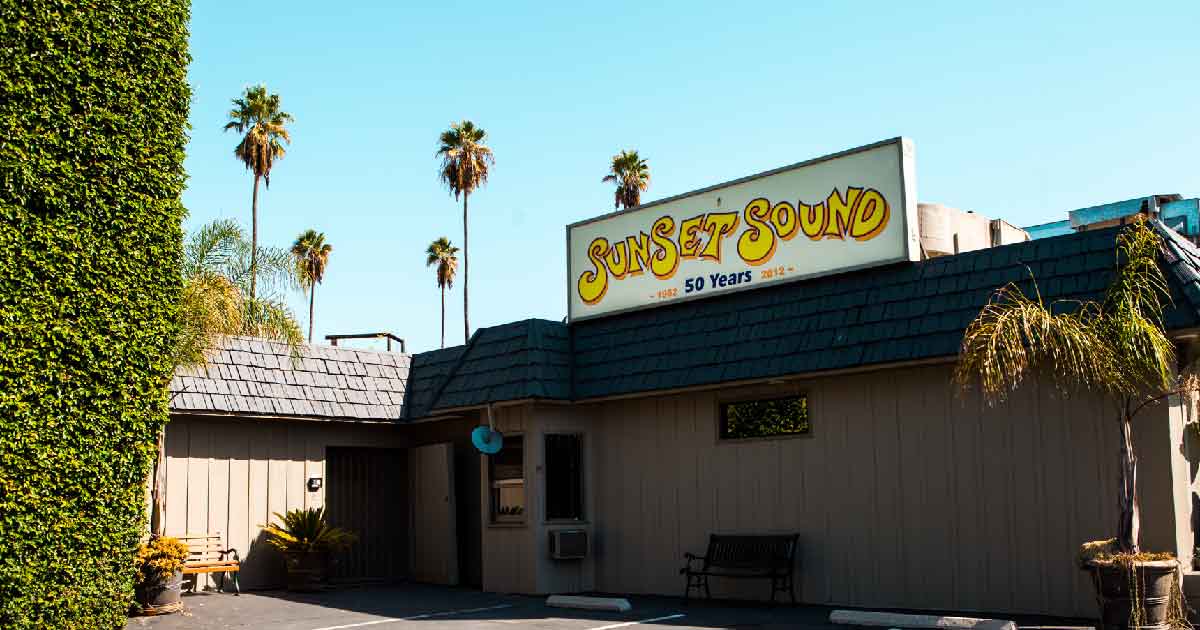
As the guy in charge of Artists and Repertoire, Sal dove right into the art of creating fabulous recordings. It wasn't long before he recommended that Disney build their own recording studio. Walt didn't feel a real need to do that and encouraged Sal to build one. So he did. He bought an old auto repair shop on Sunset Boulevard and created Sunset Sound Recorders. Over the next 16 years, Sal cranked out over 300 albums for Disney at his Sunset studio. But he was always looking for places to make recordings. He was once driving around town with Jimmy Johnson, the other founder of Disneyland Records, and made him stop at a VFW hall. After walking around the interior of the building, informally testing the acoustics with hand claps, he negotiated renting the place and ended up recording the Cinderella soundtrack there.

Image courtesy youtube.com
Sal was a musical jack of all trades during his decade and a half with Disney. He frequently was the conductor on recordings. He was the voice coach on 1963's Summer Magic starring Hayley Mills and Burl Ives. He developed the signature sound of Annette Funicello by recording her signing each song twice and then blending the two tracks to get a fuller sound. He was proud of the fact that Annette didn't think much of her singing until after she heard his first effort and was surprised that the voice coming out of the speakers was her. In the process he also managed to silence some of the executives who felt it would be easier to just overdub her (although the sales of her records did that as much as Sal's technique).

Sal also changed the format of movie soundtrack albums. Prior to Disneyland recordings, the score from a movie was usually presented in three minute segments (about the length of a 45), even on long playing records. Sal presented LPs with long continuous stretches of music, not necessarily in the order they were heard in the film, and arranged for a more casual home listening setting. In the first year of the Disneyland label, seven successful soundtrack recordings were released in this new format. Over his tenure, the label won eight Grammy Awards with many more nominations.

Image courtesy sunsetsound.com
In 1976, Sal and Disney amicably parted ways so he could concentrate on other projects. He arranged and conducted a critically acclaimed series of classical albums for London Records. In 1981, he bought the other premier recording studio in Hollywood, The Sound Factory, which started in the Sixties and has seen artists as varied as Dolly Parton, The Jackson Five and the Red, Hot Chili Peppers come through its doors. He merged The Sound Factory with his Sunset studio into the venture now known as Sunset Sound Factory. It's still serving all of Tinseltown's recording needs under the leadership of Sal's son, Paul.

Sal was declared an official Disney Legend in 2003 for all his musical contributions to the company, many of which can still be heard as background music to several areas of the theme parks. Two years later he suffered a short illness that landed him in the hospital. He wasn't able to recover and ended his phenomenal career at the age of 91.

Saturday, April 13, 2019

April 12 - Euro Disneyland


Image copyright Disney
On this day, in 1992, Euro Disneyland opened  its doors to guests in Marne-la-Vallee, France. The glimmer of a European Disney park had started shining in executives’ eyes two decades before the dream became a reality. It wasn’t until the almost instant success of Tokyo Disneyland in 1983, though, that plans began in earnest. Over 1,200 sites in several countries were considered before finally choosing the French countryside about 30 miles outside of Paris. By the time construction began in 1988, plans already existed for a second Disney-MGM Studios type park (which was still under construction in Florida) to be built right next door to the Disneyland park and open in 1996. It was also clear that guests would need a place to stay, so 5,800 hotel rooms should be enough, and, heck, why not throw in a Downtown Disney type shopping complex, too. We’re Disney, what could possibly go wrong? Well, as it turns out, quite a bit actually.

Image courtesy poteapote.com
Europe, for those of you who were wondering, is not Japan. The Japanese have a long-standing love of cute little cartoon characters (think Hello Kitty or Pokemon) that easily incorporates Disney. They are so gaga for Disney that there are tons of non-main characters you can get on merchandise in Tokyo that you can’t get anywhere else. The craze for critters does not translate to other parts of the world. It’s not even as robust in America much less Europe. So when the protests began before the park was anywhere near completion, they were not a good sign. True, some of the French people were protesting things that didn’t have anything to do with Disney, like the farmers who were upset with US trade policy, but when you give them a 20 square kilometer target to aim at, they’re going to go for it. However, many others were upset with the company itself. Everything from Disney’s hiring practices to their appearance requirements to the fact that American consumerism itself was unwelcome hindered the process of building and staffing Euro Disneyland. But Michael Eisner and his team of executives persevered and got the job done. Which almost became a moot point.

Image copyright Disney
Attendance on opening day was expected to be fairly high, based on the reception other parks around the world had experienced. Unfortunately, the French government and media got a little excited about the venture, were for some reason expecting over 500,000 people in over 90,000 cars to clog the countryside and warned people to avoid the area if at all possible. So, unlike Americans who see traffic as a challenge, the French people listened. By mid-day, Euro Disneyland’s parking lot was barely half full. It didn’t help that there was a short railroad strike happening on the same day that prevented anyone from taking the train over from Paris. To say that the number of guests that first April day was disappointing would be an understatement. The figures improved somewhat as the months went on, until August, when Europe found itself in the throes of a recession and things went bad quickly.

Image copyright Disney
Recognizing that the top complaint about the resort was a lack of things to do, Disney added an Indiana Jones themed roller coaster in the beginning of 1993, but even that had issues. Just weeks into operation, a string of guest injuries were caused by faulty emergency brakes. By the start of 1994, things were looking dire. Euro Disneyland was on the verge of bankruptcy and was starting to drag on the rest of the company. Eisner and his team actually threatened to cut the company's losses, walk away from the resort and let the banks have the land. Eventually a deal was reached to help alleviate the pressure of more than $3 Billion worth of debt. Disney sold part of its stake to a Saudi Arabian investor, the banks agreed to not collect interest for a few years and Disney agreed to not collect royalties for the same period. Then, in May 1995, things began looking up for real.

Image copyright Disney
A version of Space Mountain had been planned for Euro Disneyland from the start, but economics kept pushing construction on the project back. Which turned out to be a good thing. Imagineers gave this Mountain a total redesign, including inversions and a catapult launch beginning, making it something that you couldn't ride at any other Disney park. At a cost of $100 Million, Space Mountain: De la Terre a la Lune was a huge gamble. It paid off. The quarter the coaster opened became the first quarter in the park's history to turn a profit. At the end of that fiscal year,  attendance had jumped 21% and the hotels had seen a 8.5% increase in occupancy. After all was said and done, Euro Disneyland showed a profit of almost $23 million for 1995, an almost miraculous turnaround from the previous years.

Image copyright Disney
Euro Disneyland's fortunes yo-yoed for the next ten years. Sometimes it saw a profit, sometimes it didn't. In 2002, the resort underwent a name change and became Disneyland Paris. The second park, the Walt Disney Studios Park, was finally opened that same year. An aggressive ad campaign was launched soon after and, by 2005, Disneyland Paris had surpassed the Eiffel Tower and the Louvre to become Europe's top tourist destination. The resort's financial picture still see-saws a bit, but in general it turns a profit and enjoys increases in attendance and revenue. In June 2017, the Walt Disney Company bought out some of the partner companies in the resort, bringing their ownership share to over 85% and giving them full control of the place. Since then, it's been announced that over $2 Billion will be invested in new attractions, hotels and park expansions. 

I myself have been to the Paris park once, in the summer of 2000. It was almost by accident that we went. Our trip the City of Lights didn't include going to Disney until we saw an advertisement in the paper for an after 4:00 deal that worked out to about $25 per person. We couldn't pass that up. I found it to be charmingly European in design. We enjoyed the Alice in Wonderland hedge maze, the Old Mill Ferris wheel, the souped up Space Mountain and the fact that four of us ate dinner at a counter service restaurant for under $20 total. Someday I would like to return to Paris to enjoy more art at the Louvre, gellato near Notre Dame and another day at the expanded Disney resort (and yes, I'll do it in that order).